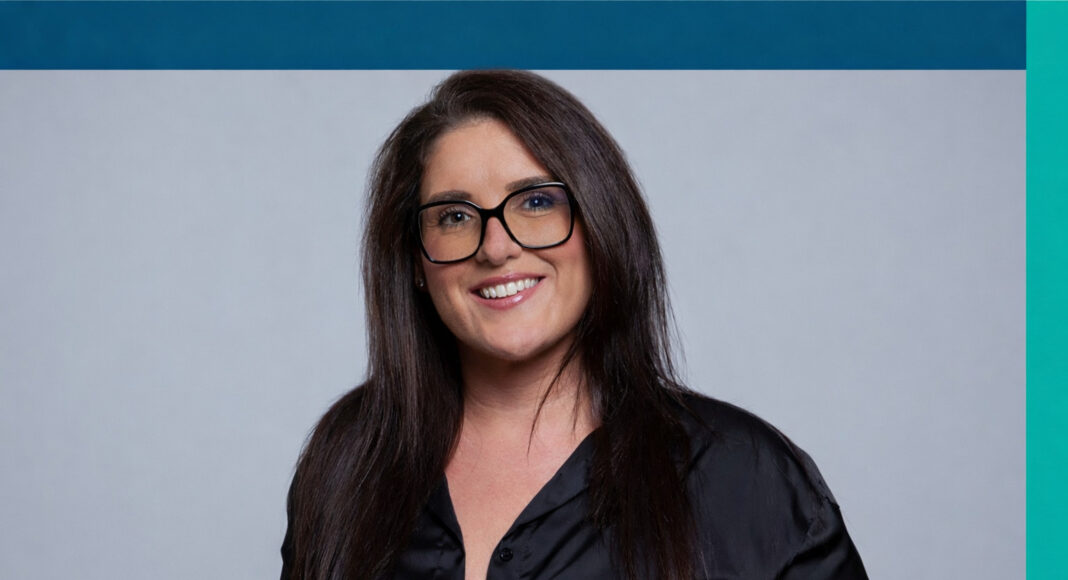
June Ahi has built her career around one simple belief: that businesses grow when their people do. As chief people officer at Cashflows, a fintech company providing payment processing solutions, she is leading efforts to scale culture, capability and wellbeing in-step with rapid expansion. Her approach blends data with empathy, ensuring performance does not come at the expense of people.
Based in Cambridge, the 41-year-old balances a busy leadership role with family life alongside her husband, a property developer, and their two children. Both have dyslexia and ADHD, which she says brings a different perspective to how she thinks about support, inclusion and flexibility at work.
In this HR Profile, June discusses financial wellbeing, flexible working, gender equity and how HR can remain human in a data-driven world.
You joined Cashflows to help drive growth through people. How are you aligning culture and capability with business expansion in such a fast-moving fintech environment?
At Cashflows, we’re a people-led business. Our slogan is Payments Perfected by People, which is powerful. We instil a vibrant and innovative culture so our team is fully engaged and invested in our vision and mission, and their own capability. For us, it’s about making sure that everybody has an individual learning journey – you can’t grow a business without growing its people, their capabilities and their experience. In turn, having their buy-in and engagement is going to enable them to drive that success.

Fintechs are often seen as fast-paced but high-pressure workplaces. What steps are you taking to prevent burnout and protect mental health while maintaining high performance?
It’s critical to look after our staff, so we make sure they have access to a robust benefits package and have a wellbeing hub that opens access to online gym classes, yoga, mindfulness sessions and various nutritious recipes. Beyond that we have Mental Health First Aiders people can reach out to and we run lunch and learns, where we can get together and talk about mental health awareness and make sure we break stigmas that can exist around the subject.
Work-life balance is important but it’s even more so when the industry you are working in is fast-paced, so we work from home when we want to, but we also have offices we can come to for the in-person community.
With the gender pay gap still persistent across financial services, what practical measures do you think are most effective for closing it, and how is Cashflows approaching the issue?
There are plenty of practical steps businesses can take to close the gender pay gap, such as annual salary benchmarking in the market and holding themselves to account with the use of data. At Cashflows, we’re pleased with our figures: 43% of our people are female and 43% of our leaders are female. We also make sure to base our salaries on the role being undertaken rather than on gender.
“You can’t grow a business without growing its people, their capabilities and their experience.”
Conversations around menopause and menstruation at work have gained momentum in recent years. How do you think organisations can move from awareness to action in supporting women’s health?
It’s great that businesses are increasingly aware of the impact that menopause and menstruation can have on staff. But that awareness needs action, so businesses should look at implementing policies, if they haven’t already.
This is something lots of people go through, so having a framework that someone can refer to and understand the support mechanisms that are available within the company. They might include options like working flexibly, time off or resources available. There are also practical steps businesses can take to make their workplaces more supportive, like providing sanitary products in all bathrooms.
Flexible working is set to become a statutory right under the Employment Rights Act. How do you see this shaping the future of workplace culture and employee expectations?
There’s typically a fear that if staff aren’t in the office, then they’re not working. But that’s not the case. Flexible working enhances workplace culture. In part, that’s because people tend to value the approach businesses take to flexible working, which drives more engagement, and in turn that increases productivity because they feel they’re part of something that works both ways.
Employment tribunal claims are rising again, particularly around discrimination and dismissal. What advice would you give employers on staying compliant while maintaining fairness and empathy in decision-making?
Again, this centres on making sure you have the right frameworks and policies in place so there are fair, transparent procedures that are very much in line with legislation and ACAS Code of Practice.
But it’s also important to build this into the culture of the company, making sure staff have a place to voice their opinions to support continual improvement. This builds on the compliance piece.
At Cashflows, we’ve made sure that the culture is in the very DNA of the business, and that includes diversity and inclusion. Seeing it as an asset that can strengthen the workforce means you’re setting your business up for success.
“Flexible working enhances workplace culture.”
As a leader in a fintech, how do you use data to make better people decisions, without losing the human side of HR?
There are lots of ways HR teams can use data to support their work; it’s just important not to go so far down this line that people become numbers. For example, data can be used when running reports on staff objectives and helping to guide meetings with managers, making sure they’re on target to meet their objectives, development plans and setting goals. This should all be used to support the team in making more objective decisions when appropriate.
Financial wellbeing is often overlooked in discussions about workplace support. How can employers, especially in financial services, play a bigger role in helping staff manage money and financial stress?
Financial wellbeing is such an important topic as the country continues to face a challenging economy, impacting every pocket. Employers should have this in mind and ensure their staff have opportunities to educate themselves about ways to make their money work better for their needs.
For example, host talks or fireside chats with a representative from the bank or benefits broker you use as a business, or organise lunch and learns to create an environment where team members feel comfortable asking questions and taking on information. Elsewhere, the benefits package offered to staff is an ideal way to help them make their money go further, whether it’s healthcare or free mortgage advice.
Recruiting and retaining women in technology remains a challenge. What have you learned about building pathways for women into technical and leadership roles?
The pathways start at the very beginning. It’s critical that young people have an understanding about what their career can look like. First and foremost, all children should have opportunities to learn about and be inspired by the idea of technology as an industry. The leadership element follows from there.
We partner with a social mobility charity called Future First, which gives us the opportunity to sponsor schools, participate in careers talks and hopefully inspire the next generation of potential leaders.
“There was almost a stigma about HR, seen as policing policies and an admin function.”
With growing scrutiny of environmental, social and governance (ESG) standards, how are you embedding responsible business practices into HR strategy?
Every business should be aware of the importance of ESG standards, the changing regulations and not only make the appropriate actions needed but hold themselves accountable. It’s something we’re passionate about at Cashflows, making ESG training mandatory and getting ahead of net zero.
We made a good start on that in 2024, reducing our emissions by 40% by adding an EV leasing car scheme into our benefits package, going largely remote and moving our office base to a more sustainable location.
As mentioned, we hold ourselves to account around our stats, having the right policies and frameworks, an employee-initiated DEI group and building DEI into our learning and development. We continue to action our plan and educate our team about ongoing topics through our lunch and learn sessions.
How do you create a culture where feedback and learning are genuinely continuous, rather than performance being something reviewed once a year?
It’s so important meetings happen regularly. I can’t state that enough. We ensure the individuals on our team have monthly meetings with their people managers and have a pre-prepared agenda that all helps to mean your team are working in a proactive rather than reactive way.
This approach helps to build trust between the team member and their manager, as you’re able to spot problems before they become issues, can check in with them about their objectives and follow up where needed with a continuous feedback loop.
And finally, how do you see HR evolving over the next five years?
HR has come a long way in the last few years. There was almost a stigma, with it being seen as policing policies and an admin function. That meant it wasn’t always seen as a key business function. Whereas now, there’s been a culture shift and there’s an understanding that the delivery of any business’s function is reliant on its people.
With that in mind, businesses should consider their strategic goals and how they can align their people initiatives to them. My hope is that people start to see HR as a critical function and understand that it’s the people that make the impact for success.

William Furney is a Managing Editor at Black and White Trading Ltd based in Kingston upon Hull, UK. He is a prolific author and contributor at Workplace Wellbeing Professional, with over 127 published posts covering HR, employee engagement, and workplace wellbeing topics. His writing focuses on contemporary employment issues including pension schemes, employee health, financial struggles affecting workers, and broader workplace trends.
- William Furney

- William Furney

- William Furney

- William Furney