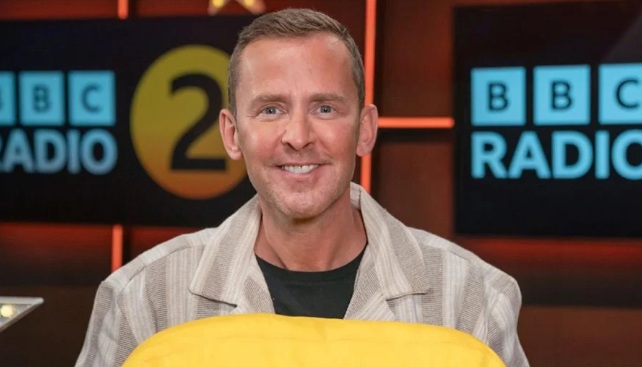
The BBC’s decision to dismiss presenter Scott Mills without providing further detail has raised questions about how employers handle high-profile exits, particularly where limited communication risks fuelling speculation.
The broadcaster confirmed the departure in a brief statement on Monday, saying it does not comment on matters relating to individuals but that Mills was no longer contracted to work with the organisation.
Mills, 53, had been a central figure at the BBC for more than 25 years, working across radio and television. He most recently hosted the Radio 2 breakfast show, having taken over the role in early 2025, and had built a large national audience.
Long career ends abruptly
Mills joined BBC Radio 1 in 1998 and went on to become one of its best-known presenters, hosting programmes including the Official Chart. He later moved to Radio 2, where he presented the afternoon slot before stepping into the flagship breakfast show.

Alongside his radio career, he appeared regularly on television, including presenting Eurovision coverage and taking part in entertainment programmes such as Strictly Come Dancing.
He remained one of the BBC’s highest-profile presenters, with millions of listeners tuning in to his breakfast show each week. His departure came suddenly, with his final programme ending on Tuesday last week without indication that he would not return. His final words on air were “Back tomorrow”.
HRreview understands that the news triggered a strong internal reaction, with audible gasps across BBC newsrooms as shocked staff learned of the decision.
In an email to employees, Lorna Clarke, director of music at the BBC, acknowledged the sudden nature of the announcement and its impact on colleagues and audiences. “I know that this news will be sudden and unexpected and therefore must come as a shock,” she said.
“Not least as so many of us have worked with Scott over a great many years, across a broad range of our programmes on R1, 5Live, R2 and TV. I felt it was important to share this news with you at the earliest opportunity.
“Of course, it will also come as a shock to our audience and loyal breakfast show listeners too. I will update everyone with more information on plans for the show when I’m able to. While I appreciate many of you will have questions, I hope you can understand that I am not going to be saying anything further now.”
Lack of detail fuels speculation
The BBC has not confirmed the reason for Mills’ dismissal, saying only that it relates to personal conduct.
The absence of further detail has led to widespread speculation, with BBC News, citing earlier reporting by the Mirror, saying the matter may relate to a historic relationship and a past police investigation. No link between these reports and the dismissal has been confirmed by the BBC, and Mills has not publicly commented.
Employment lawyers said such situations could create challenges for employers, particularly when confidentiality limits what can be shared.
Kevin Poulter, an employment partner at law firm Freeths, said the nature of the dismissal suggested a serious issue. “Where an employee is dismissed, apparently without any previous warning or investigation, it is reasonable to assume that there has been an act of gross misconduct or other serious breach of contract,” he told HRreview.
“When considering such action, an employer will usually have a mind to the risks associated with such a draconian sanction, especially when dealing with not only a long-term employee, but also when it is expected to be in the public eye,” he said.
“Although there is an understandable reluctance for an employer to share information which is rightly confidential, it is inevitable that the lack of information will create a news vacuum and this in itself can cause harm to both parties, being filled with unfounded speculation,” Poulter added.
“The lack of agreed communications is further suggestive that there is a genuine breakdown in trust and in any continuing relationship.”
Legal and reputational risks for employers
Legal experts said immediate dismissals in high-profile roles carry significant risks, particularly where due process and communication are closely scrutinised.
Jo Mackie, an employment law partner at legal practice Michelmores, said the speed of the decision indicated the seriousness of the issue.
“The BBC has not said on what grounds it has sacked Mills at this time except that it’s a ‘personal conduct’ issue,” she told HRreview. “However, we can assume it must be a very significant issue for them to dismiss him immediately like this given he is one of their biggest stars.”
She said the case may reflect a firmer approach to workplace conduct. “The BBC has faced criticism for several years for not making immediate and robust decisions, and so this could be the start of the new look of their HR and employment regime,” she said.
David Greenhalgh, an employment partner at Excello Law, told HRreview that the legal position would depend on Mills’ employment status and the process followed.
“If Mr Mills was a contractor, and not an employee, his contract will have provided for notice to terminate and will also have listed instances where the BBC had the power to terminate without notice for fundamental breach. If the BBC got it wrong and there was no fundamental breach it may face a claim for loss arising from its breach of contract,” he said.
He said the situation would typically involve suspension and investigation if Mills was an employee. “If instead Mr Mills was an employee, then it seems likely that he would have been suspended on full pay — his annual pay was said to be around £350,000 — pending an investigation into the allegations against him from last Wednesday 25 March, which was when he was last supposed to be on air but was instead unexpectedly replaced by Gary Davies.”
Greenhalgh said immediate dismissal usually followed serious misconduct. “In employment terms, dismissal with immediate effect usually only happens where there is serious misconduct, including gross misconduct. Employers will normally want to investigate fully and follow a proper process before dismissing. The employment contract will usually give examples of behaviour that will trigger dismissal without notice,” he said.
He added that a negotiated exit could not be ruled out. “It is possible that settlement agreement terms were reached between the BBC and Mr Mills as part of which he agreed to leave with immediate effect, but the timing suggests otherwise,” he said.
Balancing confidentiality and transparency
The case highlights the challenge employers face in balancing confidentiality with the need to maintain trust among staff, stakeholders and the public.
While organisations are often constrained in what they can disclose, particularly in sensitive or ongoing matters, a lack of clarity can leave space for speculation that may damage both the individual and the employer.
Experts say it shows the importance of clear internal communication, consistent processes and careful handling of reputational risk when managing senior exits.
It also raises broader questions about how organisations can demonstrate fairness and due process while protecting confidentiality, particularly in cases that attract public attention.

William Furney is a Managing Editor at Black and White Trading Ltd based in Kingston upon Hull, UK. He is a prolific author and contributor at Workplace Wellbeing Professional, with over 127 published posts covering HR, employee engagement, and workplace wellbeing topics. His writing focuses on contemporary employment issues including pension schemes, employee health, financial struggles affecting workers, and broader workplace trends.
- William Furney

- William Furney
- William Furney
- William Furney