

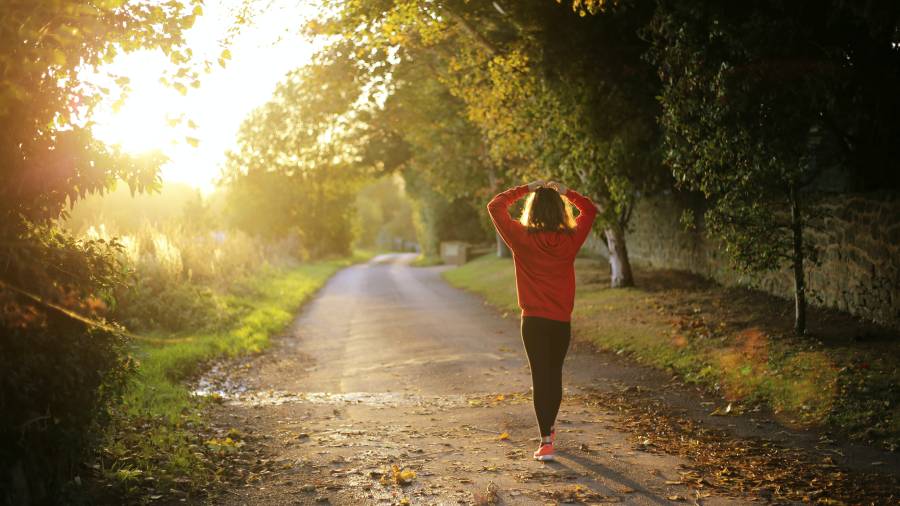
A new survey by global employment expert Remote asked over 1,000 UK working women how they feel about their commute in the dark.
Results show that enhanced flexible work options could help women commute to and from the office more confidently.
Feeling confident and comfortable when walking outside at night is something that many people accept without a second thought.
But for a large percentage of UK working women, the experience of walking at night comes with feelings of unease and vulnerability, not to mention legitimate risks.

While everyone should be able to comfortably walk outside at any time of day, regardless of their gender, the ability to do so without consideration for one’s safety is a privilege. In the age of flexible work, it is time for employers to reconsider company schedules and policies to empower their employees to feel safer when commuting between home and work.
47 percent of UK women feel “uneasy” commuting in the dark
Respondents to the survey indicated a prominent emotional response of unease when asked “How does commuting in the dark make you feel?”. Also, 47 percent of UK working women surveyed said that they felt “uneasy” when commuting in the dark.
Other responses include revealing descriptors such as “anxious” (44%) and “vulnerable” (40%). Over a quarter of respondents noted that they feel unsafe (32%) or worried (27.78%) about commuting in the dark.
This echoes research from the ONS in June 2021 which detailed that one in two women felt unsafe walking alone after dark in a quiet street near their home (compared to one in seven men).
Remote’s survey highlights that the youngest and eldest generations perhaps feel most at risk.
Also, 29 percent of respondents aged between 16-24 said they feel “frightened” – more than any other age group – and those aged 55+ reported feeling “uneasy” (52%), “anxious” (40%), and “vulnerable” (40%).
Gen Z is the generation most concerned about female commuting safety as 92 percent of working women aged 16-24 said that they would change their commuting pattern to travel to work during daylight hours. Could this be because younger women feel more vulnerable?
This is perhaps a painful reality and crucial problem facing the UK as the ONS details that over half of women aged 16-34 years experienced at least one form of harassment in the previous 12 months; with 44 percent of women aged 16-34 years having experienced catcalls, whistles or unwanted sexual comments or jokes.
42% of women in Greater London feel “unsafe” during their commute in the dark
Working women based in Greater London (42%) and the North East (42%) feel most “unsafe” commuting in the dark. With highly publicised, London-centred cases such as the murders of Sarah Everard in 2021 and Zara Aleena in 2022, this should come as no surprise.
Across the UK the apprehension of commuting in the dark is similar. Nottingham (57%) is the city where respondents felt most “uneasy” – this is closely followed by Bristol (57%), Southhampton (57%) and Plymouth (56%).
So, what practical steps can be taken by companies looking to support their colleagues to reduce this unease? The large majority of female workers across Wales (91%), Northern Ireland (90%), England (89%) and Scotland (79%) agree that “companies should offer enhanced flexible work options to women in the winter months to allow them to commute during daylight hours.”
Commenting on the study, VP of People at Remote Nadia Vatalidis:
“It’s deeply saddening to see that so many women in our survey have a shared experience of feeling uneasy or frightened doing something as ordinary as walking or travelling home from work. To change this, 88 percent of respondents feel their business should support them through flexible work arrangements to enable them to travel when they feel most comfortable – so we’re calling for more businesses to do so.
“With 85 percent of the women surveyed saying they would change their routine to commute in daylight hours, it’s time for employers to assess their work policies and culture to reflect this overwhelming demand and empower all employees. Flexible working can help place all employees on an equal playing field, promoting happiness, comfort, and most importantly personal safety.
Modern working used for good: 85 percent would use flexible working to commute in daylight hours
If given the option, 85 percent of UK working women would choose to change their commuting pattern to prioritise their safety by avoiding the dark and travelling during daylight hours.
Almost all respondents (88%) indicated that companies should offer enhanced flexible work options, which would be used in the darker winter months to allow a safer commute and the ability to travel when they feel most comfortable.
Of the respondents who believe companies should be offering enhanced flexible work options for safer commuting, just under half (45%) believe their employer would support them in this initiative.
Unfortunately, over half (55%) of respondents were “unsure” or certain that their employer would not support them with flexible work options to improve commute safety.

Amelia Brand is the Editor for HRreview, and host of the HR in Review podcast series. With a Master’s degree in Legal and Political Theory, her particular interests within HR include employment law, DE&I, and wellbeing within the workplace. Prior to working with HRreview, Amelia was Sub-Editor of a magazine, and Editor of the Environmental Justice Project at University College London, writing and overseeing articles into UCL’s weekly newsletter. Her previous academic work has focused on philosophy, politics and law, with a special focus on how artificial intelligence will feature in the future.
- Amelia Brand

- Amelia Brand
- Amelia Brand
- Amelia Brand









