

 A lack of training, supervision, appropriate equipment and a risk assessment on how to carry out certain work safely led to 2 separate accidents and the prosecution of printers Wyndeham Heron of Maldon.
The company based in Essex has been fined after two employees had their hands crushed by printing presses within months of each other.
Basildon Magistrates’ Court heard how the workers at the printers and binders, had been working with machines, when their hands became trapped.
On 27 March 2009, Press Assistant Paul Howard, 49, from Colchester, fractured his thumb when he tried to clear a paper jam in the stacker unit of a press at the company’s site.
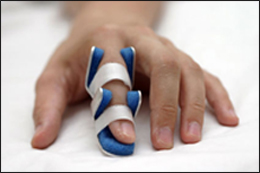
Later the same year, on 18 November, Mark Frost, 46, from Brightlingsea, was working on another press when a problem was experienced with the drive belts of a conveyer. The moving parts were unguarded and it had become common practice for employees to use objects, or their hands, to deal with conveyer belt problems. While attempting to remedy the problem, Mr Frost hand became caught in the belts and was forced against a roller crushing his fingers.

The investigation and prosecution by the Health and Safety Executive (HSE) found a lack of training, supervision and appropriate equipment, and that there had been no assessment on how to carry out the work safely in either case.
Wyndeham Heron, of Colchester Road, Heybridge, Maldon, CM9 4NW, appeared at Chelmsford Magistrates’ Court yesterday and admitted two charges of breaching Section 2(1) Health and Safety at Work etc. Act 1974.
The company was fined £15,000 with £2,490 costs for the charge relating to Mr Frost’s injury and a further £10,000 with £3,171 costs in relation to Mr Howard’s injury.
HSE inspector, Paul Grover, said:
“Incidents like this are entirely preventable. Printing presses are a potentially very dangerous piece of equipment, which require adequate guards and safe working procedures for dealing with every kind of operational occurrence. It is not good enough to rely on ad hoc practices to clear paper jams and to deal with other mechanical failures.
Each year, printing companies report approximately 1,200 work related accidents to the Health and Safety Executive (HSE).




