


 A bid by the Equality and Human Rights Commission to clarify the law surrounding religious discrimination in the workplace has sparked a huge row.
The Commission has applied to intervene in four cases of alleged religious discrimination in the workplace, which are already before the European Court of Human Rights. The cases are expected to be heard together as they all involve the same legal question.
The EHRC said that it decided to get involved in the contentious and emotive issue because it believes that both UK and European judges have to date interpreted human rights and equality law too narrowly, resulting in individuals’ freedom of expression in religion or belief being insufficiently protected.
But the British Humanist Association was furious at the move. Its chief executive Andrew Copson described it as “wholly disproportionate” and accused the Commission of showing “willingness to take action on religious matters while constantly neglecting the rights of others”.

He conceded that equality law in this area “must be clear” and there was scope for a reasonable accommodation of religious beliefs when that accommodation did not affect the rights and freedoms of others.
Stonewall chief executive Ben Summerskill agreed, saying that he was “deeply disturbed” by the EHRC’s decision to intervene in the European court cases.
“The EHRC’s announcement, which has apparently been made by officers without consulting its board, confuses a settled legal situation that is currently clear,” he said. “If employees are allowed to discriminate against gay people in the delivery of publicly-funded services, using the cloak of religion as justification, then we risk seeing a situation where Muslims may start refusing to treat alcoholics or social workers might decline to assist single mothers.”
In the Commission’s view, however, the courts have to date set the bar too high for someone to prove that they have been discriminated against, even though it believes that it should be possible to accommodate their right to religious expression alongside the rights of non-religious people and the needs of employers.
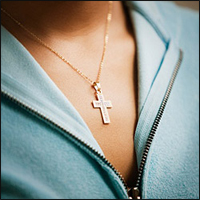
The Commission said it was also concerned that rulings already made by UK and European courts had created a body of “confusing and contradictory” case law. For example, some Christians wanting to display religious symbols in the workplace had lost their legal claim and so were not allowed to wear crosses, while others were allowed to after having reached a compromise with their employer.
As a result, it was “difficult for employers or service providers to know what they should be doing to protect people from religion or belief-based discrimination”, it said. To try and clarify the situation, the Commission will propose the idea of ‘reasonable accommodations’ to help employers manage how they allowed people to manifest their religion or belief.
It was also keen to see “clearer legal principles to help the courts consider what is and what is not justifiable in religion or belief cases, which will help to resolve differences without resorting to legal action”, it said.





