

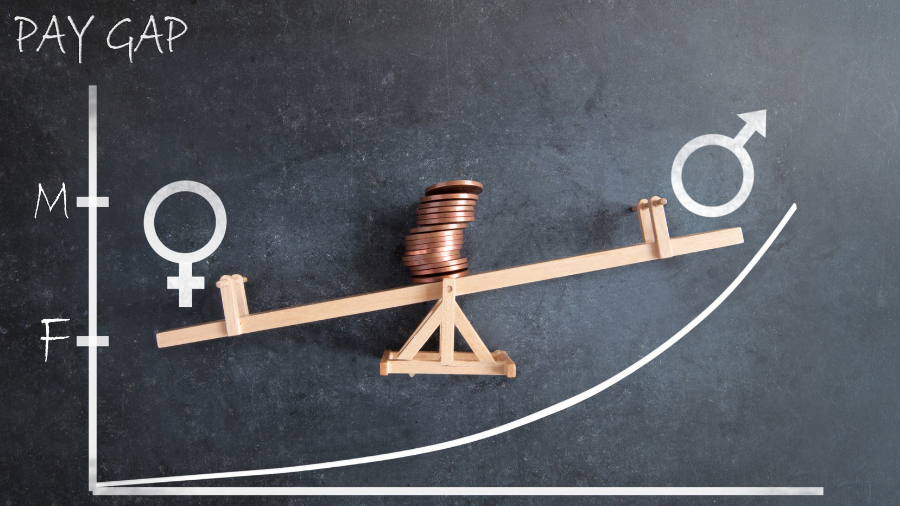
The gender pay gap in the United Kingdom remains a pervasive issue, with the latest data from the Office for National Statistics (ONS) indicating that a staggering 78 percent of all full-time job roles and 81 percent of roles employing 50,000 or more workers favour men in terms of pay.
The analysis, conducted by HR and payroll software provider Ciphr, delves into the ONS’s 2023 gender pay gap data, exposing a disheartening reality for millions of UK workers.
In a surprising revelation, four in five occupations showcase gender-based pay disparities, with 30 percent of them paying men at least 10 percent more per hour on average. Another 32 percent fall into the 5 percent to 9 percent pay gap range.
Over the course of a year, these disparities could accumulate to several thousand pounds, significantly impacting women’s lifetime earnings and potentially influencing their pension savings.

As of April 2023, approximately 12.9 million people, comprising 4.9 million women and 8 million men, are employed full-time in occupations where the gender pay gap is 1 percent or higher in favour of men.
Notably, this disparity spans diverse professions, ranging from financial managers and directors with a 26.2 percent pay gap to waiters and waitresses with a 1 percent gap.
The median gender pay gap
Despite years of inclusive policies and initiatives aimed at narrowing the gender pay gap, progress appears to be slow. The UK’s average median gender pay gap for full-time workers has stagnated at 7.7 percent over the past three years. This translates to women earning 92p for every pound earned by their male counterparts on an hourly basis.
Ciphr’s gender pay gap study highlights only two job roles, national government administrative occupations and senior care workers, where full-time workers experience gender pay parity based on median hourly earnings. Meanwhile, popular careers, such as IT managers, financial advisers, schoolteachers, registered nurses, retail managers, and LGV drivers, all demonstrate gender pay gaps.
Even in occupations where women predominate, such as care workers and teachers, the pay gap persists. Over 60 percent of full-time care workers, secondary school teachers, administrative and clerical assistants, bookkeepers, payroll managers, wages clerks, and primary school teachers are women, yet all these roles exhibit gender pay gaps in favour of male employees.
Which roles see the largest pay gaps?
Analysing the data by major occupational groups reveals an even bleaker picture, with 86 percent of sub-major groups paying men more than women. Health professionals, corporate managers and directors, and business and public service associate professionals stand out with substantial gender pay gaps of 10.6 percent, 12 percent, and 12.5 percent, respectively.
Claire Williams, Chief People Officer at Ciphr, expressed disappointment in the figures, emphasising the need for employers to address embedded salary discrepancies promptly. Williams asserted that achieving pay equality requires concerted efforts to promote equal progression and representation for all employees.
Ann Allcock, Head of Diversity at Ciphr and Marshall E-Learning, emphasised the importance of employers understanding the factors contributing to the gender pay gap within their organisations. She suggested regular equal pay audits, promoting flexible working, and reviewing policies on starting salaries, performance-related pay, and bonuses as crucial steps toward closing the gap.

Amelia Brand is the Editor for HRreview, and host of the HR in Review podcast series. With a Master’s degree in Legal and Political Theory, her particular interests within HR include employment law, DE&I, and wellbeing within the workplace. Prior to working with HRreview, Amelia was Sub-Editor of a magazine, and Editor of the Environmental Justice Project at University College London, writing and overseeing articles into UCL’s weekly newsletter. Her previous academic work has focused on philosophy, politics and law, with a special focus on how artificial intelligence will feature in the future.
- Amelia Brand

- Amelia Brand

- Amelia Brand

- Amelia Brand





