

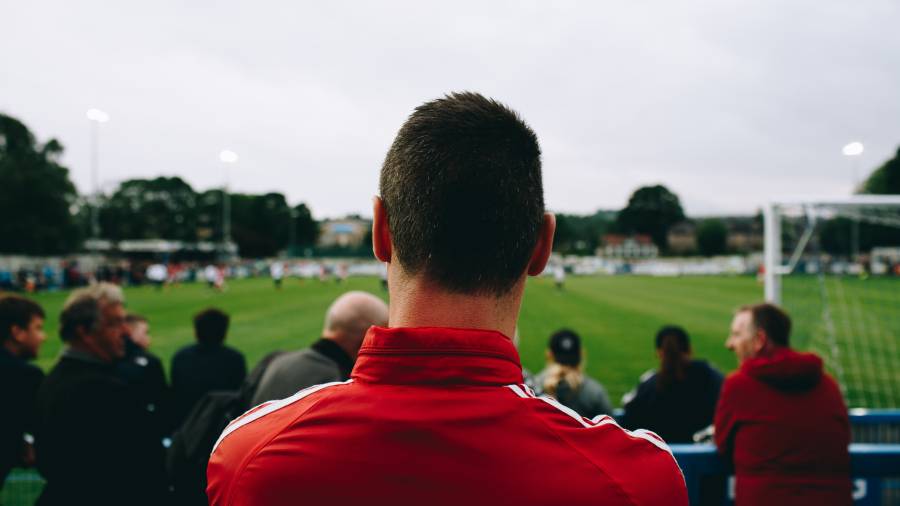
Data shows the significant spike in annual leave requests for Monday 12th July as England is set to play in the final game of the EUFA European Football Championship.
New data by Bright HR, a HR software company, has revealed that annual leave requests have increased by 322 per cent in light of the Euro final.
Overall, annual leave requests for Monday 12th July, a day after the final match, are up 109.6 per cent compared to the Monday prior (Monday 5th July).
Alan Price, CEO at Bright HR, called this result a “much needed morale boost” for England and advised firms to take a flexible stance:

I would encourage all companies to embrace the positivity, look ahead and encourage people to book annual leave in advance rather than calling in sick after the games.
Being flexible when handling holiday requests and embracing the positive mood of the country will mean businesses are less likely to struggle with a sickness hangover the day after the match.
We saw a 41 per cent increase in sickness absence the day after the England-Germany match, and I expect that celebration will be nothing in comparison to what we can expect to see should England win the tournament with the entire country wanting to celebrate this once-in-a-lifetime achievement!
However, Mr. Price also cautioned against assuming that any days taken off is a result of absenteeism:
There will, of course, be genuine sickness absences the day after the big match so employers should never assume that someone is taking a sickie. If they have genuine cause to think the sickness absence is not genuine, they can investigate and potentially even take disciplinary action.
The Trades Union Congress also encouraged employers to be flexible by talking to their employees in advance about arrangements for key games, arranging for staff to watch the game somewhere on the company’s premises if appropriate, allowing staff to finish early or start late and being as flexible as possible with annual leave requests.
TUC General Secretary, Frances O’Grady, said:
Bosses should talk to their staff and try and let people who want to watch the games do so, either at work or at home – and then claim back their time afterwards.
Whether it’s about major sporting events like Euro 2020, attending a medical appointment or picking up the kids from school, allowing people more flexibility in how and when they do their work makes them happier. It cuts absenteeism and raises productivity.
*This data come from analysis of Bright HR’s absence management software that monitors around 250,000 employees.

Monica Sharma is an English Literature graduate from the University of Warwick. As Editor for HRreview, her particular interests in HR include issues concerning diversity, employment law and wellbeing in the workplace. Alongside this, she has written for student publications in both England and Canada. Monica has also presented her academic work concerning the relationship between legal systems, sexual harassment and racism at a university conference at the University of Western Ontario, Canada.
- Monica Sharma

- Monica Sharma
- Monica Sharma
- Monica Sharma









