
Carly Jenner has spent her career helping businesses navigate growth, complexity and change through people strategy grounded in commercial understanding. As vice president of people and culture at Apeel Sciences, a California-based food technology company focused on extending the shelf life of fresh produce, she oversees a global people function spanning Europe, Latin America and the United States.
At 41, Jenner’s role combines strategic leadership with the day-to-day realities of managing international teams across multiple jurisdictions and time zones. Her work ranges from organisational design and leadership coaching to compliance, compensation and sensitive employee relations issues, often balancing operational detail with wider business priorities in the same day.
Based remotely in Wiltshire, Jenner shares her home with her partner Simon and their three dogs, who firmly dictate the rhythm of her mornings. With a strong interest in health and wellness, a carefully structured approach to productivity and a schedule shaped around US working hours, her days revolve around list-making, leadership conversations and finding moments of calm between back-to-back meetings.
I wake up somewhere between 6 and 6:30. The very first thing I do is take my vitamins. I’m slightly obsessed with health and wellness, so that’s non-negotiable for me. It makes me feel like I’ve already done something good for myself before the emails start.

After that I’ll make a hot drink, but no coffee yet. I try to delay caffeine until a little later in the morning. Then it’s straight out with the dogs. Their schedule definitely rules mine. I walk them first thing in the morning, including weekends, because if I don’t prioritise them first I get some very disapproving looks for the rest of the morning. It’s actually one of my favourite parts of the day. There’s something grounding about being outside early, before everything speeds up.
In terms of getting ready for work, my main ritual is planning my day. Before I properly start, I sit down and write my list for the day. I have a slightly unusual way of doing it that works brilliantly for me: I write down absolutely everything I want to accomplish, big and small, and then I group the tasks into batches of five in the order I’m going to tackle them. It forces me to prioritise properly instead of just reacting. Once I’ve done that, I layer it around any meetings or calls I have. It gives the day structure.
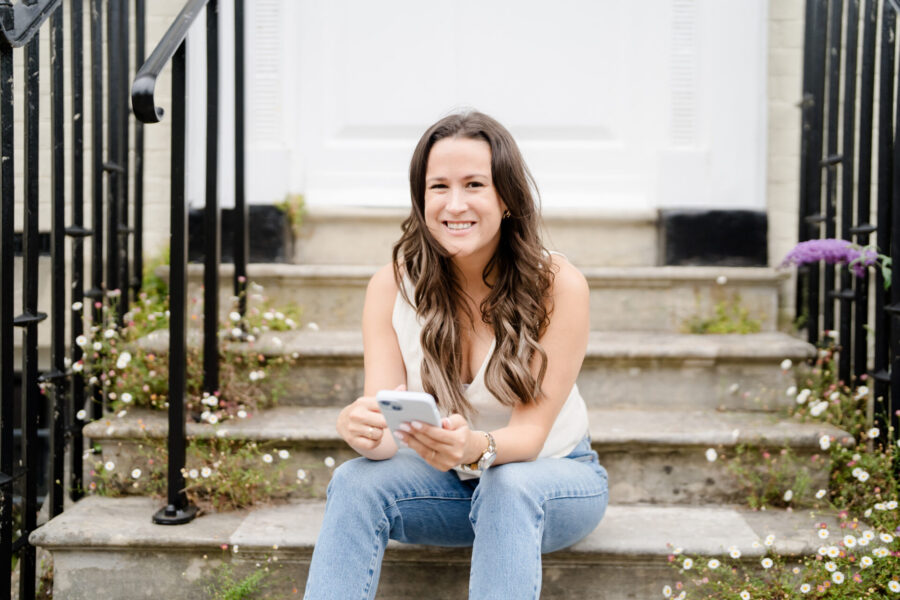
When I log on in the morning, the very first thing I do is check Slack and my emails. Because I work for a company with a US presence, there’s usually quite a bit that’s come in overnight. I’ll scan for anything urgent, anything sensitive and anything that might change my priorities for the day. Then I go straight into the list writing approach I mentioned earlier.
A typical morning for me tends to be more focused and operational. Because of the time difference with the US, my mornings are usually my window to catch up on admin, close loops from the day before and prepare for the calls and meetings that will fill my afternoon and early evening. That said, I also oversee Europe and LATAM, so there are often earlier calls with those regions too. It really depends on what’s happening in the business.
My role spans the full People and Culture remit, so no two mornings are ever the same. I might be resolving a payroll issue in one country, managing a complex employee relations situation in another, reviewing a sensitive communication for leadership or designing a training session for managers. I could be speaking to our PEO (Professional Employer Organisation) about compliance in a new market, or deep in a compensation discussion about equity or bonus structures. Some days it’s very strategic; other days it’s very practical. Most days it’s both at the same time. That’s what makes it interesting.
I’m not very good at taking a proper break for lunch. I tend to eat at my desk. I know it’s not the best practice from a wellbeing or nervous system perspective, and I’m fully aware of the irony given my interest in health. But when the afternoons are back to back, it’s often the only way to keep things moving. It’s something I’m consciously trying to get better at.
Excluding AI itself, I think the biggest innovation in HR over the next five years will actually be driven by the consequences of AI rather than the technology alone. There are two big shifts I see coming.
The first is the continued breaking down of borders. As AI reduces friction in communication, operations and even knowledge transfer, more organisations will expand internationally earlier and more fluidly. That means HR will have to become far more sophisticated in global market entry, cross-border employment, compliance, culture translation and leadership capability.
It won’t be enough to think locally. HR will need to design people systems that can stretch across jurisdictions, different labour laws, different cultural norms and different expectations of work. The complexity increases, and so does the need for strong organisational design.
The second shift is more human. As process-driven, rules-based and repeatable work declines what remains becomes deeply human. Judgement, ethics, culture, trust, leadership maturity, navigating ambiguity and managing change. The old model of HR, built on rigid processes and static structures, will struggle because technology makes the environment more fluid and less predictable.
So HR will need to focus much more on building resilient leadership, clear accountability, strong decision-making and cultures rooted in behaviour rather than policy documents. In other words, less bureaucracy, more clarity. Less process for the sake of it, more intentional design that links people directly to business outcomes. That’s the shift I’m most interested in.
If I had to give one piece of advice to someone wanting to advance their career in HR, it would be this: Get to know the business properly. Not just the people-side but also the commercial side. Learn how the business makes money. Understand the profit and loss. Read the balance sheet. Know what drives revenue, what constrains margin, who the competitors are, how the industry is evolving.
When you can speak the language of the business fluently, you stop being seen as a support function and start being seen as a strategic partner. It also completely changes how you design people programmes. You’re no longer creating initiatives because they sound good or because other companies are doing them. You’re building systems that directly support growth, performance and sustainability. And when you do that, you create better outcomes for the organisation and far more meaningful opportunities for the people working within it.
My afternoons are usually full. More often than not, they’re back-to-back meetings, because that’s when my US colleagues are online. So I tend to compress a lot into that window. It can be executive team meetings, one-to-ones with leaders, talent reviews or more ad hoc conversations when something has flared up and needs thinking through.
A lot of what I’m doing in those conversations is helping leaders navigate their teams. We’ll talk about talent, succession, performance challenges, engagement dips, structural questions or how to communicate something difficult without creating unnecessary anxiety.
Sometimes I’m acting as a sounding board. Sometimes I’m challenging their thinking. Sometimes I’m helping them zoom out and connect what’s happening in their team to the wider business strategy. I’m also often working through talent planning, organisational design questions or how to structure priorities so that teams aren’t trying to do everything at once. The afternoons are very people focused and very conversational.
In terms of staying productive or recharged, my list-making habit is a big anchor for me. I don’t just write it in the morning and forget about it. I revisit it during the day, especially if meetings have thrown up new actions or shifted priorities. It helps me recalibrate and avoid that feeling of being swept along. And if I start to feel my energy dip, music is my reset button. A good playlist can completely change my mood and focus. It’s such a simple thing but it works every time. I also love Reformer Pilates and try to go in the evening at least twice during the working week.
If I’m honest about pet peeves in HR, one is the reputation the function sometimes has. The idea that HR isn’t commercial, or that it somehow loses sight of humanity because it’s in service of the business, just isn’t true. In fact, I think the closer HR is to the business, the more impact it can have on people’s lives. If the business is healthy and successful, there’s more stability, more opportunity, more investment in development. I’m genuinely on a bit of a mission to shift that perception and show that strong HR is both commercially sharp and deeply human.
The other thing that frustrates me is when we rely too heavily on process and policy as a substitute for judgement. Policies matter — of course they do — but they can’t replace thoughtful leadership. The more we can bring nuance, empathy and context into our decisions, the better outcomes we create. HR should be about enabling good judgement.
If there’s one thing that might surprise people about my daily routine or life in HR, it’s how much time I spend thinking about people even when I’m not in a meeting. I know that sounds obvious given the job, but for those of us who really love this work, it’s constant. I’m often reflecting on what will create the most optimal environment for someone to succeed. What isn’t working. What might be getting in the way. What I could do differently as a leader. There’s a lot of self-reflection involved.
I’m not brilliant at sticking to strict work hours. I do tend to work beyond them, and I probably wouldn’t recommend my exact schedule to anyone else. It’s something I’m continually reflecting on and trying to manage better. When I wrap up my workday, it can be a bit later than a typical nine-to-five because of the US time difference. Once I close my laptop, I try to create a clean break. I really love reading, Reformer Pilates and movies.
Evenings are fairly simple. As soon as I’m done with calls, we’ll make dinner and I’ll eat with Simon. We usually watch a bit of television or a film, and then it’s more reading or just relaxing with the dogs. One of my favourite rituals to transition out of work mode is my skincare routine. I absolutely love it. It’s not very exciting but it signals my brain to relax.
I go to bed at 10 every night. If I’m in bed any later than that, I’m useless the next day. I need a solid seven hours of sleep to function well. Thankfully I fall asleep very easily. I’ve always been able to get into bed and switch off.

William Furney is a Managing Editor at Black and White Trading Ltd based in Kingston upon Hull, UK. He is a prolific author and contributor at Workplace Wellbeing Professional, with over 127 published posts covering HR, employee engagement, and workplace wellbeing topics. His writing focuses on contemporary employment issues including pension schemes, employee health, financial struggles affecting workers, and broader workplace trends.
- William Furney

- William Furney
- William Furney
- William Furney