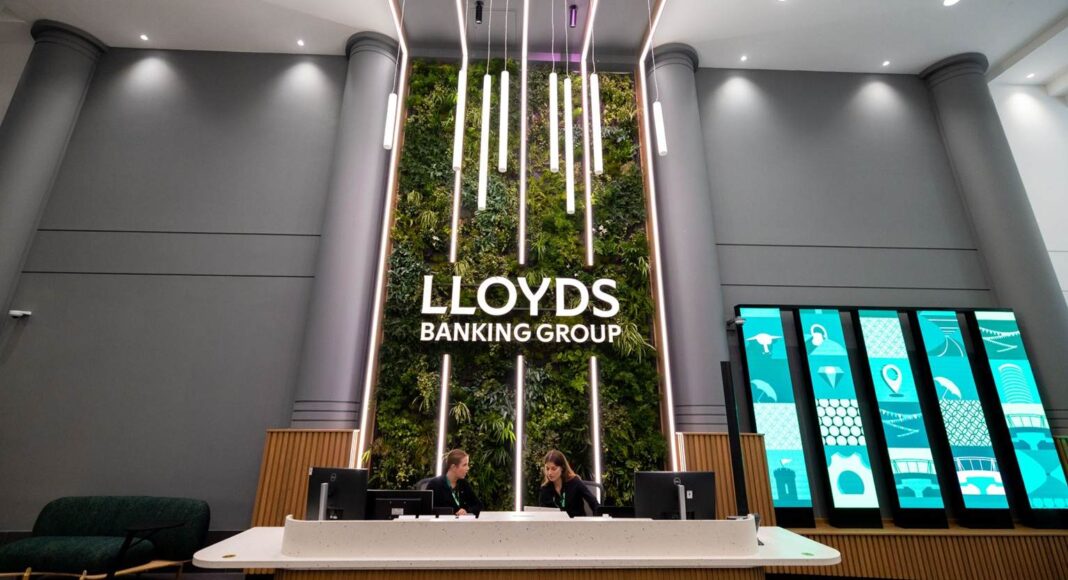
Lloyds Banking Group plans to create more than 1,000 artificial intelligence-related roles this year, adding fresh weight to claims from some technology leaders that AI will create new employment opportunities rather than trigger widespread job losses.
The banking group announced on Monday that it would recruit for almost 300 new agentic AI-related positions over the coming months, including data scientists, engineers, responsible AI specialists and product managers. More than 700 employees are already working on AI projects, with over 1,000 roles expected to support the bank’s wider AI expansion during 2026.
The development comes amid a growing debate over whether artificial intelligence will eliminate jobs or create new forms of work. Last week, Amazon founder Jeff Bezos rejected fears that AI would make large numbers of workers redundant, arguing instead that the technology would eventually create labour shortages by increasing demand for human skills. And earlier this month, OpenAI chief executive Sam Altman said he was “delighted to be wrong” about predictions of an AI-driven jobs apocalypse after labour market disruption had so far proved less severe than many expected.
Hiring and retraining go hand in hand
The latest plans suggest that, for some employers at least, AI adoption is creating demand for new skills rather than simply reducing headcount.

Alongside specialist recruitment, Lloyds Banking Group is expanding training programmes designed to help existing employees use AI tools confidently and responsibly. Since launching its AI Academy in January, employees have completed more than 400,000 courses, while over 65,000 colleagues have undertaken training focused on the responsible use of artificial intelligence.
The bank said all 67,000 employees have access to tailored AI learning resources, workshops and demonstrations designed for different levels of experience and responsibility.
New routes into AI careers
Lloyds Banking Group is also investing in future talent through one of the UK’s first Level 6 AI Engineering apprenticeships offered by a bank.
The programme will welcome 33 apprentices this year across the organisation’s UK locations, combining workplace experience with a recognised qualification in AI engineering.
Emma Richards, one of the apprentices joining the programme, said it would help her develop practical skills while gaining experience of how AI can be applied in a business environment.
“My apprenticeship will give me the chance to build practical skills in software engineering while learning how AI can support the work we do every day,” she said.
“Being able to apply that learning in a real business environment, with support from experienced colleagues, will help me build my confidence. It will show me how these skills can be used responsibly to support colleagues and improve the way we work.”
AI moves from experimentation to deployment
The recruitment drive comes as employers increasingly move beyond pilot projects and begin deploying AI tools across core business functions.
Among the latest initiatives is an AI-powered fraud-detection system that analyses payments in real time to identify potentially fraudulent transactions before money leaves customers’ accounts.
Sharon Doherty, chief people and places officer at Lloyds Banking Group, said in a statement provided to HRreview that the focus was on ensuring AI delivered practical benefits for both employees and customers.
“AI is becoming an increasingly important part of how we support customers and how we work across Lloyds Banking Group. As we scale its use, our focus is on making sure it delivers real benefit in day-to-day roles, helping colleagues make better decisions and enabling us to provide faster, more effective and more personalised support for customers.”
She added that it was “about keeping AI practical and accessible, so everyone can use it in ways that make a meaningful difference”.
The announcement adds to growing evidence that organisations are increasingly focusing on workforce development and new specialist roles as they integrate AI into their operations, even as concerns continue about the technology’s longer-term impact on employment.

William Furney is a Managing Editor at Black and White Trading Ltd based in Kingston upon Hull, UK. He is a prolific author and contributor at Workplace Wellbeing Professional, with over 127 published posts covering HR, employee engagement, and workplace wellbeing topics. His writing focuses on contemporary employment issues including pension schemes, employee health, financial struggles affecting workers, and broader workplace trends.
- William Furney

- William Furney
- William Furney
- William Furney