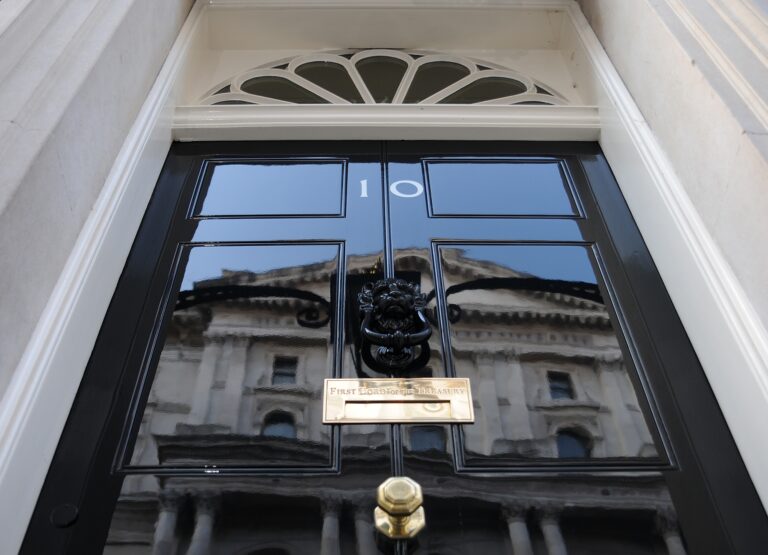
Business groups have called for stability and clarity over employment reforms following Sir Keir Starmer’s resignation as prime minister, with employers watching closely to see whether planned workplace legislation remains on course.
The resignation comes with further measures under the Employment Rights Act 2025 still due to be introduced over the coming months, leaving businesses awaiting signs from a new Labour leader on the future direction of employment policy.
Attention has already turned to who will succeed Starmer. Former Greater Manchester mayor Andy Burnham is widely seen as the frontrunner after winning the Makerfield by-election last week with a substantial majority and being sworn in as an MP on Monday. So far, he is the only declared candidate in the leadership contest, with nominations due to open in July.
Industry groups warned that another change in political leadership could create uncertainty at a time when employers are already adapting to significant regulatory and economic pressures.

Neil Carberry, chief executive of the Recruitment and Employment Confederation (REC), the trade body representing recruitment firms and staffing businesses, said businesses would be looking for reassurance that growth remains a government priority.
“More change in Whitehall could be a challenge to the stability firms need, but businesses are adept at getting on with it,” he said in a statement provided to HRreview.
Carberry argued that only private sector growth could address the country’s economic challenges and said employers wanted government to work more closely with business when developing policy.
“What firms really need is a government that will back them to deliver growth, rather than making trading more difficult by heaping up ever more regulatory and taxation costs. That means making sure that government works with business to achieve its aims, rather than imposing solutions that sound good to Westminster think-tanks and more radical union leaders, but do not help ordinary workers and companies who are trying to drive the country forward.
“Pragmatism on the unworkable approach to guaranteed hours set out by the Employment Rights Act would be a good first step in working out whether any new Prime Minister really has growth and prosperity at the heart of their plan.”
Questions over future reforms
The Employment Rights Act was described by ministers as the biggest expansion of workers’ rights in a generation and introduced major changes affecting recruitment, contracts, workplace protections and employment status. Further reforms are scheduled to be implemented through to 2027, meaning the approach taken by the next prime minister could have significant implications for employers.
Alan Price, chief executive of HR software provider BrightHR and chief operating officer of Peninsula Group, told HRreview that small businesses had already spent considerable time adapting to the changes introduced so far.
“A change in Labour leadership could bring yet more disruption for small businesses,” he said. “The past two years have seen changes in taxation, payments and, most significantly, employment rights legislation. The Employment Rights Act 2025, billed as ‘the biggest upgrade to workers’ rights in a generation’, has permanently changed people management for small businesses in the UK.”
He said employers would be closely monitoring to see whether the remaining reforms proceed as planned under a new administration.
“Alongside the economic benefits of new legislation, small businesses have had to adjust to the financial impacts of these changes. And as reforms under the Employment Rights Act 2025 are planned until 2027, we will be watching the new prime minister with interest to see whether the plans change.”
Managing leadership transitions
Kate Palmer, chief operating officer at employment law and HR consultancy Peninsula, said leadership transitions required careful communication and preparation to maintain confidence and continuity.
“We look to our leaders for reassurance, guidance and, more than anything, consistency. Navigating through periods of change can be difficult, so much so that entire departments are dedicated to implementing and managing it in the business world.”
“Change managers and change leaders are integral parts of many organisations. It is their role to introduce change as comfortably as possible, whilst reducing the scale of impact upon an organisation or client base.”
Palmer said maintaining confidence in leadership and ensuring continuity were essential during any transition. She argued that communication played a central role in bringing people together and helping organisations navigate uncertainty.
“Part of any leader’s responsibility is preparing their company for leadership change. Confidence in leadership is key, as is continuity of standards and service. While it’s true that leaders have an intrinsic part to play in building trust and shaping culture, collaboration boosts satisfaction across the board. And that’s where communication comes into play.
“A leader needs to bring everyone together, and the best way to do this is by clearly communicating your vision. Knowing your employees, their feelings and motivations as well as keeping a finger on the pulse of the workforce is important for any leader.
“With new leadership comes new opportunity, fresh ideas, and the chance to try doing things differently. Businesses will be watching what happens next with interest.”

William Furney is a Managing Editor at Black and White Trading Ltd based in Kingston upon Hull, UK. He is a prolific author and contributor at Workplace Wellbeing Professional, with over 127 published posts covering HR, employee engagement, and workplace wellbeing topics. His writing focuses on contemporary employment issues including pension schemes, employee health, financial struggles affecting workers, and broader workplace trends.
- William Furney

- William Furney
- William Furney
- William Furney