

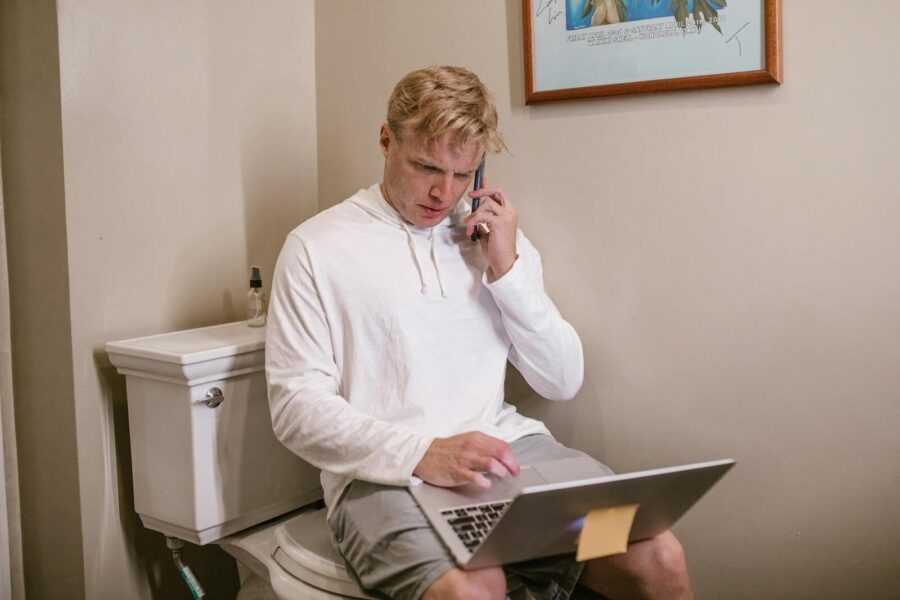
British workers are at increasing risk of burnout as a result of failing to take proper breaks during the working day, as the pressure to remain constantly available is affecting employee wellbeing across the country.
That’s according to research by HR software provider Personio, which found that 65 percent of workers have completed a full working day without taking a break, while 60 percent admitted to responding to emails or calls from the bathroom.
Millennials were the most likely to work while unwell (58%) and to send emails from the bathroom (64%), while Gen Z workers (aged 18–24) were the most likely to skip breaks in order to leave work earlier.
Women appear disproportionately affected, with 60 percent saying they work through their lunch break, compared to 50 percent of men. Law enforcement and security workers reported the highest rates of working a full day without a break, at 76 percent.

Erosion of boundaries and psychological safety
Commenting on the findings, psychotherapist and workplace behaviour specialist Zoë Aston said, “People working from the bathroom is a red flag for boundary collapse. The bathroom is one of the few remaining personal spaces we expect to be off-limits. When employees are responding to work in that space, it signals a culture where people don’t feel psychologically safe to disconnect, even briefly.”
Aston added that the gender difference in break-taking raises important issues around equity and workplace culture.
“Women are often conditioned to over-deliver in professional environments – taking fewer breaks, shouldering invisible labour, and deprioritising their own wellbeing to meet (or exceed) expectations. For HR leaders, this is a call to go beyond policy and examine if they are fostering equity in rest, recovery, and workload distribution.”
Break culture and wellbeing
The data also highlighted gaps in basic knowledge of working rights. Nearly one in three workers (31%) did not know they are legally entitled to a 20-minute uninterrupted break when working more than six hours a day.
Suzie Rogers, VP, People Business Partnering at Personio, said, “Prolonged screen time without rest can lead to eye strain, headaches and musculoskeletal issues, as well as anxiety, chronic stress, sickness and ultimately burnout, all of which come at a much steeper cost to both employees and organisations.”
Rogers added, “Taking regular breaks isn’t just about boosting productivity, it’s about protecting long-term health and wellbeing. Whether that involves stepping away from your desk or switching off at lunch, even short pauses can make a big difference.”

Alessandra Pacelli is a journalist and author contributing to HRreview, where she covers topics including labour market trends, employment costs, and workplace issues.
- Alessandra Pacelli

- Alessandra Pacelli
- Alessandra Pacelli
- Alessandra Pacelli









