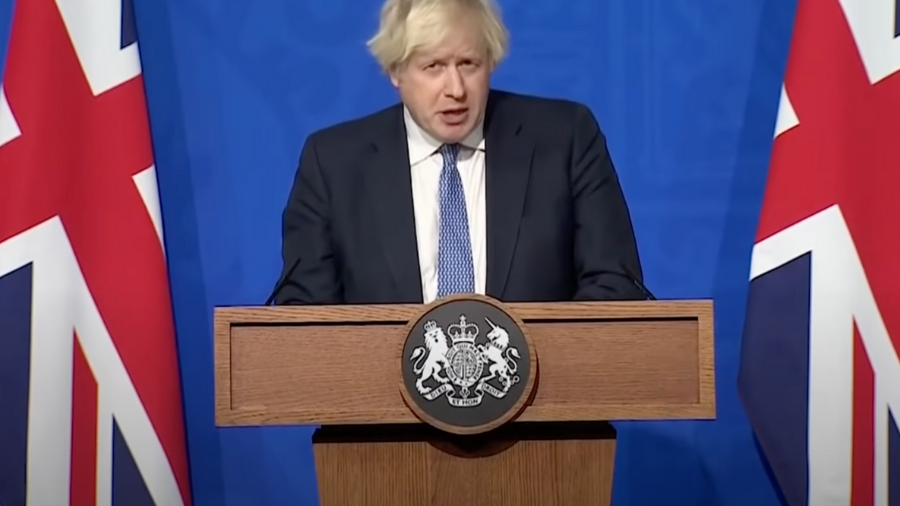
Boris Johnson: If you can work from home, do it.

-

From Monday, people in England are being asked to work from home again – ‘if you can’ – and masks are compulsory again in most public areas.

This is part of the government’s plan to limit the spread of the Omicron variant.

Anyone going to large venues will need their vaccine passports; at a press conference at number 10, the Prime Minister said “It’s not a lockdown, it’s Plan B.”

Mr Johnson did not specify the mask-wearing rules for people who are forced to go into an office.

HRreview Logo

Get our essential weekday HR news and updates.

This field is for validation purposes and should be left unchanged.
Keep up with the latest in HR...
This field is hidden when viewing the form
Optin_date
This field is hidden when viewing the form


The UK Health Security Agency estimates that the number of infections is more than 9,000 though its official figures show 568 confirmed cases.


Plan B already in place in other parts of UK

Vaccine passports had already been in place in Scotland, Wales and Northern Ireland and office staff had also been working from home on advice.

Boris Johnson said Omicron is growing faster than Delta and early studies show cases possibly doubling every 2 to 3 days.

First Minister Nicola Sturgeon told Scotland’s employers to make sure anyone who worked from home in the last lockdowns can do so again till mid-January.

Ministers in Wales also encouraged employers to let people work from home and advised against putting pressure on people to return to the office unless it was imperative.

In Northern Ireland, meanwhile, employers were also urged to support working from home for employees, but did not ask them to impose home-working as a mandate.


NHS supports the move

Responding to the announcement of new measures in England at the No 10 press conference, chief executive of the NHS Confederation Matthew Taylor said it is better to be safe than sorry:

“We are relieved the Government has finally listened and hope these precautionary measures have not come too late. No one wants another national lockdown or for patient care to become disrupted again given how hard frontline teams are working.”

Mr Taylor said: “As set out in our #NotTooMuchToMask campaign, curbing the spread is not just a Government responsibility as the public has a vital role to play too. This includes by wearing face coverings, getting vaccinated, keeping indoor spaces ventilated, cleaning their hands regularly and getting tested.”

The government’s chief scientific adviser, Sir Patrick Vallance, meanwhile, said it was ‘incredibly  important people follow the rules’ saying “it only works if we all do it.”

The Health Secretary – Sajid Javid – made a statement to MPs at the same time as Mr Johnson’s news conference, saying there will be a debate and vote in the House of Commons next week on the measures.


Feyaza Khan has been a journalist for more than 20 years in print and broadcast. Her special interests include neurodiversity in the workplace, tech, diversity, trauma and wellbeing.

Latest news

Personalising the Benefits Experience: Why Employees Need More Than Just Information

This article explores how organisations can move beyond passive, one-size-fits-all communication to deliver relevant, timely, and simplified benefits experiences that reflect employee needs and life stages.

Grant Wyatt: When the love dies – when staying is riskier than quitting

When people fall out of love with their employer, or feel their employer has fallen out of love with them, what follows is rarely a clean exit.

£30bn pension savings window opens for employers ahead of 2029 reforms

UK employers could unlock billions in National Insurance savings by expanding pension salary sacrifice schemes before new limits take effect in 2029.

Expat jobs ‘fail early as costs hit $79,000 per worker’

International assignments are ending early due to family strain, isolation and poor preparation, as rising costs increase pressure on employers.
- Advertisement -

The Great Employer Divide: What the evidence shows about employers that back parents and carers — and those that don’t

Understand the growing divide between organisations that effectively support working parents and carers — and those that don’t. This session shows how to turn employee experience data into a clear business case, linking care-related pressures to performance, retention and workforce stability.

Scott Mills exit puts spotlight on risk of ‘news vacuum’ in high-profile dismissals

Sudden departure of a long-serving BBC presenter raises questions about how employers manage high-profile dismissals and limit speculation.

Must read

Florence Parot: How to avoid the dreaded burnout

A friend of mine who works in an HR managerial capacity was told last year at her performance review that she was doing amazingly well but they were a bit worried that she did not look stressed enough. Just what does that tell us about what is happening nowadays in the corporate world?  We may be talking about wellbeing at work but in reality, we still think that if someone is not buzzing around round the clock, they must be faking it.  Where are the times gone when if you were around after 5pm you were not considered efficient enough?  That is something the French used to be jealous about. In the French world, nobody has ever been finished by 5pm except civil servants. So could we be saying that nowadays the English are behaving just as badly as the French? Mince alors.

Eugene Farrell: Why HR and EAPs need to pull together to shore up mental health

Eugene Farrell explores why employer support on mental wellbeing is so important.
- Advertisement -

You might also likeRELATED
Recommended to you