

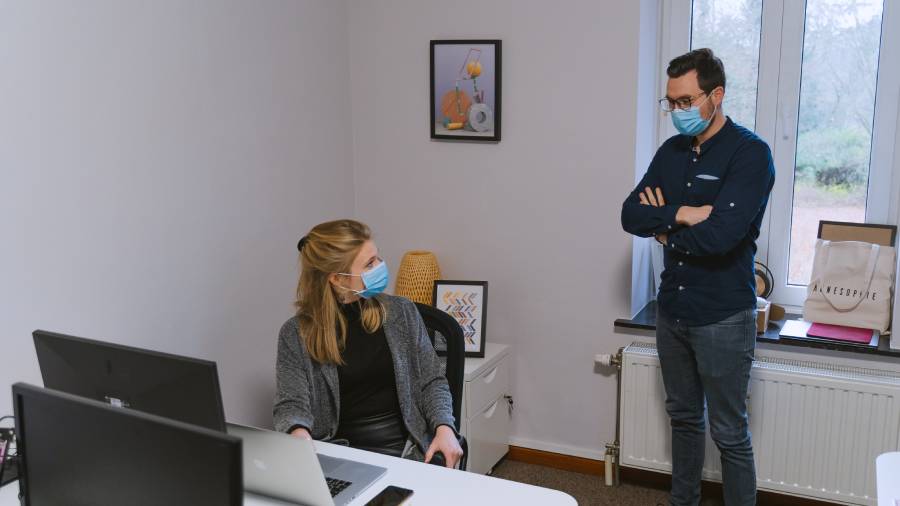
In light of lockdown restrictions for non-essential retail being lifted on the 12th April, the Trades Union Congress (TUC) have warned that infection rates could “rebound” if workplaces are not made COVID-secure.
The TUC have stressed the need for workplaces to meet COVID-secure regulations to ensure staff are not put at risk and COVID-cases do not rebound.
The body have curated several steps employers can take, within the coming weeks and months, to ensure their spaces are safe for workers and that workplaces do not become hubs for outbreaks to occur.
Firstly, the union body have stressed the need for workplaces to be made COVID-secure through appropriate risk assessments.

Since 2020, the guidance has changed on how best to approach health and safety at work. In the summer months, much emphasis was placed on surface disinfection. However, in 2021, this has since been updated to ensuring effective ventilation is circulating throughout the work space.
In addition to this, the TUC state previous guidance such as the use of face-masks and implementing social distancing should still be followed.
Based on recent research, the body has also urged employers to undertake risk assessments as around a quarter of safety representatives stated they were unaware of a risk assessment taking place in their workplace in the last two years – despite this being a legal requirement.
Working from home guidance is also still in place which means employees that can work from home should do so until lockdown restrictions are completely lifted, currently forecast to be the 21st June.
The TUC have also urged employers to offer a “decent amount” of sick pay where possible, stating that £96.35 a week is not enough to live off. This financial support, it says, will ensure employees who need to self-isolate can do so which will decrease the risk of a COVID-19 outbreak.
Furthermore, in line with Government guidelines, the body urges employers to offer workers with information regarding the vaccine. Persuading them, without making it a condition of employment, will preserve employer-staff relations and avoid discrimination claims, the TUC state.
Frances O’Grady, General Secretary of the TUC, said:
Before reopening, every employer must run a new risk assessment, prioritising good ventilation – and act to make sure their workplace is Covid-Secure. They have to consult their workers and unions on their safety plans. And they have to publish their risk assessment to reassure their workers and customers.
Even as some workplaces reopen, employers must still make sure that everyone who can work from home continues to do so.
More people are getting vaccinated every day – but that does not mean that employers can skimp on safety measures at work.

Monica Sharma is an English Literature graduate from the University of Warwick. As Editor for HRreview, her particular interests in HR include issues concerning diversity, employment law and wellbeing in the workplace. Alongside this, she has written for student publications in both England and Canada. Monica has also presented her academic work concerning the relationship between legal systems, sexual harassment and racism at a university conference at the University of Western Ontario, Canada.
- Monica Sharma

- Monica Sharma
- Monica Sharma
- Monica Sharma








