

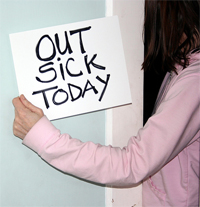
 In a recent survey of 190 UK business leaders by careerbuilders.com, Half of UK employers have admitted to checking up on employee’s who call in sick.
Just fewer than 10 per cent of respondents claimed that they had driven past their employee’s home to check if they were faking sickness. Thirteen percent admitted to firing an employer for failing to provide a legitimate for missing work.
Employers suspecting employees of faking a sicky have resorted to devious tactics to investigate the absence, especially if the employee is a chronic offender
Many employers admitted to asking for a doctor’s note to justify thier sick day, others called the employee, had another employee call the employee and even checked the employee’s personal social networking page to check for inconsistencies.

When asked to share examples of the most unusual excuses they received from workers calling in sick, employers in Europe reported the following:
·     Employee’s foot was stuck in the toilet.
·     Employee said someone threw a garden gnome through his window.
·     Employee claimed to be attacked by a shark.
·     Employee witnessed someone being pushed under a train.
·     Employee had a nightmare and felt out of sorts.
·     Employee injured his leg chasing his dog to prevent it from attacking a rabbit.
·     Employee had to take his mother shopping.
Tony Roy, President of CareerBuilder EMEA said;
“If you lie about the reason for needing time off, you can seriously hurt your credibility with your employer,” said
“The vast majority of employers – 79 per cent – enable workers to use sick days for mental health days to rest, recharge and return more productive, so your best bet is to be up front and honest with your manager.”





