

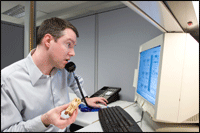
 Growing numbers of time-pressed office workers are resorting to eating meals at their desks amid pressure from employers and peers not to step away from work to take a break to eat, according to the findings of a new study by Alpro.
The study of 2,000* workers found that more than one third now eats at least one meal at their desk each day, while one in six tucks into two meals a day.
Women favoured eating breakfast at work, over their male colleagues, with one in three saying they regularly ate at their desk compared to one in five men.
One in 10 of those surveyed said their employer expected them to be at their desk at all times – even when eating. One in five said they would draw attention to themselves if they popped out to eat and one in 30 claimed they even risked getting the sack if they didn’t eat at their desk.

The growing phenomenon of eating in the workplace – dubbed ‘deskfest-ing’ by researchers – means that more than one in four workers now regularly eats breakfast at their desk, six out of 10 lunch there, and one in 20 even sits down to an evening meal surrounded by their work.
The study also showed how work time diets have become increasingly based around small meals supplemented by regular snacks. Of most concern, researchers found that the average worker had two snacks a day – most frequently chocolate, crisps or biscuits – in between regular meals, with more than a third of those quizzed for the study admitting their diet was unhealthy.
More than half expressed concerns about the effect their enforced workplace eating habits might be having on their long-term health, while one in three said they recognised the need to make urgent changes to their diet.
“Our study shows that time-pressed workers now often have no choice but to eat many of their meals at their desks,” said Alpro dietitian, Kate Arthur. “While we accept that sitting down to eat in the workplace is becoming a regular occasion for an increasing number of workers, what concerns us most about these findings is that many workers’ diets appear to be based around foods that are high in saturated fat, sugar and salt, all of which are linked to poor long-term health.”
Although healthy choices such as fruit, yogurts and smoothies appeared on the breakfast menu for up to three out of 10 ‘deskfest-ers’, bacon sandwiches, croissants, muffins and even ‘just coffee’ were regular fodder for one in six. Cereal and porridge were the most popular workplace breakfast choices, enjoyed regularly by more than four out of 10 workers, while just one in 20 claimed to occasionally manage eating a fry up at their desk.
Regionally, workers in London and the South East were found to eat the most meals at their desks, with one in five averaging as many as two meals a day in the workplace. East Anglians are among the biggest workplace snackers between meals, while bosses in London, Birmingham, Southampton and Glasgow appear to crack the whip the hardest, with more than one in 10 expecting workers to eat at their desks.
However, some deskfest-ers said they didn’t mind becoming part of the growing trend. Six out of 10 workplace breakfasters said eating at their desk gave them more time in bed in the morning, while one in 10 said it effectively meant they wasted time at their desk and therefore started work later. Almost one in 10 said eating meals at their desk also meant they had more time to spend on Facebook and Twitter.
“Our study suggests that the trend for eating in the workplace is not only set to continue but to also increase,” added Kate Arthur. “The question is what part the phenomenon will continue to play in shaping our future diets and what we, as a nation, can do to stay fit and healthy despite the increasing demands of the modern workplace.
“These ‘deskfesters’ need to consider the choices they are making as it’s all too easy to grab the nearest unhealthy snack for a quick energy boost. I’d advise people to keep it simple. Try to make sure that two thirds of your plate is made up of plant-based foods such as fruit, wholegrains, nuts and seeds to stay healthy and energised and make sure you have some of these healthier choices stored in your desk drawer!”
The good news is help is at hand from Alpro. The company has launched a campaign to provide inspiration for healthy deskfesting.




