

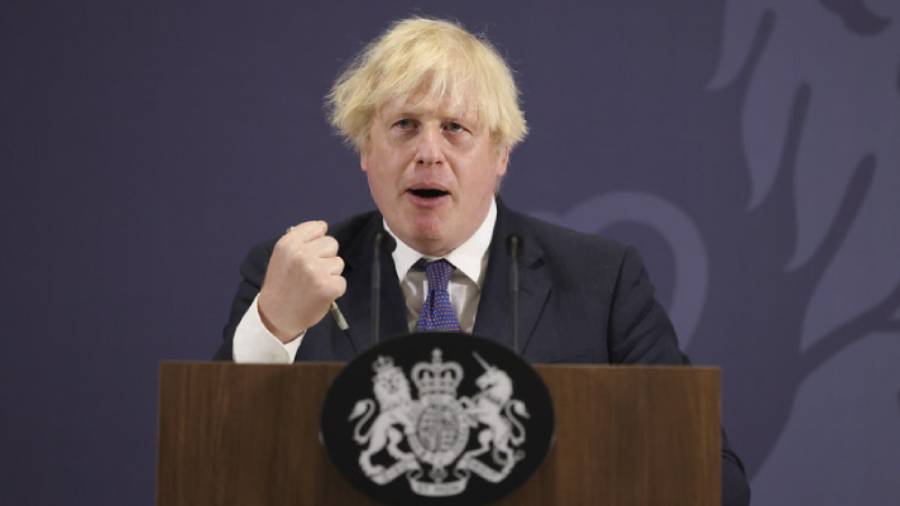
As part of their National Disability Strategy, the Government has proposed key ways of making the workplace more inclusive for staff with disabilities including trialling an Access to Work Adjustments Passport.
The Department for Work and Pensions (DWP) has today set out practical steps they are taking to improve the lives of disabled people at work.
Data found that whilst there are seven million working-age people in the UK, just over half are in work.
Additionally, answering the UK Disability Survey, over half of unemployed, disabled respondents (56 per cent) either agreed or strongly agreed that they wanted more support in finding a job.

As such, the Government have laid out various steps to help disabled people find a job as well as retain this employment.
A significant issue raised was the challenge of transitioning between jobs.
Intending to build upon its Access to Work scheme – which provides support for disabled people that is not covered by employers’ responsibility to make reasonable adjustments – it has announced that it is piloting an Access to Work Adjustments Passport.
This, it says, will improve employer understanding of disability and adjustments by giving employers a full overview of the available support through Access to Work.
Through this move, it hopes to reduce the need for repeated assessments, enable a seamless transition between jobs and set the expectation with employers that tailored specialist aids and appliances will follow the passport holder when they change jobs.
Another key strategy from the Government is setting up an advice hub, providing information for employers and disabled workers linked to disability discrimination, flexible working, employee rights linked to reasonable adjustments and fairness in redundancy situations.
Other proposals include:
- A consultation on introducing Disability Workforce Reporting for large employers
- Expanding current services such as the Individual Placement and Support (IPS) which encourages people with health conditions to move into work quickly
- Reviewing the statutory right to request flexible working and strengthening rights for disabled workers
- Introducing unpaid carer’s leave
Work and Pensions Secretary of State Thérèse Coffey said:
The result of an unprecedented endeavour across government, this national strategy will help level up opportunity and improve the everyday experience of disabled people.
It sets out the practical actions we will take now, alongside clear accountability for delivering them, as well as renewing our ambition to do even more as we build back fairer.
However, Frances O’Grady, General Secretary of the TUC, was critical of the strategy, arguing the Government has “missed the chance to act”:
Disabled people are far less likely to be in paid employment – and when they are, they are hit by a 20 per cent pay gap, which is growing year-on-year. The way to end this is to make employers report on their disability pay gaps – but ministers have failed to support this in the disability strategy.
Disabled workers have a legal right to the reasonable adjustments they need – but two-fifths of disabled workers aren’t getting them. Ministers should have taken the opportunity to strengthen the duty on employers to provide reasonable adjustments.
And ministers should get on with their long-promised plans to make flexible working the default by giving all workers a day one right to work flexibly. This could be transformative for disabled workers.
*The full findings are laid out within the Government’s National Disability Strategy, published on the 28th July 2021.

Monica Sharma is an English Literature graduate from the University of Warwick. As Editor for HRreview, her particular interests in HR include issues concerning diversity, employment law and wellbeing in the workplace. Alongside this, she has written for student publications in both England and Canada. Monica has also presented her academic work concerning the relationship between legal systems, sexual harassment and racism at a university conference at the University of Western Ontario, Canada.
- Monica Sharma

- Monica Sharma

- Monica Sharma

- Monica Sharma






