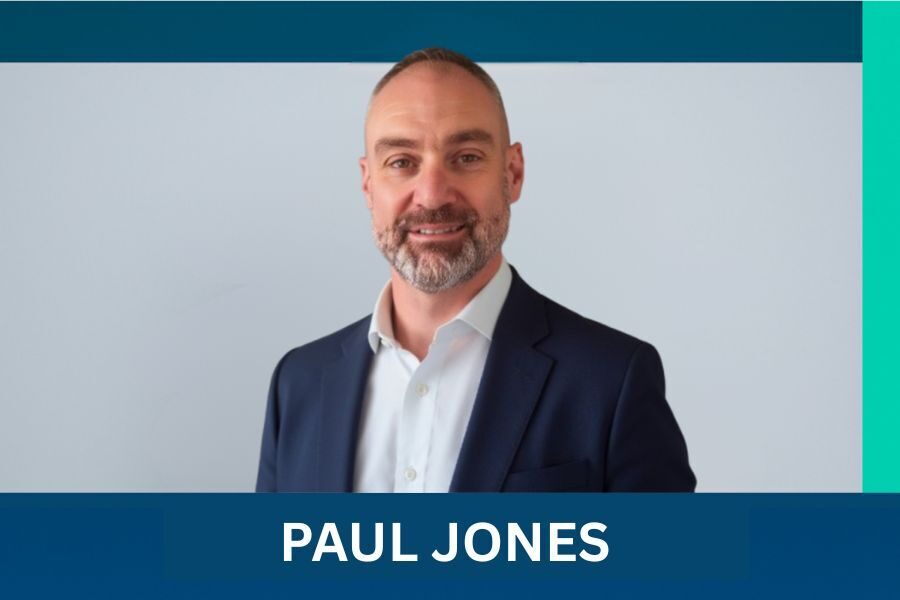
Paul Jones has spent over 20 years leading people strategy in fast-paced, high-growth companies, from fintech to health tech, building cultures that scale without losing their soul. Now interim Senior People Director at SMG, a specialist marketing group that helps brands grow in retail, Paul, 52, is applying his experience to evolve everything from flexible working and performance management to inclusion and AI readiness.
Splitting his time between Folkestone and London, Paul lives with his wife Jessica, their two children, Matias, 13, and Olivia, 10, and Diego the cat. Outside of work, he’s an advocate for internal talent development, data-driven decision-making and what he calls “real-world HR” that combines culture with commercial impact.
In this edition of The HR Profile, Paul explains how always-on employee feedback has helped drive major changes at SMG – including a new core hours policy – and why smart hybrid policies are built on trust and outcomes, not location. He also discusses the company’s strong track record on internal mobility, how its Incubation Hub is shaping tomorrow’s leaders and why People teams must embrace AI and analytics to remain strategic in the years ahead.
SMG’s implementation of always-on Voice of Employee (VoE) feedback mechanisms demonstrates a commitment to continuous employee engagement. How has this approach influenced your strategies for enhancing employee experience?
Absolutely, happy to chat about how VoE feedback has really transformed our approach at SMG. We’ve leaned heavily into creating a truly always-on feedback loop, and it’s been a game-changer. For us, keeping those lines of communication wide open with the team is paramount.

Regular pulse surveys aren’t just for checking boxes; they’re our early warning system, allowing us to course correct in real-time throughout the year and quickly spot any new or emerging themes that need our attention. It genuinely creates a space where everyone feels empowered to share their ideas; and honestly, those ideas are incredibly valuable – they directly inform where we focus our efforts to make a tangible difference.
A perfect example of how VoE has directly enhanced our employee experience is how we used insights from a recent survey to champion and implement our core hour policy alongside new email and meeting guidelines. The feedback was crystal clear: excessive meetings and a constant barrage of emails were really impacting our team’s wellbeing and overall happiness at work.
We didn’t just hear it; we dug into the data to pinpoint exactly where we could make a difference. Now, we’ve set core hours from 10am to 4:30pm, which gives everyone a more predictable schedule, fantastic flexibility and, crucially, dedicated time for deep, uninterrupted work.
We’ve also streamlined our email and meeting practices to significantly cut down on those disruptions. The results? Honestly, they’re looking fantastic. We’ve already seen a 25% drop in emails and 15% fewer meetings, and the anecdotal feedback from the team suggests a much happier, more focused workforce. We’re confident this will continue to foster a better work-life balance and keep morale high; and, of course, we’ll keep monitoring and gathering feedback to ensure it stays that way.
With the Employment Rights Bill introducing changes to flexible working requests, how are you adapting your policies to accommodate new regulations while maintaining operational efficiency?
Right, so regarding the Employment Rights Bill changes to flexible working, honestly, we haven’t had to overhaul our approach much. We’ve certainly fine-tuned our flexible working request process to align seamlessly with the new regulations; but the truth is, we already had a pretty robust and progressive hybrid working policy in place. Most people here at SMG were already adept at integrating their work with their personal lives, and it’s been working really well.
At the very heart of our hybrid work policy is a simple philosophy: we want everyone to work from wherever they’re most effective. To ensure everything runs smoothly and transparently, we’ve established clear yet flexible guidelines covering areas like meeting etiquette, calendar management and communication protocols.
We’re huge advocates for flexibility, but equally, we stress the importance of accountability. Ultimately, it’s about striking that sweet spot between individual needs and what works best for the business and our clients. And naturally, we’re very focused on ensuring our hybrid setup fosters a sense of inclusion and fairness for everyone. We do encourage teams to come together in person a couple of days a week. This face-to-face time is invaluable for collaboration, often boosts efficiency for certain tasks and, let’s be honest, most of our teams genuinely enjoy connecting in person.
Building on that, we recently introduced core hours, which has really amplified the flexibility our team has in getting their work done. It’s all about fostering an environment where everyone has the autonomy to determine how, when, and where they work most effectively.
This really boils down to strong communication and mutual trust. We’re keen to empower everyone to make the best decisions for themselves. Essentially, we trust our team to manage their week efficiently and work in a way that maximises their effectiveness, always keeping role requirements and crucial client needs in mind. It’s a collaborative effort between our employees and their managers to figure out the optimal rhythm for each team and individual.
At SMG you integrate employee feedback with customer experience data. How does this integration inform your HR strategies and decision-making processes?’
It’s invaluable for us to review our employee’s feedback alongside the experience from our customers. This dual lens enables us to validate our internal insights and ensure our people initiatives are perfectly aligned not just with our internal priorities but, critically, with the needs of our customers.
What we’ve found is that the customer experience feedback consistently reinforces what we’re seeing internally, often validating our strategic focus areas like training and development for our teams. It’s more than just “another data point”; it’s a powerful affirmation that we’re truly on the right track with our people plans.
This integration ensures we’re investing in initiatives that will have the greatest synergistic impact for both SMG as a business and, most importantly, for our customers. We’re not just checking boxes against internal company goals. We’re actively ensuring our people strategies directly contribute to delivering what our customers truly want and need, closing that crucial loop between employee satisfaction and external success.
At the very heart of our hybrid work policy is a simple philosophy: we want everyone to work from wherever they’re most effective.
How do you support managers in developing the people skills needed to lead effectively, especially in a data-driven and fast-changing work environment?
We’re really passionate about helping our managers become amazing leaders here at SMG, especially in today’s fast-paced, data-driven world. Our philosophy is all about giving them the right tools, solid frameworks and a strong support system to continuously grow.
We’ve got a few key ways we help our managers build their leadership muscle. We offer structured training for all new managers as part of their onboarding process and this is supplemented by our Manager Academy, which provides all managers training on leadership skills and management strategies twice a year.
In addition to the academy, we also run Quarterly Manager Roadshows for all managers, which are interactive sessions where we tackle current challenges and hot topics. It’s a great way for them to learn from each other and brush up on specific skills. For more targeted or industry specific learning we also offer Training Bites —these are short, targeted sessions perfect for addressing immediate needs or new opportunities that pop up.
Less structured and self-paced learning is also available to our managers through our Learning HUB which is a treasure trove of training materials and courses and includes a dedicated manager channel that they can access whenever it suits them. And for those who want to explore beyond our internal offerings, our LearningFund provides financial support for external courses or qualifications that align with their career goals or development needs. These offerings are all about encouraging self-directed learning.
For our most senior folks, we run a Biannual Senior Leadership Development Program. This one’s all about strategic leadership, advanced techniques and big-picture organisational development.
Our People Experience team also play a huge role here. They offer one-on-one support, guidance, and mentorship, helping managers navigate their roles day-to-day. Ultimately, we believe in a well-rounded approach to ensure our managers have everything they need to lead effectively and contribute to SMG’s success.
In the context of hybrid work models, what measures have you taken to ensure team cohesion and maintain company culture across dispersed teams?
Maintaining strong team cohesion and a vibrant company culture, especially within our hybrid work model where teams are often dispersed, is absolutely paramount for us at SMG. We’ve put a lot of intentional effort into initiatives that foster connection and ensure everyone feels truly part of the SMG family.
Here’s a snapshot of what we’re doing:
Facilitating In-Person Connection. We provide dedicated team building budgets, empowering individual teams to organise their own activities and deepen relationships. While we encourage flexibility, most teams do come into the office a couple of days a week, recognising the undeniable value of face-to-face interaction for collaboration and bonding. Additionally, we hold quarterly team offsite meetings, offering a dedicated space to step away from daily tasks and focus purely on team building and strategic alignment.
Company-Wide Celebrations. Twice a year, we bring everyone together for large-scale, all-company social events. Our Big Huddle in the summer and our festive holiday events are fantastic opportunities for cross-functional mingling and strengthening our collective identity.
Nurturing Shared Values & Community. We actively support our Employee Resource Groups in their activities and celebrations, promoting diversity and inclusion. We also strongly encourage participation in our Corporate Social Responsibility initiatives, like the Peak Challenge and SMGreen volunteering opportunities, which build camaraderie around shared purpose.
Robust Communication Channels. We prioritise transparent and consistent communication through monthly AGMs and frequent newsletters, keeping everyone informed and connected to the broader business.
Digital Community Hubs. We recently launched Google Spaces, which serves as a more casual, vibrant community channel. It’s a fantastic informal space for colleagues to chat, share interests, and connect outside of formal work topics, really keeping that sense of community alive regardless of physical location.
It’s about creating a great mix of opportunities – both structured and informal channels, in-person and virtual – to ensure that sense of belonging thrives, no matter where our employees are working from.
In light of the evolving perspectives on diversity, equity and inclusion (DEI), with some organisations reconsidering their approaches, how are you ensuring that diversity and inclusion remain integral to your recruitment and promotion strategies, while also addressing concerns about effectiveness and potential backlash?
It’s true that the conversation around DEI is evolving externally, and some organisations might be reconsidering their approaches. But for us at SMG, DEI remains an absolutely fundamental and unwavering priority. We are not backing down or being swayed by external noise; in fact, we’re doubling down on our commitment to investing in our people and fostering a truly inclusive environment for both our current and future employees.
When it comes to our recruitment and promotion strategies, DEI is deeply embedded in our process. We are absolutely committed to ensuring fairness and providing equitable opportunities for everyone. Here are some of the ways that we make this happen. We focus on Mitigating Bias. Managers have access to unconscious bias training that aims to raise awareness and equip them with tools to make fairer decisions; this will be made mandatory for all interviewers later this year. We ensure objective screening by utilising anonymous CVs at the initial screening stage, which helps us focus purely on skills and experience, eliminating potential bias from names or backgrounds. And we have standardised the evaluation process by introducing structured hiring scorecards throughout the entire recruitment process. This ensures consistency, objectivity and fairness in evaluating candidates.
Our commitment extends beyond just processes. We’re deeply invested in ensuring SMG is a place where everyone feels a profound sense of belonging, is celebrated for their unique contributions and can truly thrive. Our long-standing EDI group, composed of passionate individuals from across the company, is absolutely central to driving these initiatives and ensuring they resonate authentically.
We firmly believe that diverse teams aren’t just “better” – they’re demonstrably more innovative, resilient and perform at a higher level. It’s not just the right thing to do ethically; it’s a strategic imperative that’s good for our business outcomes. While we acknowledge there’s always room for growth, we’re consistently striving to improve and implement changes that are truly sustainable and impactful.
DEI remains an absolutely fundamental and unwavering priority. We are not backing down or being swayed by external noise; in fact, we’re doubling down on our commitment.
SMG’s People Team emphasises attracting, retaining and developing talent. What specific initiatives have proven most effective in achieving these goals?
Our People Team’s core focus revolves around a continuous cycle of attracting, retaining and developing top talent. While we have a range of initiatives, one strategy that has consistently proven exceptionally effective, particularly in developing our people, is our strong emphasis on internal mobility.
We truly believe in the immense value of giving our colleagues the opportunity to learn and develop on the job by moving across different roles, teams and even departments. These kinds of opportunities aren’t just about career progression. They significantly accelerate individual growth, deepen understanding of our broader business operations and help people cultivate a much wider and more diverse skill set.
Given that we’re a fast-growing company operating within a dynamic industry, there’s a constant influx of new learning opportunities, evolving roles and chances for professional development. We actively track and encourage internal mobility, and the results speak for themselves: over the last year, a remarkable 24% of our employees were either promoted or moved into new roles internally. This figure really highlights how effective this approach is in fostering career growth and retaining our valuable talent.
With the rise of AI and automation, how is SMG preparing its workforce for the future in terms of skills development and training?
With the rapid rise of AI and automation, we’re not just observing the trends at SMG; we’re proactively jumping in headfirst and fully embracing the incredible opportunities it presents. Our strategy is centered on preparing our workforce to leverage these powerful tools, not to be replaced by them.
We’re in the midst of a full-scale rollout of AI tools and comprehensive training across the entire business. Our core philosophy is to cultivate a culture of curiosity, encouraging every team member to explore how these tools can be integrated into their daily roles to genuinely reimagine what’s possible.
To facilitate this, we’re ensuring all team members receive foundational training on the new AI tools. Crucially, our dedicated Incubation Hub has been doing an outstanding job. They’re not just providing access. They’re actively curating and sharing best practices, showcasing compelling internal case studies, clearly explaining the risks and benefits of AI usage and generally fostering an environment where everyone feels comfortable experimenting and playing around with these innovations. This hands-on, supportive approach is key to building both capability and confidence across our workforce as we navigate this exciting future.
AI has already proven to be an incredibly valuable asset … We’re spending considerably less time on administrative or repetitive tasks.
In light of the current economic climate, how are you approaching compensation and benefits to remain competitive and fair?
We absolutely understand how crucial it is to keep our compensation and benefits competitive and, equally important, fair, especially navigating today’s dynamic economic landscape. It’s fundamental to both attracting top-tier talent and ensuring our current team remains happy, motivated and committed.
So how do we approach this? Our process is rigorous and transparent. Annually, we conduct a deep dive into external benchmark data, reviewing market data across all our roles — considering both local and national market trends. We pay close attention to organisations of similar size and industry and, critically, to the specific talent markets where we compete. This process allows us to construct fair, competitive and internally published salary ranges, ensuring full transparency across the business. We believe in being completely open about our pay philosophy.
But base pay is only one piece of the puzzle. We continuously review our benefits and pension plans, ensuring they’re not just current but also genuinely impactful. Our goal is to offer a robust and flexible benefits package that truly supports our team’s diverse needs. T
his includes vital components like healthcare, pension, continuous learning and development opportunities, comprehensive wellness programs and other perks. We empower our employees to choose the benefits that best align with their personal circumstances and priorities, ensuring a holistic approach to their wellbeing.
What role does technology play in SMG’s HR operations, and how are you leveraging it to enhance the employee experience?
Technology is no longer just a supporting tool; it’s absolutely foundational to our People Operations at SMG. The deployment of Humaans, our new Human Resources Information System (HRIS), has transformed our team’s work. It has significantly simplified our complex processes, achieving an efficiency we previously considered unattainable.
Data accuracy has improved greatly, with strong system controls that give us full confidence in our records. Additionally, our reporting capabilities have seen a dramatic improvement. We can now generate insightful and comprehensive reports with ease, enabling data-driven decision-making at all levels.
Beyond our HRIS, AI has already proven to be an incredibly valuable asset, particularly for our People team. AI has been instrumental in accelerating our research efforts, allowing us to gather and analyse information at remarkable speed. It also helps us in the creation of various documents, freeing up tonnes of time that would otherwise be consumed by writing and formatting.
The immediate benefit? We’re spending considerably less time on administrative or repetitive tasks. This shift allows us to redirect our focus to what truly matters: engaging directly with the business, building stronger relationships with our colleagues and proactively addressing their needs.
How are you responding to growing employee demand for personalised career paths and greater autonomy in shaping their development?
We’re definitely seeing employees want more personalised career paths and more control over their growth. So a few things we’ve done: we recently launched competency frameworks and they’ve been really helpful. They give all the teams a clear picture of what’s expected but they also give both managers and employees a sort of “blueprint” to help with their development.
Internal mobility’s another big one for us. It gives people a chance to explore different things and have more of a “zig zag” career path instead of a straight line. We’ve always been good at giving people chances to try new things in different teams and even different offices.
A unique initiative we have is our Incubation Hub. The creation of this team allows individuals to temporarily become part of a core team, collaborating on major, innovative projects that often shape the future of our business.
And finally, how do you see HR evolving over the next five years?
People teams are in for some interesting changes over the next few years, and it’s going to look pretty different from what we’re used to. Think of it like this: technology, especially AI, is going to be a huge game-changer. Those repetitive tasks People teams spend ages on – things like sifting through resumes, writing policy and process documents, handling basic HR queries or even building learning content – will largely be supported and enhanced by the introduction of AI.
This isn’t about replacing people, it’s about freeing up our team’s time to focus on the really important stuff, like digging into data to build insights like predicting who might leave, and generally making smarter, data-driven decisions and using these to implement people initiatives that support our business goals.
Companies now recognise that employee well-being is paramount. Compensation alone is insufficient. Prioritising mental health, financial security, career progression and work-life balance has become essential for fostering a positive employee experience.
A huge part of this will be focusing on developing talent — thinking about what skills are needed for the future and how to help employees learn those. So expect more emphasis on continuous learning and making sure people have the opportunity to grow. They’ll also be leading the charge on change management, helping everyone navigate all the new tech and shifts in how we work.
Despite some recent changes in the narrative externally around DEI, People functions will continue to play a crucial role in shaping a really positive and inclusive company culture, making sure everyone feels safe and valued.
Remote and hybrid work are here to stay for forward-looking businesses, making People teams essential in developing connection and engagement across all locations. The focus will shift from where employees work to optimising how they work effectively within a progressive, agile and hybrid environment.
Finally, I envision top-performing people functions as having evolved from administrative or tactical roles to become strategic and transformational partners. The struggle for executive-level influence will be resolved, with People Leaders integral to defining the company’s overarching strategy. Some teams are already doing this but it will be great to see others catch up.

William Furney is a Managing Editor at Black and White Trading Ltd based in Kingston upon Hull, UK. He is a prolific author and contributor at Workplace Wellbeing Professional, with over 127 published posts covering HR, employee engagement, and workplace wellbeing topics. His writing focuses on contemporary employment issues including pension schemes, employee health, financial struggles affecting workers, and broader workplace trends.
- William Furney

- William Furney

- William Furney

- William Furney