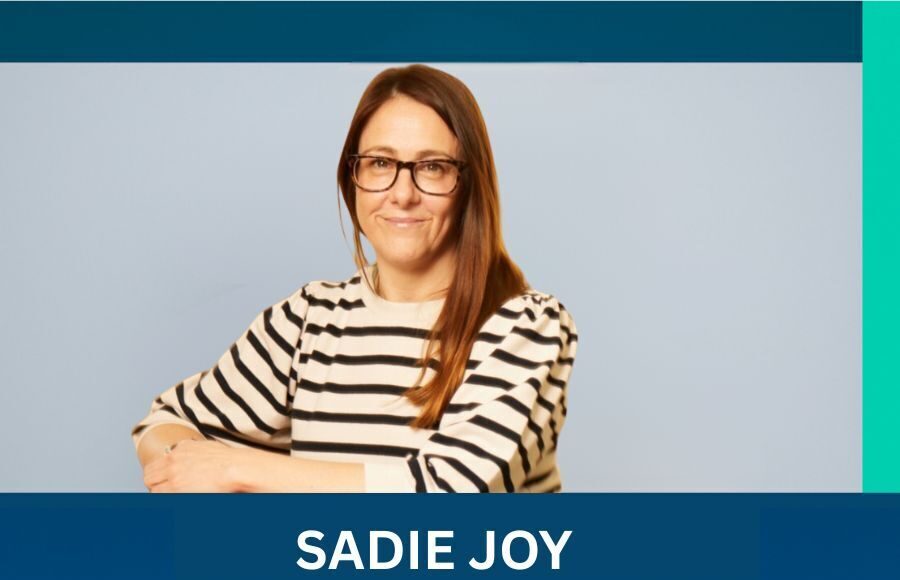
As global people director at Billion Dollar Boy (BDB), a global influencer marketing agency with offices in London and New York, Sadie Joy leads the agency’s people strategy across the UK and US at a time of rapid growth and global expansion. With more than 20 years’ experience in creative and marketing agencies including Ogilvy, MullenLowe and Splash, she has built a career on shaping inclusive, high-performing workplaces that blend creativity with compassion. Her remit at BDB is to bring consistency and fairness to the company’s leadership, pay and development practices while championing wellbeing and belonging across a dispersed, international workforce.
A member of the agency’s Global Leadership Team, Joy, a 51-year-old mother of a teenage girl, has helped BDB navigate the challenges of growth across continents while maintaining its collaborative culture. Under her direction, the business has introduced transparent pay frameworks, strengthened diversity and inclusion initiatives and created development opportunities designed to give every employee a voice. Her approach combines structure with humanity, ensuring that systems serve people, not the other way around.
Joy’s leadership reflects a wider shift in HR thinking across the creative industries, where flexibility, fairness and authenticity have become central to attracting and retaining talent. From wellbeing initiatives like “For You Fridays” to the launch of BDB’s Future Leaders Board, her focus is on making work sustainable, inclusive and forward-looking. In this HR Profile, she discusses pay transparency, generational differences, DEI in practice and how HR can continue to evolve in a fast-changing, creative world.
Billion Dollar Boy has grown rapidly in recent years and now operates across the UK and US. What are the biggest HR challenges in maintaining culture and cohesion across two continents, and how have you addressed them?
One of the biggest challenges has been helping people feel like one team when we’re spread across different time zones and at different stages of maturity as a business. There are also cultural nuances that naturally come into play.

To address that, we’ve built global people processes that bring consistency across both regions – things like pay, onboarding, performance reviews, all agency meetings and company updates and development frameworks. We celebrate DEI moments together and run education sessions to promote inclusion. We’re also encouraging more cross-office collaboration and currently exploring ways to facilitate more visits between offices. Tools like HiBob and Slack have been really important to help us stay connected day to day.
You’ve introduced a transparent pay and progression framework linked to business performance and values. What prompted this move, and what impact has it had on employee engagement and retention?
Employees value transparency, especially our younger generations, when it comes to pay. They want to understand their earning potential, how progression work and why someone might earn more than someone else. With the rising cost of living, people are thinking more about financial planning, and we saw an increase in pay rise requests both in frequency and volume. People didn’t want to wait for an annual cycle to be considered for a raise or a promotion.
We’re still developing the framework and constantly review processes, but we’ve made a lot of progress. Salary bands are now transparent, and we’ve clearly outlined when salaries and promotions are reviewed, and how decisions are made, taking into account role level, performance, equity and overall business performance.
The benefits have been really noticeable: fewer off-cycle requests and more structured, fair conversations around progression. It also gives us a clearer lens to assess gender and ethnicity pay gaps and make sure we’re being equitable.
BDB was recently recognised with a People First Promise award by the Institute of Practitioners in Advertising (IPA). What specific initiatives helped earn this recognition, and how do you plan to build on it?
We presented a number of initiatives in our IPA submission, so it’s great they’ve been recognised. Two initiatives that stood out to the IPA were our DEI sessions that put employee voices front and centre. We host panel discussions where people share their lived experiences, which helps create genuine empathy and understanding. We also introduced a “low battery” Slack emoji status, which allowed people to easily signal when they’re not feeling 100%, whatever the reason.
Next, we’re focusing on providing more in-depth mental health training for our managers so they feel empowered and better equipped to support their teams.
I’d love to see AI evolve to help managers identify mental health concerns, especially in a hybrid world.
The marketing and creative sectors are known for demanding workloads and tight deadlines. How do you support employee wellbeing in this kind of environment, and has your approach changed post-pandemic?
Wellbeing has always been important in HR, but because we’ve normalised talking about mental health, it’s definitely more visible now.
One of the biggest positives to come out of Covid was hybrid working, and we’ve kept that. We’ve also introduced flexible start times and flexible in-office days. Our Gen Z employees, in particular, are brilliant at setting boundaries, which has helped to shift expectations on workload management more broadly.
One initiative I really love is For You Fridays, which are shortened working hours on Friday. Initially an employee-led initiative, we rolled it out in pilot in previous summers, but have now committed to extending the initiative all year round. It’s a small gesture that makes a big difference in helping people take the time they need.
With multiple generations now in the workplace, how do you tailor your people policies to meet differing expectations around flexibility and communication?
Different generations definitely want different things, but I think most people, regardless of age, want clarity, fairness and respect. That’s why we take a personalised approach wherever possible.
Flexibility is key; people want to work in ways that suit them. Some people value face-to-face conversations, while others prefer using Slack. So we offer a mix.
We try to connect the dots between the two approaches, though, and this year we introduced All Agency Days, to bring everyone into the office together to meet in-person. We’ve also started a monthly comms round-up after realising that even when we repeat messages, some still get missed. It’s all about making sure no one’s left out of the loop.
Tools like C Me also help teams better understand one another’s communication and work styles.
You’ve co-created new company values with your team. Why was that process important, and how do you ensure those values are lived day to day, rather than just appearing on posters or handbooks?
It’s been a journey. Our CEO, Ed East, initiated the process with a project that asked people to identify what they thought was wrong with the industry and what they’d like to see changed. That led to the development of our “future behaviours”, which focused on making a positive impact and addressing some of the less desirable aspects of our industry.
From there, we invited people to suggest and lead initiatives to bring those behaviours to life — For You Fridays is a great example. Over time, these evolved into our company values.
For example, one of our values is Work for Tomorrow, which influences how we approach sustainability in client campaigns and internal operations. They’re designed to shape our direction, and evolve through feedback from the employees who are actively applying these values.
Your Future Leaders Board aims to bring diverse perspectives into strategic decision-making. What have you learned from that so far, and how has it influenced leadership thinking at BDB?
The Future Leaders Board was created to bring fresh, diverse voices into leadership conversations and help us challenge the status quo. The group meets bi-monthly to discuss key topics, attend local leadership meetings and hold senior teams accountable.
Each member also takes part in reverse mentoring with someone from our Global Leadership Team, which has sparked some honest, eye-opening conversations and pushed our leaders to rethink certain approaches.
We’ve already seen a real impact: from improving internal comms and onboarding to creating more space for inclusive leadership thinking. It’s also a development opportunity for the board members themselves, with rotating leadership roles, tailored training and chances to represent Billion Dollar Boy externally.
Ultimately, it’s helping us build a more inclusive culture and improve decision-making by making sure more voices are truly part of the room.
With Gen Z becoming the dominant generation in the workforce, there’ll be a growing demand for transparency, inclusivity and agility.
Pay transparency, fairness and equity are increasingly demanded by employees. What advice would you give to other HR leaders thinking about implementing similar frameworks in their organisations?
Make it as clear as possible. Your pay bands and decision-making processes must be solid and transparent. People want to understand why they’re paid what they’re paid.
We’ve recently introduced a banding structure with levels that make it easy for people to see where they sit and what they need to do to move up. Pay is tied to role levels, individual performance and business results.
It’s not always an easy process, but being upfront builds much more trust than leaving people in the dark. Keep it simple, fair and transparent.
With the influencer marketing industry evolving fast, how do you ensure your HR policies keep up with the pace of change while remaining relevant and inclusive?
I’ve learned people want clarity on ways of working. Not to be told what to do, but to have clarity around how things work. It saves people from having to guess or ask every time.
We try to make our policies relevant, up to date and written in plain language, so they’re easy to understand and genuinely useful. They’re shaped by feedback, and we aim to make them empowering rather than restrictive.
What role is technology, including AI, playing in your HR function, whether in recruitment, employee experience or performance insights?
I’m a big fan of AI. It’s already helping us work faster and smarter. We use HiBob as our HR platform, and they’ve started rolling out AI features that help spot patterns and insights from our data, so it definitely saves time.
It’s still early days, but I think AI will support better conversations, not replace them. I’d love to see it evolve to help managers identify mental health concerns, especially in a hybrid world where we don’t always have in-person cues.
As social and environmental responsibility becomes a bigger focus for brands, how are you embedding Environmental, Social and Governance (ESG) principles into your people strategy at BDB?
We have a passionate cross-functional ESG group spearheaded by an employee-led sustainability board that helps guide decisions around things like sustainable suppliers and how we manage our office space. We also have working groups for DEI, mental health and social impact.
Billion Dollar Boy has worked with global clients such as Nike, Unilever and PepsiCo. What have you learned from partnering with these organisations that has shaped your internal people practices?
These clients hold us to high standards, especially around things like diversity and sustainability. It pushes us to do better internally as well.
We’re always looking at what these big brands are doing. They’re often leading the way, and while we may adapt their ideas to suit our size and culture, there’s always something to learn.
And finally, how do you see HR evolving over the next five years?
AI will take on a lot of the admin burden, freeing up HR teams to be more strategic. I also see it enabling more personalised experiences like tailored learning paths or wellbeing support.
To keep up, HR professionals will need to strengthen skills in data literacy, strategic influence and business acumen, not just empathy and people skills.
With Gen Z becoming the dominant generation in the workforce, there’ll be a growing demand for transparency, inclusivity and agility. I think careers will become more “squiggly” and less linear. HR will play an even bigger role as the moral compass of fast-moving businesses, balancing innovation with responsibility.

William Furney is a Managing Editor at Black and White Trading Ltd based in Kingston upon Hull, UK. He is a prolific author and contributor at Workplace Wellbeing Professional, with over 127 published posts covering HR, employee engagement, and workplace wellbeing topics. His writing focuses on contemporary employment issues including pension schemes, employee health, financial struggles affecting workers, and broader workplace trends.
- William Furney

- William Furney

- William Furney

- William Furney