

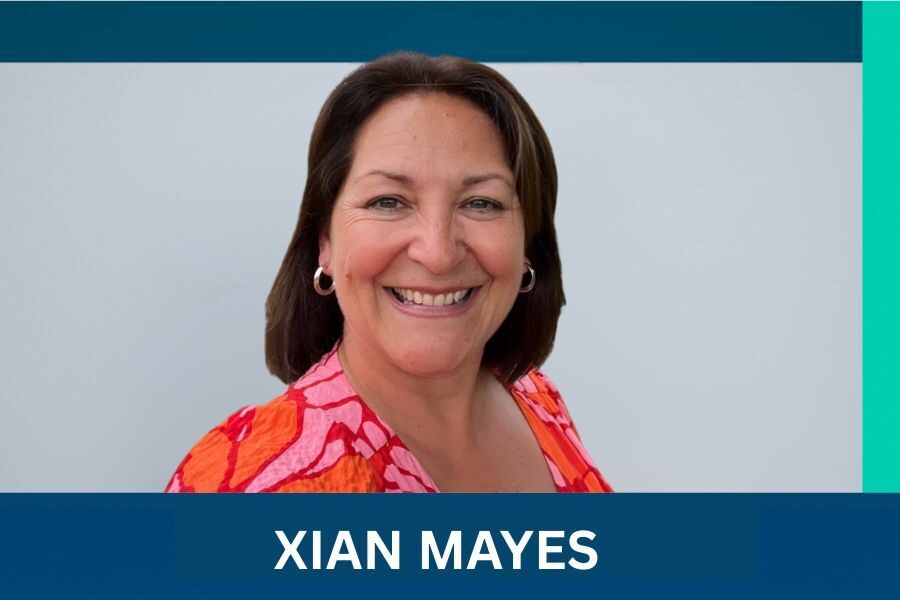
When Xian Mayes became Chief of People at Advantage Travel Partnership, the UK’s largest independent travel agency group, she brought with her decades of experience spanning hospitality, HR consultancy and senior leadership roles across multiple sectors. Joining the business in 2022 as it rebuilt after the pandemic, she has been central to shaping a people strategy that supports growth while staying true to the organisation’s people-first ethos.
Her career began in hospitality before moving into training and HR with brewer Scottish and Newcastle, followed by leadership roles in facilities, water, health and food manufacturing. After seven years as an independent consultant, she returned to in-house leadership to steer Advantage through rapid expansion and cultural renewal.
Now 52 and based near Bedford, Xian is focused on balancing agility with stability in a volatile sector, ensuring resilience is embedded in teams while protecting wellbeing. Named one of the Chartered Institute of Personnel and Development’s (CIPD) 30 most influential senior HR professionals, she also contributes to the All-Party Parliamentary Group on Modernising Employment. In this HR Profile, Xian reflects on remote-first culture, shaping inclusive practices and building a future-ready workforce in an industry defined by change.
You joined Advantage in 2022 to develop a future-proof people strategy. What were the most important changes needed to align that strategy with the company’s long-term growth ambitions?
This is an evolving business, and trying to predict the shape of the people strategy has a multitude of dimensions. I love how the business has grown in the last two years but also maintained the people-first culture. Building the foundations was the primary focus and with that came the huge increase in headcount to help build on the success of the business, plus all the awesome work our members were doing, and still are.

With quick growth highlights how we define and nurture the culture – with over 50% of our people being new to us, this gave a brilliant opportunity to mesh the history and knowledge already here with new skills gained from a variety of other businesses, and industries, as we don’t limit people joining only from the travel-sector.
Learning from all these facets is critical to developing the teams to support the growth plan. There’s no future-proof people strategy but accepting that it needs to bend and shape and be as agile as possible is how we will develop and, more importantly, grow.
The travel industry is known for volatility, from pandemics to geopolitical shifts. How do you build resilience into your people strategy to help staff navigate uncertainty without burning out?
Working within the travel sector has shown me people’s ability to respond to near enough any crisis. I am in awe of their flexibility, having not worked in the travel sector before, and how everyone responds with such professionalism.
Change is not always comfortable for people, but here it’s almost the norm, which is testament to the resilience our people show, day in and day out. Empowering the divisional leads to ensure their teams are equipped with the right tools and mindset to grow, learn and fail-fast and respond is no easy task, yet it feels like second nature to a lot of the management team.
Covid ripped apart a lot of travel businesses, but many have fought back and are now bigger, better and stronger than ever before. A growth mindset allows the “why” to be continually asked, and to see learning as a positive and not a boring development area. People don’t know what they don’t know, so asking “why” is absolutely the right culture for our business. And as leaders, we embrace and support the challenge.
Advantage has embraced a remote-first working model. What’s been key to maintaining a strong team culture and sense of connection when people are widely dispersed?
This isn’t an easy road, but the CEO and I are determined to make it work through employing and retaining the best people for the job, no matter where they live.
Collectively across the business, we reviewed our goals and decided to launch a refreshed mission, vision and values at our first People Conference in January 2025. Our people resonated with the values, and it wasn’t a completely new thing coming in but collating a set of values about how we work and interact with each other, and how we feel. I loved it.
I’m never complacent when it comes to assuming the same messages are received across a fully remote business, and I seek feedback from everyone and constantly revisit how we can reconnect, work together and meet up. But it needs to be purposeful. I understand that remote working is not for everyone, but with the excellent tech advancements, and ability to communicate with the team members wherever they’re based, we are working collaboratively to ensure we are listening to everyone’s needs and finding solutions for any issues.
There are so many ways to encourage our people to work today, whether it’s utilising the volunteering day to do some good in people’s local area, getting together at member and industry events or simply catching up at a virtual coffee break on-line.
My team have put together a heatmap of whereabouts in the UK everyone is, and we encourage people to work from anywhere and make use of the Reef app to grab a couple of hours working together and getting a free coffee with it.
I feel for small businesses who don’t have the knowledge and capacity to absorb the potential changes of the Employment Rights Bill.
You were named one of the CIPD’s 30 most influential and inspiring senior HR professionals. How do you measure meaningful impact in your role, and ensure that HR initiatives go beyond good intentions to deliver lasting, measurable change?
Working with the senior team to ensure success through their teams is critical. In just three years we have doubled in size, and that brings its own challenges. I have worked with the senior leaders to develop their roles to make it their own as well as bringing out the teams and identifying what success looks like. This is where the magic happens.
There are plenty of metrics to measure success, but this is more about how moving forward with everyone facing the same direction and aligning with our strategic plan. It sounds so obvious, but there’s no point delivering on initiatives if the outcome doesn’t bear fruit. I’ve always been the support function to the operational teams, which means me and my team help them to make the business successful.
I enjoy implementing change that isn’t a big bang, but more about sliding in what people need to complete their role better, faster, with less bureaucracy, but without with scary parts.
You’re also active in the All-Party Parliamentary Group on Modernising Employment. With the Employment Rights Bill on the horizon, what reforms do you think employers should take the lead on themselves, rather than waiting for legislation to force change?
With so much uncertainty on what the bill may or may not bring, employers need to ensure their practises are fair and consistent as well as robust, and the most important element is to ensure the people managers in the business understand their responsibilities.
I feel for small businesses who don’t have the knowledge and capacity to absorb the potential changes and then have to revisit when the proposals change. This has been hyped up, and the stories that come out are just not helpful. None of this helps businesses. Those that do not have the luxury of an HR department will be expected to pay to translate the legislation into a useful language.
My biggest bugbear is the ambiguity when new legislation takes effect. The terms used, like “reasonable” and “mainly”, are never quantified until it becomes case law, which is the inverse way to manage such processes. Using bodies like ACAS and the CIPD is the best way for businesses to keep up to date with this as they always use clear language, and ACAS especially can provide free or cost-effective training.
The APPG for Modernising Employment has really given me an insight of how we can really make a change in making Britain a great place to work, by understanding the frustrations of what stands in the way of recruiting the people needed to fill the resourcing issues every business has due to the delay in vetting and referencing. Thankfully, even when we have a government change, this party continues with the great work and sharing best practises and inviting comments from a huge range of employers.
With DEI initiatives under scrutiny in some sectors, how are you ensuring Advantage’s work on inclusion — particularly around gender and physical ability — remains authentic and future-proof?
As a fully remote business, we no longer have the restrictions for people to have to travel into central London, which means we encourage applications from people who may have a physical restriction or a neurodiverse condition which can affect being in an office environment all week.
This is about allowing people to be their authentic self, and we encourage the conversation on how best to support them with flexible hours, working from anywhere and managing their work diary so we get the best from them.
And as we are all home-based, our sickness stats are generally quite low. This is mainly due to people saying that they’re not feeling 100% but as they’re working from home, feel able to log in. Whereas if they were travelling into the office, it would normally mean they would call in sick. But if someone is ill, they take the time off and recuperate.
We have a good gender mix across our senior team, and are actually female-heavy across the business as a whole. We’re not reducing our DEI activity at any time soon, as it’s important to not build a team with the same people but to have differing views to ensure inclusivity not just for our business and future, but for our members, stakeholders and suppliers.
The APPG for Modernising Employment has really given me an insight of how we can really make a change in making Britain a great place to work.
You’ve implemented a mobile-first HR platform to support your people strategy. What’s changed in how employees engage with their benefits, learning and performance tools?
Having everything to do with people on a mobile-ready platform is 100% the way to go. If the platform I’m looking to implement isn’t mobile-optimized, then it’s not joining us. People have access to benefits, to understand their pay, holiday requests, discounts and recognition, and can access it when it suits them.
To be able to celebrate the milestones of the people in your team and congratulate without having to start up the laptop and log in, all of this is now normal, and it all needs to be able to work, and ideally link together to make it simple. I’m thrilled when people comment on how the benefits I’ve put into place can impact them, always looking for how we can improve on these and drive better engagement, and sharing what works best for everyone.
As the travel sector continues to evolve, how are you rethinking attraction and retention strategies to appeal to the next generation of talent?
Attracting and retaining people within travel is a huge concern at the moment. You can no longer take a degree in travel and tourism, which has impacted how we draw in the next generation of people. Utilising the Apprenticeship Levy has been a real focus for me, and I’m thrilled that we have six people currently on a programme, ranging from a marketing through to the ILM level 7 in leadership.
But the challenge we have is making the younger generation see that travel is a profession that you can enjoy an amazing career with, and not as a low-paid, low-level job. This again comes back to working with the APPG, to identify how best to modernise employment in the UK, and reform working practises, so travel is not seen as mainly female-led and “just a job”, but as a career.
There needs to be more of a focus on qualifications in the travel sector to upskill our people. Once you enter the travel industry, your career can take you from sales to marketing, to finance, HR, commercial and beyond. And the people are amazing, extremely knowledgeable and point you in the right direction for the best deals and places to visit.
Performance management is shifting across many industries. How are you adapting traditional approaches to suit a workforce with diverse roles and varying performance metrics?
After putting Employment Hero — our human resources information system (HRIS) — into the business over a year ago, we upgraded to the premium version pretty soon after implementation to enable the Objectives and Key Results module, which has been a key focus for the last eight months or so.
Previously the business would focus on KPIs, which were individual and didn’t always align with the rest of the team or division. By taking a step back and reviewing what the ultimate vision was for us, everything we now do has to feed into this goal. And the system makes it really clear for us to report on, to review progress and to adapt and change when we need to.
HR will need to think leaner and have the ability to respond to the changes coming down the line quicker than the business leaders.
Reward and recognition are more important than ever in keeping people motivated. What approaches have worked best for you, especially in a climate where budgets are under pressure?
Recognition is so important, and now we have our SPIRIT — self-centric, purpose, integrity, reward & recognition, innovate and teamwork — values to ensure we follow these principles and call out when this is done well. Again, our HRIS really helps to shout out the brilliant people when a job is done well and enables us to have an annual awards evening to celebrate success.
When looking at how best to remunerate people, I work hard to understand the best and most efficient way to make everyone’s money go further. The increase of employer’s NIC has hit us hard, and I know we are not alone. Whether it’s implementing salary sacrifice schemes like the Cycle to Work or electric car schemes, helping pay for gym membership and spreading the cost over a year or giving people options to suit their lifestyle, like whether private medical insurance is better than dental insurance for them currently.
Focussing on people’s wellbeing and mental health is becoming more and more important, so ensuring the employee assistance programmes we have is more than just a phone line, that it has suitable resources for everything — yoga classes online, help with managing your finances, good ideas for meal planning as well as mindfulness and someone to contact when you need that next level of support.
Even moving to a new pension provider has given a lot of people a new perspective on saving for the future, as the platform is on an app and helps people to understand the investment we are making for their future — pension contributions are the second largest cost after salaries, so it needs to be the right one. In our regular employee satisfaction surveys, we are always asking for more ideas on how to reward our people, and what’s important to them, so I don’t just listen; we react.
You work with a network of independent businesses as well as internal teams. How do you create consistency in values, communication and people experience across such a varied group?
Talking about the core values we launched only in January of this year still excites me. We also launched our brand values at our main conference in May this year, and these resonated with all our key stakeholders, from members to suppliers, and beyond. This wasn’t a matter of picking a few buzz words and slapping them on a noticeboard, these are how we operate, our DNA if you like, and none of these were deemed unusual or not a true reflection of who we are.
Our members align very closely to how we operate and therefore share some of our DNA by facing in the same direction and being open and honest in our relationship.
And finally, how do you see HR evolving over the next five years?
The changes business will have to go through over the next year to 18 months will have a huge impact on growth. The resilience of the HR profession will be tested as we navigate the changes in legislation and, in my opinion, restrict the entrepreneurial nature of some business owners.
AI will also have a major impact on how we respond to trends in the working landscape. Businesses are looking for AI to help with automating tasks, but this can also lead to a skills gap when junior employees or entry level job roles no longer buddy-up with a colleague to learn the job role and therefore don’t have the fundamental skills to develop further.
This will be a challenge, but by understanding it, we can all plan for how it will impact us, and develop a workaround. In every organisation, HR will need to think leaner and have the ability to respond to the changes coming down the line quicker than the business leaders, to lead the people strategy with confidence. It’s all about being laser-focused and not afraid of change.

William Furney is a Managing Editor at Black and White Trading Ltd based in Kingston upon Hull, UK. He is a prolific author and contributor at Workplace Wellbeing Professional, with over 127 published posts covering HR, employee engagement, and workplace wellbeing topics. His writing focuses on contemporary employment issues including pension schemes, employee health, financial struggles affecting workers, and broader workplace trends.
- William Furney

- William Furney

- William Furney

- William Furney






