

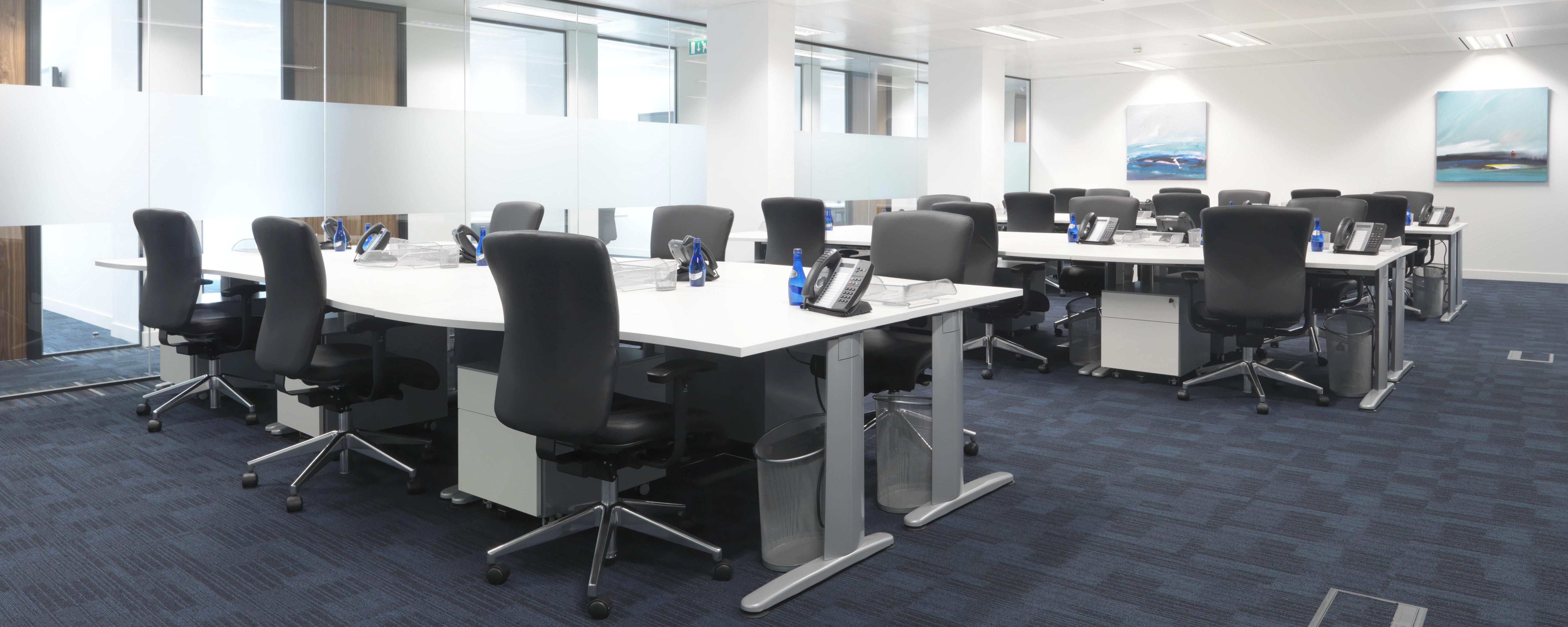
UK workers are the least satisfied with their office ambience, according to research by Steelcase,a workplace solutions provider. The study of over 12,000 workers across 17 countries, carried out by Ipsos, found that a third of workers say they don’t like their office environment, suffering from a lack of control over making it suit their needs.
Nearly half of UK workers are dissatisfied with the room temperature at work, while a third are unhappy with the light intensity. Only 39 percent of respondents say they can adjust the office temperature, while a mere 21 percent can alter the lighting.
This could be seriously affecting the concentration, productivity and engagement levels of workers, with the study showing that a lack of flexibility and control over the physical work environment correlates with a lack of engagement. In contrast, highly engaged employees are those that have the most flexibility over how and where they work.

The situation in the UK is likely to be influenced by the country’s dominance of open-plan design, with 49% of workers based in this kind of space due to its cost-saving benefits. However, this can limit employees’ individual control over their environment.
Christine Congdon, Director of Global Research Communication and editor of 360 Magazine at Steelcase, commented:
“Our research has consistently shown that the most engaged workers are those who have autonomy over how and where they work, whether adjusting the temperature, lighting, or workspace to suit their needs. When people feel like they have choice and control over various aspects of their physical work environment, it leads to greater satisfaction overall.
“Everybody is different and personal preference will depend on an individual’s natural physiology, their mood on a particular day and the task they are working on. To cater to these constantly changing needs, employers should pay more attention to providing a range of working environments, including the ability to adjust workspace basics as required.”

Rebecca joined the HRreview editorial team in January 2016. After graduating from the University of Sheffield Hallam in 2013 with a BA in English Literature, Rebecca has spent five years working in print and online journalism in Manchester and London. In the past she has been part of the editorial teams at Sleeper and Dezeen and has founded her own arts collective.
- Rebecca Clarke

- Rebecca Clarke
- Rebecca Clarke

- Rebecca Clarke








