

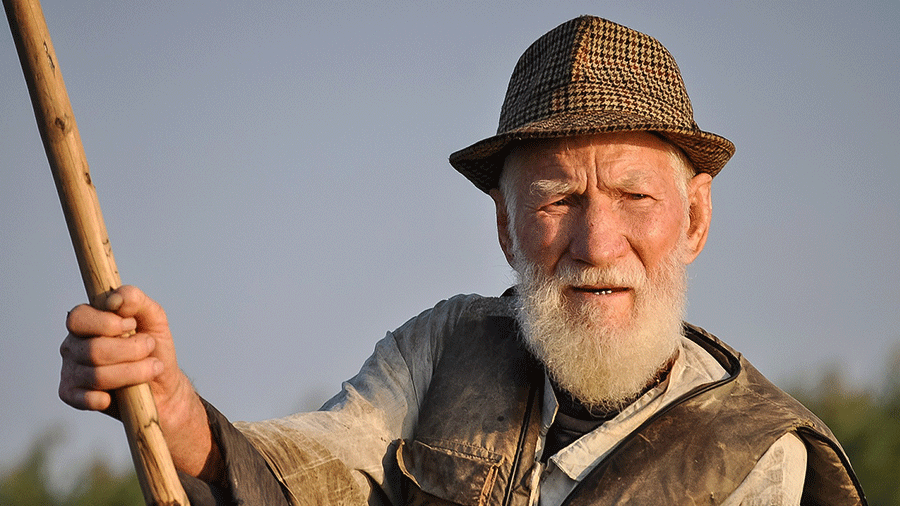

Employers are more concerned about the health and wellbeing of baby boomers compared to any other generation in the workplace.
This was discovered by Group Risk Development (GRiD), the industry body for the group risk protection sector. The research found that employers’ concern for their staff’s wellbeing increases as workers get older.
Employers’ specific concerns for baby boomers are that they tend to be non-active and have a general lack of fitness, with 32 per cent thinking this. However, 29 per cent think the same of Generation X and 30 per cent of millennials.

There is also a belief that baby boomers are more likely to be dealing with long-term health conditions such as diabetes, and that they may be obese, smoke a lot or be alcohol dependent.
Over a quarter (26 per cent) believe that baby boomers endure more stress and anxiety during their home life as they may have caring responsibilities or manage difficult relationships. Also, baby boomers tend to suffer from overwork and an uncertain future. They also feel this generation is likely to feel anxiety over their finances and debt.
The second group of workers employers seems to be worried about the most is Generation X.
Katharine Moxham, spokesperson for GRiD said:
It’s hugely important that employee support is provided holistically with adequate resources split between physical, mental, financial and social health, as no-one can predict the twists and turns that an individual’s life may take.
Many employers rightly appreciate the specific issues their baby boomer employees face. This group will have worked hard over many decades and many employers will feel a particular responsibility to this group as their lives become more complex.
Whilst the baby boomer generation is the one that most concerns employers, it is important that all generations are supported, and across all areas of concern – financial, physical, social and emotional. Group risk products (employer-sponsored life assurance, income protection and critical illness) have long included support for such concerns and are a great help for employers looking at how best to support all their staff.
Opinium, a strategic insight agency on behalf of GRiD spoke to 500 HR decision makers to gather these results. These results were taken before the outbreak of COVID-19 but GRiD believes all these issues will simply be exacerbated by the virus.

Darius is the editor of HRreview. He has previously worked as a finance reporter for the Daily Express. He studied his journalism masters at Press Association Training and graduated from the University of York with a degree in History.
- Darius McQuaid

- Darius McQuaid

- Darius McQuaid

- Darius McQuaid






