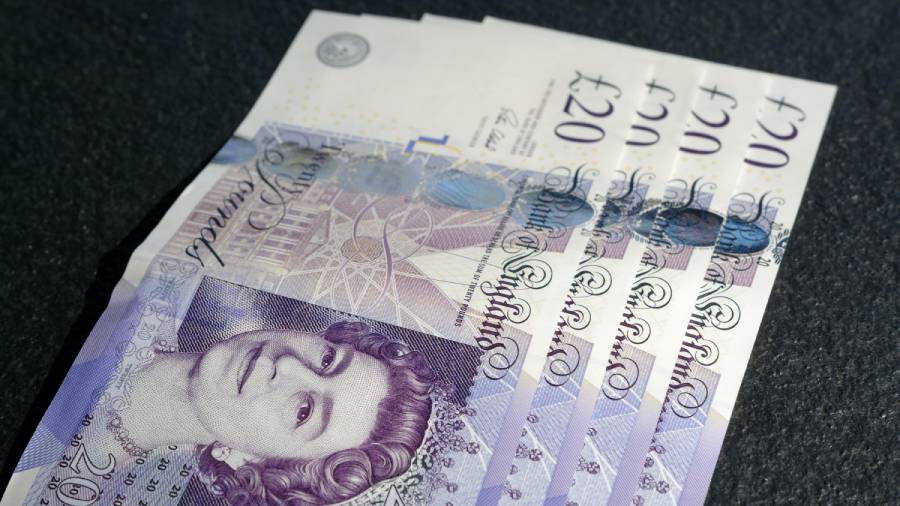
Statistics show that a maximum wage of £100,000 could increase the annual average median wage by £3,535.
A new report by think tanks Autonomy and the High Pay Centre state that over half of the UK (54 per cent) would support the idea of a maximum wage being introduced. Over three in 10 (31 per cent) stated that the fairest maximum wage would be £100,000.
New research reveals that out of all the members that make up the the Organisation for Economic Co-operation and Development (OECD), the UK has the 9th highest rate in terms of income inequality out of 37 countries.
Currently, 17 per cent of the total income in the UK is taken up by the top one per cent of earners. In 1980, the top one per cent of earners in the UK took up only six percent of the UK’s total income, showing a growing gap of wealth inequality. The report estimates that the average FTSE 100 CEO is paid around 126 times more than the wage of an average earner.

The COVID-19 pandemic has also had a profound impact on the economy, with the OBS (Office for Budgetary Responsibility) predicting that the UK will hit a peak unemployment rate of 12 per cent. By August 2020 alone, 750,000 jobs have been lost.
Therefore, the think tanks have called on the Government to redistribute wealth which will help to “protect as many jobs and livelihoods as possible”.
Research states that a £100,000 wage cap would be able to redistribute money to over one million jobs which the think tanks believe would help to avoid redundancies. Furthermore, it states that only 2.85 per cent of those earning over £100,000 would need to take a pay cut which would lead to nine million employees receiving pay rises.
It further states that if the top 0.6 per cent of earners agreed to a £187,000 wage cap then a national minimum wage of £10.50 could be achieved.
When polling the UK public, over half (54 per cent) stated they would be in favour of a maximum wage whilst close to three out of 10 (29 per cent) responded they would not support this. 17 per cent stated they “did not know”.
Out of this, 31 per cent stated their belief that the maximum wage should be £100,000 whilst almost a quarter (24 per cent) believed that £200,000 should be the cut off for salary. Less than one in 10 (9 per cent) believe the maximum wage should be an annual figure of £1 million.
Will Stronge, Director of Research at Autonomy, said:
A maximum wage is popular with the public and could be an essential tool for making sure that industries and those that work in them survive this pandemic.
Let’s be honest – earning anything more than £100,000 a year is by most people’s standards extremely excessive, especially during an economic crisis where millions are being made unemployed.
However, Emma Robinson, founder and managing director at Red Diamond Executive Headhunters, argues that introducing a cap on salary would deter the best candidates:
To attract – and retain – the best people, who will bring you through these most challenging of times, you need to offer a competitive salary. Times of crisis are when leaders really earn their money; anything else is a false economy.
Dean Sadler, CEO and founder of Tribepad, a software company, agreed:
Putting a £100,000 cap on wage is not the answer to building back our economy. Yes, we do see some extremely high – and unnecessary – salaries, but bringing in these restrictions will only create loopholes and an even larger pay gap – many will set up businesses abroad for example, worsening our economy in the long run.

Monica Sharma is an English Literature graduate from the University of Warwick. As Editor for HRreview, her particular interests in HR include issues concerning diversity, employment law and wellbeing in the workplace. Alongside this, she has written for student publications in both England and Canada. Monica has also presented her academic work concerning the relationship between legal systems, sexual harassment and racism at a university conference at the University of Western Ontario, Canada.
- Monica Sharma

- Monica Sharma

- Monica Sharma

- Monica Sharma