Countries should step up their efforts to improve the quality of post-secondary vocational training in order to meet the changing needs of today’s job market, according to a new OECD report.
Skills Beyond School: Synthesis Report says that most basic vocational courses cannot teach the higher level skills needed in an increasing number of jobs in fast-growing sectors, such as healthcare technicians and junior managers.
In the United States, for example, it is estimated that one third of all vacancies by 2018 will call for some post-secondary qualification, but not necessarily the completion of a four-year degree.
But while some countries have thriving post-secondary vocational sectors, others have found it difficult to find a place for shorter one-or two-year programmes in competition with better known academic qualifications.

England and Northern Ireland stand out as countries where, relative both to other countries and to potential demand, there is limited provision of postsecondary vocational training, potentially leading to a shortage of mid-level skills.
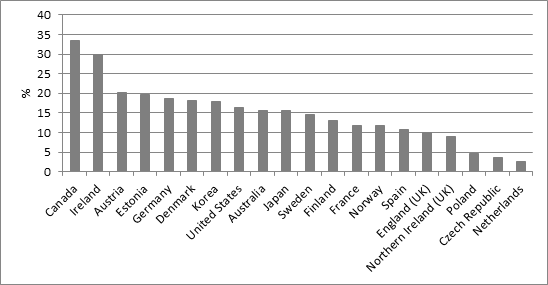
The OECD study outlines a series of recommendations for countries to help them step up their efforts to deliver higher quality post-secondary vocational programmes. These include:
- All professional education and training programmes should include some work-based learning as a condition of receiving government funding. This work-based learning should be systematic, quality-assured and credit-bearing.
- Ensure that the workforce in professional training institutions benefit from a strong blend of pedagogical skills, industry experience and academic knowledge. Adapt qualification requirements to that end.
- Assess students’ basic skills at the start of programmes and integrate basic skills development into professional programmes. This will ensure students leave programmes with essential literacy and numeracy skills that the 2013 OECD Survey of Adult Skills revealed that many adults lacked.
- Engage industry stakeholders and develop and sustain vocational systems in close partnership with those stakeholders. This is key as work-based learning is too often weak and unsystematic, and employers and trade unions are sometimes too remote from the development of qualifications, so that they end up having limited value in the labour market.

Paul Gray is an entrepreneur and digital publisher who creates online publications focused on solving problems, delivering news, and providing platforms for informed comment and debate. He is associated with HRZone and has built businesses in the HR and professional publishing sector. His work emphasizes creating industry-specific content platforms.
- Paul Gray

- Paul Gray

- Paul Gray

- Paul Gray