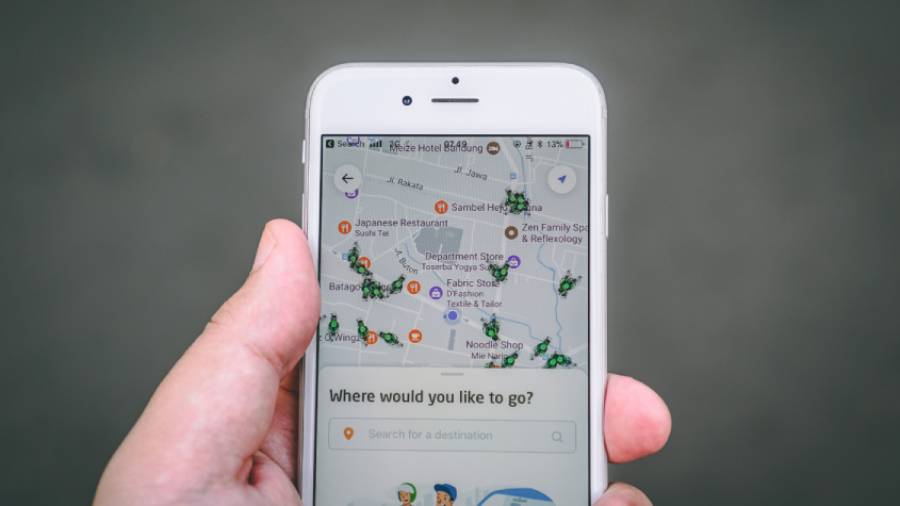
As debates surrounding employment rights in the gig economy intensify, a new study shows that the majority of the public support improving conditions in this industry.
New research carried out by Oxford University indicates the UK public believe there are various measures that could be carried out to make the gig economy fairer.
When asked about their perception of the industry, close to half of the public (41 per cent) believe workers are not paid a fair wage.
As such, almost two in three members of the public (64 per cent) believe employment law should be changed to prevent gig economy platform employers from labelling workers as self-employed in order to avoid giving out holiday pay and sick leave.

This comes as, earlier this year, the Supreme Court ruled Uber drivers should be classed as workers as opposed to self-employed, giving drivers key employment rights such as minimum wage and rest breaks.
However, other gig economy platform workers including Deliveroo riders have been classed as self-employed and therefore not entitled to collective bargaining rights.
The study also indicated support (57 per cent) for companies being required to negotiate with trade unions while two-thirds (66 per cent) said companies should have to inform workers of changes to the technology used in their jobs.
If gig economy platforms failed to improve pay and conditions received by workers, close to half (49 per cent) believed the companies behind the app should be nationalised and taken into public ownership.
Mark Graham, a professor the University of Oxford’s Internet Institute which carried out this research, stated:
The development of technology has allowed for services like transport and delivery to be organised in new ways, but these developments risk being monopolised for the benefits of platforms and their investors, rather than being passed onto workers.
Given the scale of the social challenges we face as we emerge from the pandemic, there is an urgent need for the platform economy to transition towards working for social benefit, not private profit.
Gig economy platforms need to start making serious improvements now if they want to keep their customers on side and prevent this demand for change from escalating further.
*This polling was carried out by Survation on behalf of Oxford’s Internet Institute and surveyed 2,020 UK adults aged 18 and over.

Monica Sharma is an English Literature graduate from the University of Warwick. As Editor for HRreview, her particular interests in HR include issues concerning diversity, employment law and wellbeing in the workplace. Alongside this, she has written for student publications in both England and Canada. Monica has also presented her academic work concerning the relationship between legal systems, sexual harassment and racism at a university conference at the University of Western Ontario, Canada.
- Monica Sharma

- Monica Sharma

- Monica Sharma

- Monica Sharma