

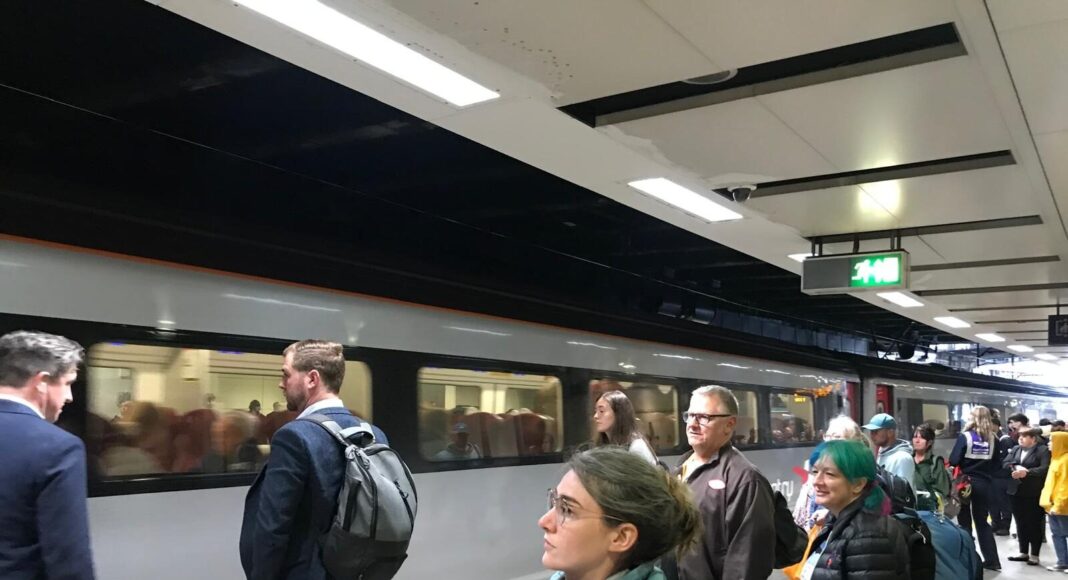
Professionals are increasingly choosing to work from offices located close to major transport routes, as hybrid working continues to alter how and where work is carried out. Rather than travelling directly between home and a central office, many workers are making use of flexible workspaces near rail stations, motorways and airports to fit work around journeys.
The pattern reveals a growing preference for work locations that reduce downtime during travel and offer greater control over the working day. Offices positioned near transport hubs appear to be serving as stopover points for professionals moving between meetings, commuting part time into cities or working around flights and long journeys.
The trend also reflects broader changes in commuting behaviour since hybrid working became established. Fewer people are travelling five days a week to a single workplace, and many are choosing locations that allow them to remain productive without committing to long or inflexible journeys.
Transport-linked workspaces see rising usage
New data from International Workplace Group, which operates serviced offices and co-working spaces globally, shows a marked increase in use of locations close to transport infrastructure. The figures, based on Wi-Fi log-ins across UK sites, indicate that footfall at transport-linked workspaces has risen by around a third compared with the previous year.

Some of the strongest growth has been recorded at sites located near busy rail stations. A workspace above London Blackfriars station saw usage more than double year on year, while centres close to major stations in cities including Leeds, Birmingham and Sheffield also reported substantial increases. The data suggests that rail-connected offices are increasingly being used as temporary bases between journeys or alongside part-time commuting patterns.
Growth has also been recorded at locations along major motorway corridors. Sites near the M25, M4, M3 and M5 have seen increased use, particularly among professionals travelling by car who are breaking up longer journeys or avoiding unproductive time between appointments. Several locations near motorway junctions recorded growth of around 30 percent or more over the past year.
Airports emerge as working locations
Offices located along airport corridors are also seeing rising demand, according to the data. Workspaces serving areas around Gatwick, Heathrow, Birmingham and Manchester airports recorded notable increases in footfall, suggesting that professionals are increasingly working before or after flights rather than treating travel days as lost time.
Locations connected to airport transport links, including tram and rail routes, have also seen increased use. The data points to a blurring of boundaries between travel and work, with professionals choosing locations that allow them to work flexibly around onward journeys.
IWG said the growing use of transport-linked offices reflected wider acceptance of hybrid working and greater flexibility over where work could be done. Mark Dixon, the company’s founder and chief executive, said organisations were continuing to support more flexible ways of working. “Companies of all sizes are embracing more flexible ways of working for the long-term, empowering their people to work from locations that are most convenient to them and their lifestyles and at the same time boosting company productivity,” he said.
“As a result, we’re seeing a fundamental shift in the geography of work, with demand moving towards more local and accessible locations including travel hubs. Advances in cloud technology and video conferencing mean people no longer need to travel long distances every day, which is why the majority of our new centres are opening in local communities, suburbs and well-connected hubs, bringing work closer to where people live and travel.”
Changing expectations of where work happens
The rise in use of transport-linked offices suggests that the geography of work is becoming more dispersed. Rather than concentrating activity in large city centre offices, professionals are spreading their working time across a wider range of locations that align with how they move through the day.
This approach appears to suit workers whose roles involve regular travel, as well as those combining office attendance with remote working. Offices near transport hubs offer a way to stay connected and productive without committing to long commutes or fixed schedules.
IWG has also pointed to separate research suggesting that flexible working arrangements are associated with higher levels of self reported productivity and motivation among workers. While such findings are based on survey data rather than direct output measures, they align with broader evidence that flexibility over work location remains a priority for many professionals.
The data suggests that hybrid working is not only reducing the number of days spent in a central office, but also changing where work takes place in between. As professionals increasingly organise their working time around travel and mobility, offices located near transport links are becoming a regular part of the working landscape rather than a niche option.

William Furney is a Managing Editor at Black and White Trading Ltd based in Kingston upon Hull, UK. He is a prolific author and contributor at Workplace Wellbeing Professional, with over 127 published posts covering HR, employee engagement, and workplace wellbeing topics. His writing focuses on contemporary employment issues including pension schemes, employee health, financial struggles affecting workers, and broader workplace trends.
- William Furney

- William Furney

- William Furney

- William Furney






