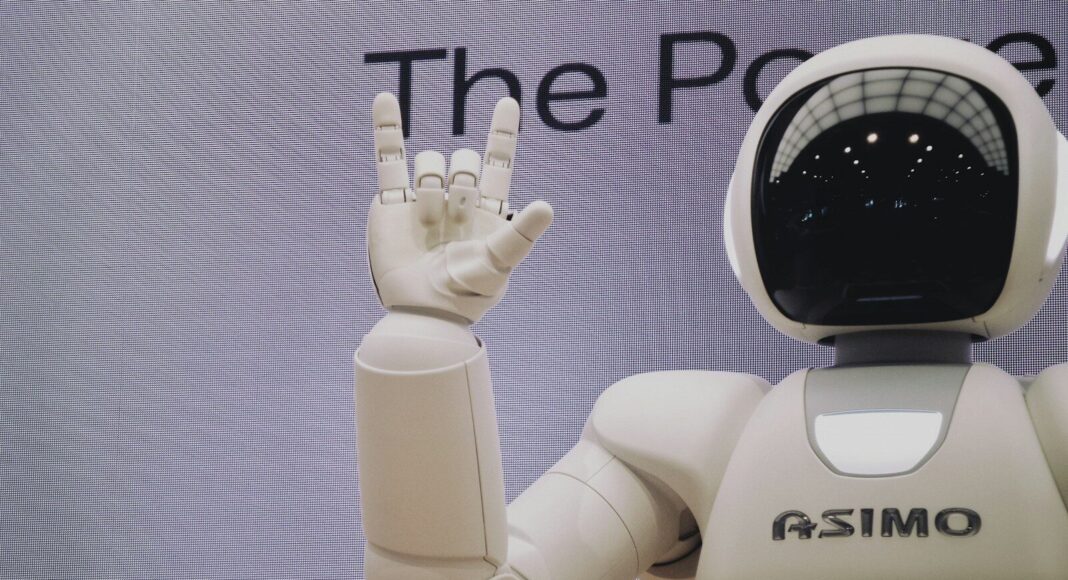
Concerns about automation replacing human roles remain widespread among the UK workforce, with new research suggesting a significant share of people fear robots could eventually take over their jobs.
About 41 percent of adults in the UK say they worry robots could replace humans in the workplace, reflecting continued unease about how rapidly advancing technology might reshape employment.
But the research, commissioned by Swedish tech firm Hexagon, also suggests workers’ biggest concern about robots is not job loss but security, with many fearing the technology could be hacked or misused.
Security fears outweigh job concerns
More than half of UK adults, 53 percent, said their main concern about robots in the workplace is the risk they could be hacked or used maliciously.

This means security risks ranked above worries about job replacement among the public’s top concerns about robotics and automation.
At the same time, many respondents recognised potential advantages of robots in workplaces. Around half said the biggest benefits would be improving productivity and speed, while a similar proportion said robots could make workplaces safer by carrying out dangerous tasks.
Comfort higher in factories than homes
People appear more comfortable with robots operating in industrial environments than in everyday settings.
Across the countries surveyed, around 63 percent of adults said they would feel comfortable interacting with robots in factories and warehouses. Comfort levels were lower in the UK, where 53 percent said they would feel comfortable with robots in industrial workplaces.
Public acceptance was even lower in domestic settings. British adults were more likely to say they would feel uncomfortable interacting with robots in the home than comfortable doing so.
Burkhard Boeckem, chief technology officer at Hexagon, said public confidence depended on how and where robotics technology was introduced. “Across the world, people aren’t simply pro-robot or anti-robot. They’re asking where robots belong, what they should do and what safeguards must come first,” he said.
He said trust tended to weaken where robotics technology still felt unfamiliar. “In the UK, the message is especially clear: confidence lags when robots feel distant or unfamiliar. Trust breaks down when robots are pushed into everyday or domestic roles before governance, safeguards, and human control are clearly in place,” he said.
Boeckem said robots were most likely to gain acceptance when used for tasks that clearly improved safety or reduced physical strain. “The opportunity is to build trust the right way, by deploying robots where they make work safer and less physically punishing, such as heavy lifting, hazardous inspections and continuous monitoring,” he said.
Exposure may reduce anxiety
Researchers and robotics experts say direct exposure to robots can often reduce public fears about the technology.
Michael Szollosy, a research fellow in robotics, said people’s perceptions often changed once they encountered robots in real life. “When people actually meet a robot, especially a small, friendly one, the fear often disappears. You can almost hear them think, ‘Oh, that’s not going to take over the world,’” he said.
“If scientists and engineers want people to come with them on this journey, they have a responsibility to explain why these technologies exist and what they’re actually for. If you don’t take people with you, the counter-narrative sticks. And once that happens, it’s very hard to undo.”
Dr Blay Whitby, a technology ethicist who studies the social impact of automation and artificial intelligence, said robotics was unlikely to remove the need for human oversight in workplaces.
“A world with robots could be a better world, certainly better than one where humans have to do some very unpleasant jobs,” he said. “Automation doesn’t remove the need for humans. Even highly automated systems still require human oversight. We have to learn, and we are learning, to live together with robots.”
The survey was conducted by research firm Vitreous World between October and November 2025 among 18,000 respondents across nine countries, including the UK.

William Furney is a Managing Editor at Black and White Trading Ltd based in Kingston upon Hull, UK. He is a prolific author and contributor at Workplace Wellbeing Professional, with over 127 published posts covering HR, employee engagement, and workplace wellbeing topics. His writing focuses on contemporary employment issues including pension schemes, employee health, financial struggles affecting workers, and broader workplace trends.
- William Furney

- William Furney
- William Furney
- William Furney