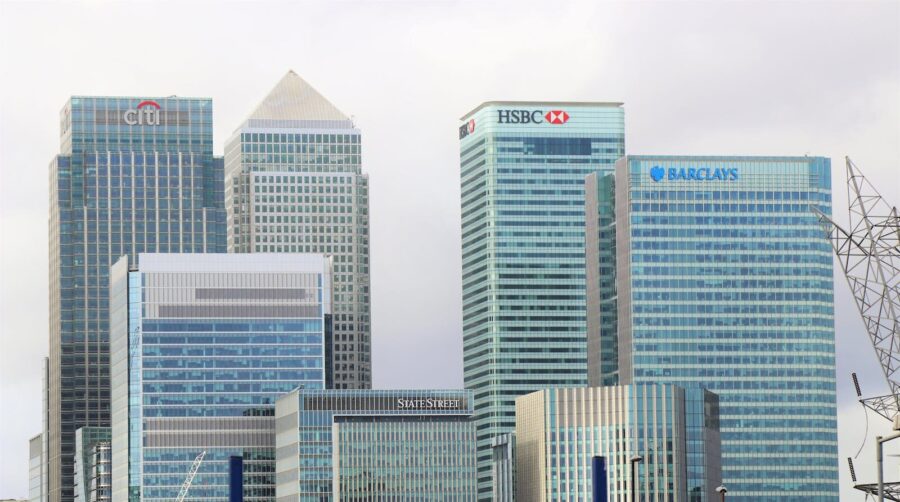
Hybrid working remains entrenched in London, with Canary Wharf emerging as a rare success story while the City of London struggles to attract commuters back in large numbers.
Data from Transport for London (TfL) shows that weekly entries and exits through City rail stations in mid-June averaged about 3.9 million, compared to 4.6 million in 2019. That is only marginally higher than the 3.7 million recorded in 2024 and the 3.5 million in 2023.
Times Business Editor Jon Yeomans posed the question: “So is the war on WFH won? Far from it. The evidence suggests that in London the great return to our desks has flatlined.”
Docklands revival
The picture is different in Canary Wharf, where combined Tube, Docklands Light Railway and Elizabeth line entries and exits in mid-June were about 180,000 higher than in the same period of 2019. Yeomans wrote that the area “appears to have been boosted by the opening of the Elizabeth Line in 2022”, which has cut journey times from many parts of London and beyond.

Canary Wharf Group chief executive Shobi Khan told the paper that the estate is busy throughout the week, with queues at coffee stands and food stalls even on Fridays. He has been promoting its transformation into a “mixed-use” zone, with new restaurants, theatres, padel courts, housing and hotels to attract both residents and workers.
HSBC changes course
The momentum received a further boost when HSBC reversed its 2023 decision to leave Canary Wharf entirely. At the time, the bank planned to relocate all London staff to a smaller headquarters in the City by 2027 as part of a strategy to cut its property footprint and global head-office costs.
Instead, Europe’s largest lender has signed a 15-year lease for 210,000 sq ft at 40 Bank Street, not far from its current base, which it will vacate in 2027. The Financial Times reported that the move follows stricter attendance policies under chief executive Georges Elhedery, who is considering a group-wide requirement for employees to be in the office at least three days a week.
“This ensures we are easily accessible for our clients across the capital,” said Suzy White, HSBC’s group chief operating officer.
The Wharf is also attracting other companies. Visa is in talks to move its European headquarters there, Spanish bank BBVA has extended its lease and taken another floor and fintechs Zopa and Revolut have secured new premises.
Mandates and attrition
For all the headline-grabbing moves back to the office, hybrid work remains widespread. A British Chambers of Commerce survey found that one in 10 employers had lost staff unwilling to give up remote working. The organisation said there was “a clear shift” towards more firms requiring full on-site working, with manufacturers leading the way.
Research by King’s College London found that average permitted homeworking days had increased from less than one day a week in 2022 to about 1.3 in 2024. The Centre for Cities, a British economic think tank, saw a “loss of momentum” in the return to the office in a study published last year.
Yeomans wrote that “hard-pressed workers have to move ever further out of cities to find somewhere they can afford to live. Then they have to pay inflation-busting rail fares for the privilege of commuting back in”.
The wellbeing equation
The resistance to office mandates has a wellbeing dimension for HR executives. Long commutes can add stress, reduce personal time and impact productivity. Employees who see little benefit to in-person attendance are more likely to resist, or even resign, when flexibility is reduced.
Some employers are trying to address this by enhancing the workplace experience — offering amenities such as gyms, upgraded collaboration spaces and social events — or by locating offices closer to where employees live. Others are exploring multi-site models, as HSBC is now doing, to spread attendance across locations.
Canary Wharf’s stronger performance points to the role of connectivity and amenities in shaping attendance patterns. The Elizabeth line has made the area more accessible, while a growing mix of housing, leisure and cultural facilities makes it easier for employees to combine work and personal activities in one trip.
By contrast, the City is seeking to entice tenants with high-spec office refurbishments, new hospitality options and cultural events, but faces a more constrained environment for mixed-use development.
Implications for HR
The uneven recovery in commuter numbers means, say experts, that HR teams must balance competing demands:
- Retention risk if mandates are perceived as rigid or out of touch with employee circumstances
- Space strategy decisions as office occupancy and desk demand evolve
- Multi-site coordination challenges in maintaining culture and communication across locations
- Wellbeing support to offset commuting strain and costs
- Engagement strategies to make the office an attractive destination
London’s experience shows that while return-to-office drives are gathering pace, hybrid work has proved durable. Any policy shift needs, observers say, to be backed by a compelling reason for employees to make the journey, and that may depend as much on location and lifestyle as on corporate strategy.

William Furney is a Managing Editor at Black and White Trading Ltd based in Kingston upon Hull, UK. He is a prolific author and contributor at Workplace Wellbeing Professional, with over 127 published posts covering HR, employee engagement, and workplace wellbeing topics. His writing focuses on contemporary employment issues including pension schemes, employee health, financial struggles affecting workers, and broader workplace trends.
- William Furney

- William Furney
- William Furney
- William Furney