

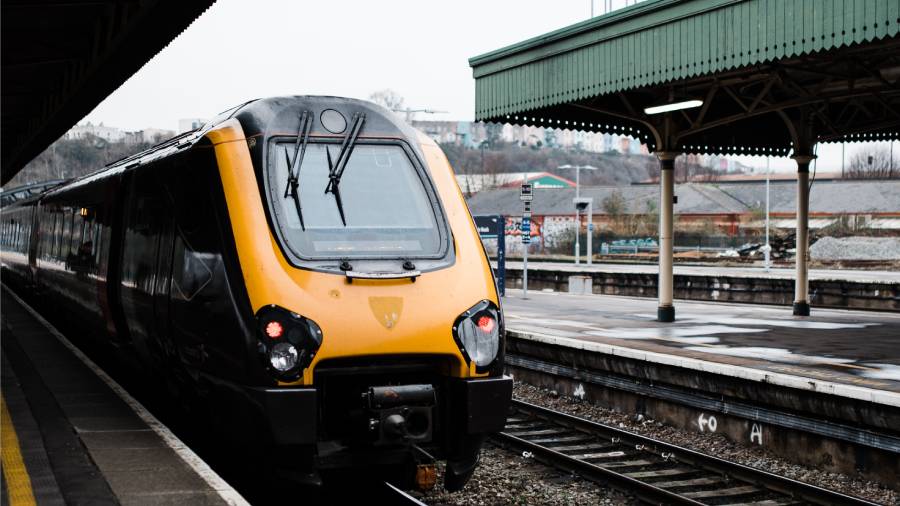
This new type of season ticket, created to cater for hybrid working, allows commuters to travel on any eight days in a 28 day window without being required to select the days of travel in advance.
From next week (Monday 28th June), a National Rail Flexi Season Ticket will be available to buy for commuters who are planning to travel into the office a few times a week.
Being introduced to cater for the new trend of hybrid working, it has been estimated by the Government that between £60 and £350 could be saved annually on selected journeys.
These tickets cover standard class only and are paperless, meaning commuters will either need a smartphone or a smartcard to utilise this option. In addition, these tickets do not cover Transport for London services, including the Underground or buses within London.

The transport secretary, Grant Shapps, stated that these tickets would match “modern day working habits”:
As we kickstart the biggest reforms to our railways in a generation, flexible season tickets are the first step. They give us greater freedom and choice about how we travel, simpler ticketing and a fairer fare.
Matthew Fell, CBI Chief UK Policy Director, also said:
The introduction of flexible season tickets will help to ensure rail travel remains an affordable and realistic option for commuters while future-proofing a network which has a key role to play in the UK’s decarbonisation ambitions.
However, there has been significant criticism garnered over the introduction of this new season ticket – namely questions about the actual amount of money commuters will save and whether this ticket provides the flexibility it claims to.
Tony Miles, rail expert and contributor to Modern Railways magazine, told the BBC:
These really aren’t season tickets. This is a bulk purchase of tickets.
A season ticket effectively gives you unlimited travel. The big difference with this is you’re buying a fixed number of journeys at a discount price but if you decide at a weekend to do some extra journeys that will start ticking off your credit.
Similarly, The Guardian calculated that many commuters would only save money compared with a walk-up ticket if they travelled at peak times for all eight days a month. It further found that, on some routes, this flexi ticket worked out to be more expensive than a daily anytime return.
Alice Ridley, of Campaign for Better Transport, also shared her doubts concerning whether this would convince commuters to return to using public transport:
There’s a danger that people will change the way they commute and start driving, and we wanted flexible tickets to encourage people back onboard trains. We don’t think these tickets are going to do that or provide the savings that people had hoped for.
This scheme comes as part of a wider reform of the rail industry which will see a new public body, Great British Railways, integrate the railways, own the infrastructure, collect fare revenue, run and plan the network, and set most fares and timetables.

Monica Sharma is an English Literature graduate from the University of Warwick. As Editor for HRreview, her particular interests in HR include issues concerning diversity, employment law and wellbeing in the workplace. Alongside this, she has written for student publications in both England and Canada. Monica has also presented her academic work concerning the relationship between legal systems, sexual harassment and racism at a university conference at the University of Western Ontario, Canada.
- Monica Sharma

- Monica Sharma
- Monica Sharma
- Monica Sharma









