
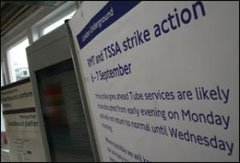
CBI seeks ban on strikes

-

The CBI has called for the law to be changed, so that strikes can only go ahead if at least 40% of balloted members vote in favour of industrial action.

This mirrors a report from thinktank Policy Exchange earlier this month, which argued that the legal balance between trade unions, union members and employers no longer reflects the realities of low union membership in most sectors. It also coincides with calls this weekend from London mayor Boris Johnson.

The CBI is also calling for companies to be able to recruit agency staff to “provide essential cover” for striking workers. Currently, organisations can recruit temporary workers directly but are not able to use an agency.

John Cridland, CBI deputy director-general, said: “Industrial action is never inevitable, and we want to see public sector managers and unions going the extra mile during difficult times ahead. By constructively working together, damaging industrial action can be avoided.

HRreview Logo

Get our essential weekday HR news and updates.

This field is for validation purposes and should be left unchanged.
Keep up with the latest in HR...
This field is hidden when viewing the form
Optin_date
This field is hidden when viewing the form


“The public increasingly expects it to be business as usual, even during a strike, so firms must be allowed to hire temporary workers directly from an agency to provide emergency cover for striking workers.”

TUC general secretary Brendan Barber commented: “The UK has some of the toughest legal restrictions on the right to strike in the advanced world. Already the courts regularly strike down democratic ballots that clearly show majority support for action.

“The CBI proposals are a fundamental attack on basic rights at work that are recognised in every human rights charter, and will be dismissed by any Government with a commitment to civil liberties.”




Latest news

Bullying and harassment to become regulatory breaches under new FCA rules

New rules will bring bullying and harassment into regulatory scope, as firms face rising reports of workplace misconduct.

Personalising the Benefits Experience: Why Employees Need More Than Just Information

This article explores how organisations can move beyond passive, one-size-fits-all communication to deliver relevant, timely, and simplified benefits experiences that reflect employee needs and life stages.

Grant Wyatt: When the love dies – when staying is riskier than quitting

When people fall out of love with their employer, or feel their employer has fallen out of love with them, what follows is rarely a clean exit.

£30bn pension savings window opens for employers ahead of 2029 reforms

UK employers could unlock billions in National Insurance savings by expanding pension salary sacrifice schemes before new limits take effect in 2029.
- Advertisement -

Expat jobs ‘fail early as costs hit $79,000 per worker’

International assignments are ending early due to family strain, isolation and poor preparation, as rising costs increase pressure on employers.

The Great Employer Divide: What the evidence shows about employers that back parents and carers — and those that don’t

Understand the growing divide between organisations that effectively support working parents and carers — and those that don’t. This session shows how to turn employee experience data into a clear business case, linking care-related pressures to performance, retention and workforce stability.

Must read

Jilaine Parkes: 4 Leadership development blind-spots and how performance management can help

Whether leaders manage people or process, lead a vision...

Ian Symes: Why are ‘motherhood penalties’ still stalling women’s careers?

In a recent report from Mumsnet it was revealed that six out of 10 women feel having children has had a negative effect on their career. The research also found that nine out of 10 women agreed that there exists a ‘motherhood penalty’ which stalls women’s careers. These numbers make for disappointing reading to anyone who wants an enthusiastic female workforce.
- Advertisement -

You might also likeRELATED
Recommended to you


