

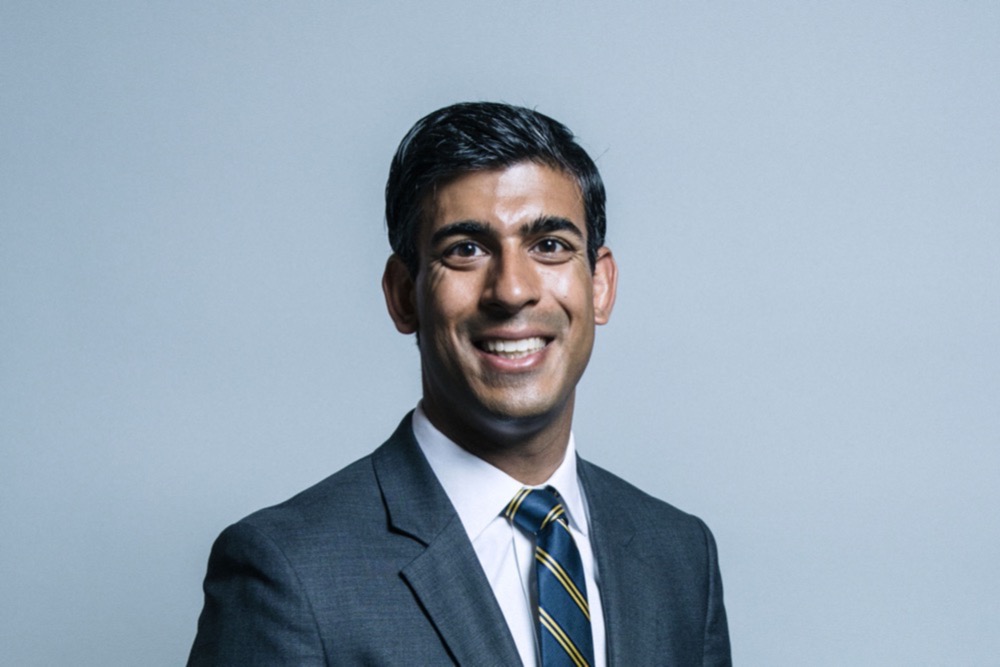
Rishi Sunak will soon become the first Asian UK prime minister, a milestone for British politics.
What does his appointment mean for HR specifically?
HRreview has gathered expert insights on how Sunak’s proposed changes will impact the wider HR world.
Alan Price, CEO at BrightHR says:
“It’s been a turbulent time in politics recently but, with today’s appointment of Rishi Sunak as the next leader of the Tory Party and Prime Minister, we are all hoping things will settle down. During the recent leadership contest, Mr Sunak proposed a few changes that could impact employers, including:

- Scrapping the apprenticeship levy and creating new incentives for businesses to invest in training and upskilling.
- Taking a ‘tough stance’ towards public sector pay – i.e. no pay rises, so potentially more strike action.
- Setting up a Brexit Delivery Department to review all EU-derived law in 100 days. The new Brexit Minister would have to make the first set of recommendations over whether they should be scrapped or changed within those 100 days – Liz Truss created draft law to do this by the end of 2023 so we shall have to see if Mr Sunak leaves the law as it is, changes the deadline to within 100 days, or brings in a completely new time line.
- Publishing a manifesto for women’s rights.
“More details as to what, exactly, we can expect from the new Prime Minister will likely emerge over the coming days and weeks. We are expecting a budget on the 31st October, if Jeremy Hunt is still Chancellor, so will get some further steer economically following that. For now at least, the main takeaway is that we shouldn’t expect any major changes or surprises any time soon.”
Sunak has ‘long road ahead to win support of self-employed’
Founder of IWORK Julia Kermode, comments:
“I can’t help but think that Rishi Sunak’s appointment is bad news for the self-employed. Just look at his track record. He rolled out IR35 reform, along with various other tax increases, and knowingly excluded millions of self-employed people from Covid support.
“The self-employed need support and they need it now. Given the haste at which tax cuts and hikes are rolled out and reversed these days, a quick win for the Prime Minister – and one which would make a big difference to anyone supplementing their income to pay their bills – is to raise the £1000 trading allowance. Increasing this would mean self-employed people could earn more before being taxed.”
Qdos CEO, Seb Maley, commented:
“Rishi Sunak becomes Prime Minister at a time when millions of self-employed workers are worried about their futures. In recent years, the independent workforce has been hit again and again by needless, short-sighted tax grabs – many of which Mr Sunak himself introduced while serving as Chancellor. The Prime Minister has a long road ahead to win the support of the self-employed, but the work must start immediately.
“Having U-turned on the IR35 reform repeal and insisting on rolling out a potentially disastrous Corporation Tax hike next year, the government must press the reset button and rethink how the UK’s smallest businesses are treated. At a time of such uncertainty, the Prime Minister would do well to consider just how important independent workers are to the economy.”

Amelia Brand is the Editor for HRreview, and host of the HR in Review podcast series. With a Master’s degree in Legal and Political Theory, her particular interests within HR include employment law, DE&I, and wellbeing within the workplace. Prior to working with HRreview, Amelia was Sub-Editor of a magazine, and Editor of the Environmental Justice Project at University College London, writing and overseeing articles into UCL’s weekly newsletter. Her previous academic work has focused on philosophy, politics and law, with a special focus on how artificial intelligence will feature in the future.
- Amelia Brand

- Amelia Brand

- Amelia Brand

- Amelia Brand






