

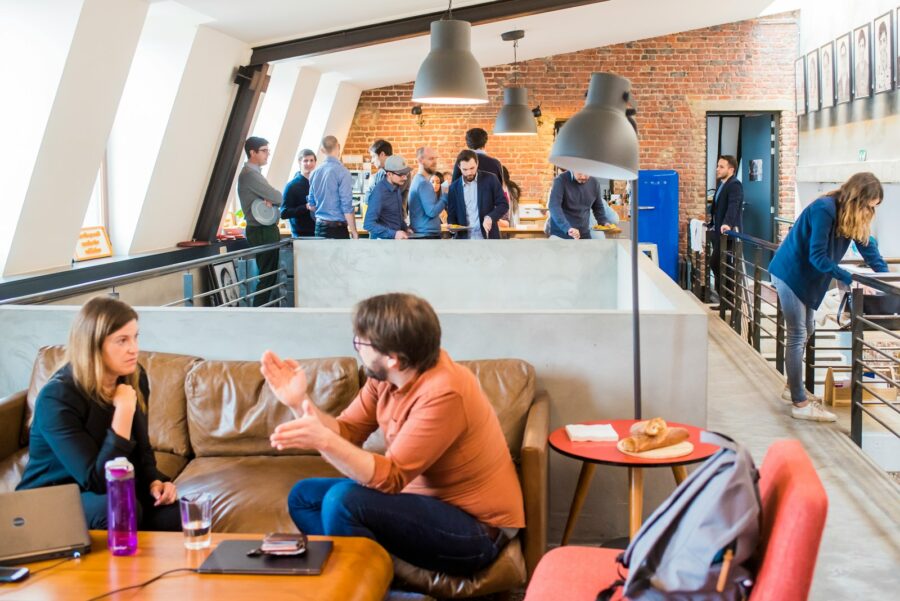
Humans are social creatures, and the bonds we created have been key to our success as a species – so it should come to no surprise that they’re key to success in the workplace, too.
A new report from Compass Group, titled The Power of Socialisation, reveals the importance of sociable workplaces when it comes to maintaining employee happiness, productivity, and loyalty. The study surveyed over 30,000 workers and students across 21 countries to examine the impact of workplace socialisation on employee engagement and satisfaction.
According to the report, employees who find their workplaces enjoyable are significantly happier and more engaged. Among respondents, 83 percent who said their workplace is enjoyable also reported high job satisfaction, while this dropped to just 22 percent for those without an enjoyable environment. Social connections in the workplace were identified as essential, with 27 percent of employees feeling lonely or isolated at work and 45 percent of hybrid workers saying they would come to the office more often if there were more chances to socialise.
Reducing Loneliness, Boosting Wellbeing
The report highlights how workplace friendships contribute to employee wellbeing, with 60 percent of employees stating that friendships at work are as important as those outside the workplace. Those with friends at work are more likely to enjoy their jobs, with 70 percent reporting they look forward to coming to work compared to just 25 percent for those without such connections. The data also shows that employees who socialise at work feel a stronger sense of belonging, with 70 percent reporting a sense of inclusion versus 37 percent of those who do not socialise at work.

Loneliness is linked to increased absenteeism, with employees experiencing twice as many sick days when isolated, according to the report. Additionally, workplace loneliness has been shown to pose risks similar to smoking, alcohol consumption, and physical inactivity.
Kirsty Adams, People Director Talent, Learning, Leadership & Inclusion, Compass Group UK & Ireland, said, “Now more than ever, creating environments that nurture and support positive social environments is crucial – helping overall health, wellbeing and happiness, which in turn enhances peoples’ loyalty and productivity. ‘The Power of Socialisation’ report highlights that enabling powerful moments of social connection at work is a necessity.”
Driving Productivity and Retention
The report emphasises that sociable work environments encourage collaboration, creativity, and productivity. In highly sociable workplaces, 85 percent of employees said their teams work well together, 84 percent feel comfortable expressing opinions, and 55 percent report completing work to expected standards on time. These figures sharply contrast with those from less sociable workplaces, where only 37 percent felt teamwork was effective, 40 percent felt free to share opinions, and just 26 percent felt they met work standards on time.
The findings also indicate that lonely employees are more likely to leave their jobs. Nearly half (46%) of those who feel isolated at work are likely to consider leaving, with this number rising to 54 percent among Gen Z employees. Additionally, 51 percent of employees in sociable workplaces said they would recommend their organisation to others, compared to just 11 percent in less sociable settings.
The study signals a shift away from traditional, after-hours work events centred around alcohol. While 49 percent of employees are likely to attend social events outside of work hours, employees and prospective employees favour more varied, inclusive activities that fit within the workday. For instance, future employees – particularly students – indicated they look forward to events such as games-based activities (59%), music events (43%), and themed gatherings (37%) at their workplaces.
Seventy-six percent of employees who regularly participate in organised social events reported a better understanding of company strategy and goals, compared to 56 percent of those who did not socialise regularly. Similarly, 61 percent of employees who socialise with colleagues feel connected to senior leadership, and 55 percent perceive career advancement opportunities, while these figures fall to 28 percent and 23 percent, respectively, among those who do not participate in workplace socialisation.
The ‘Hotelisation’ of the Workplace
The report also highlights the rising trend of ‘hotelisation’ in office spaces, with a focus on creating well-designed, multi-purpose spaces for relaxation and social interaction. Sixty percent of employees value social and recreational facilities in the workplace, with 21 percent considering these amenities essential.
Modern workplaces are increasingly integrating features commonly found in hotels, providing employees with designated areas for relaxation and connection. By offering spaces designed for both productivity and revitalisation, organisations can create a more appealing workplace environment that encourages employees to spend more time in the office. For some, these areas may include calming spaces to decompress, while for others, it may mean areas designed with a social focus to facilitate stronger team connections.

Alessandra Pacelli is a journalist and author contributing to HRreview, where she covers topics including labour market trends, employment costs, and workplace issues.
- Alessandra Pacelli

- Alessandra Pacelli
- Alessandra Pacelli
- Alessandra Pacelli








