

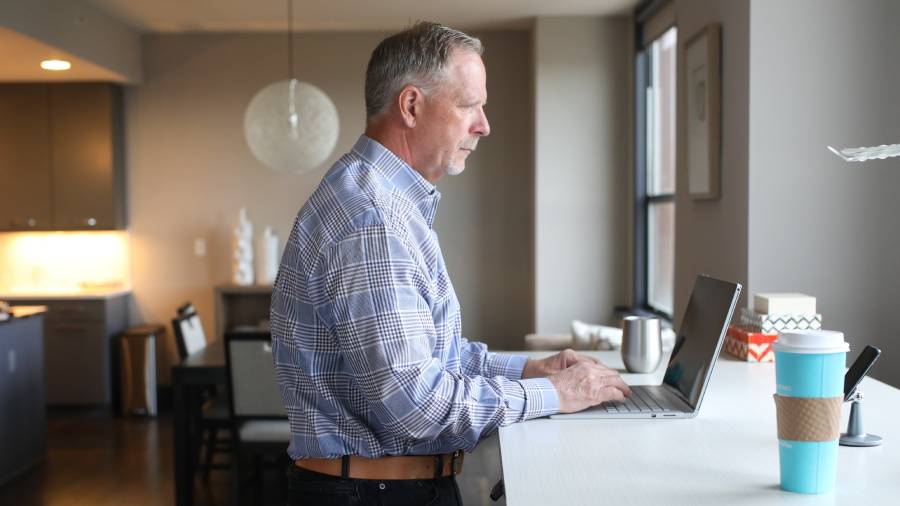
New research released by the Office for National Statistics shows that working from home may help enable older workers to remain in the labour market for longer.
Flexible working and homeworking are key factors which could allow older workers to continue working, according to new data released by the ONS.
The report outlined the detrimental effects associated with people aged 50 or over prematurely exiting the labour market.
This included risking the individual’s future financial security as well as having negative implications on the wider economy.

As such, the ONS concludes that there are significant benefits in homeworking being offered to this group following the pandemic.
In April-May 2021, older workers aged 50 to 69 years who were working from home reported that it improved their work life balance and overall well-being.
In addition, older staff who were homeworking throughout the pandemic were over twice as likely to say they were planning to retire later (11 per cent) compared to people not working from home (5 per cent).
Productivity levels were largely unaffected or improved through working from home, according to three-quarters of people within this group.
This change in working style was shown to have a sizeable impact on this demographic. Across the board, a greater proportion of older staff planned to work from home post-pandemic compared to the number that did so before the pandemic.
However, the research also highlights the negative effects that could arise for this group due to homeworking – notably, fewer promotions and training opportunities.
This is already a problem for this age bracket with previous research showing close to two-fifths of staff aged 55 or over received formal workplace training around ten years ago or never at all.
Inequalities within the labour market could also become entrenched, the report warns, as the gap widens between older staff who are permitted to work from home and those who are not.
Older staff who did not work from home during the pandemic were shown to share qualities with people who exited the labour market earlier than usual including having poor health, living in deprived areas, having lower or no qualifications and having lower well-being.
Cheney Hamilton, CEO at flexible working recruiter firm, Find Your Flex, stated this research shows a shift towards more flexible ways of working for this group:
People aged 45+ are job hunting in droves as a result of the pandemic. The fallout from Covid-19, and the wholesale switch to remote working, seems to have hit older workers particularly hard.
Many older workers are seeking flexibility to accommodate a better work/life balance as they enter the latter stages of their working lives. People’s mindsets have changed irreversibly as a result of the pandemic.
Flexibility that was once considered a luxury is now a requirement, if you’re lucky enough to find a role.
*This research was obtained from the ONS’ “Living longer: impact of working from home on older workers” report, published on the 25th August 2021.

Monica Sharma is an English Literature graduate from the University of Warwick. As Editor for HRreview, her particular interests in HR include issues concerning diversity, employment law and wellbeing in the workplace. Alongside this, she has written for student publications in both England and Canada. Monica has also presented her academic work concerning the relationship between legal systems, sexual harassment and racism at a university conference at the University of Western Ontario, Canada.
- Monica Sharma

- Monica Sharma

- Monica Sharma

- Monica Sharma






