

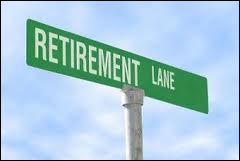
 The CBI has urged government to delay planned changes to the retirement age for a year, warning that firms faced “huge uncertainty” and a greater risk of unfair dismissal claims unless there was more legal clarity over the plans. At the moment employees can be forced to retire at or above the age of 65. The Government has made it clear that the statutory ‘default retirement age’ of 65 will disappear on 1 October 2011.
The last date upon which retirement notices can be given is even earlier – 31 March 2011. So, within a matter of months, requiring an employee to retire because of their age will be both unfair dismissal and age discrimination – unless the employer can justify its own retirement age. Many employers are concerned about the impact of this change on their business and it is predicted that there could be a steep rise in employment tribunal claims. Martin Warren, Head of employment law at international law firms Eversheds commented: “Each employer needs to decide how to respond. The main options are:
• To maintain a compulsory retirement age for all employees – or for some occupational groups – and be ready to defend this as ‘objectively justified’ in an Employment Tribunal.
• To take the view that employees will not wish to continue to work when they are no longer capable of performing well and therefore the issue will look after itself.
• To refresh and improve performance management processes – and the willingness of managers to operate them – so that any issue with under performance with age can be fairly and safely addressed.
• Set up straightforward arrangements so that sensible and practical discussions can be had with employees about retirement and about reducing their duties as they get older, and generally encourage open discussion on this topic.
“Employers’ concerns about the abolition of the default retirement are exacerbated by the fact that, although it will still be open for employers to have a compulsory retirement age in respect of their employees, they must be able to justify that for themselves under the Employment Equality (Age) Regulations.

Although the CJEU has displayed a markedly non-interventionist approach to the idea of compulsory retirement, which could be seen as an encouraging sign for those employers planning to retain a compulsory retirement age when the default retirement age is abolished next year, it should not be assumed that UK Employment Tribunals will be equally relaxed about forced retirement.
The existence of the default retirement age means there have been very few cases on retirement to date but those that have emerged from the Employment Tribunals in England and Wales demonstrate that employers cannot be assured of an easy ride. Moreover, given the Government’s views about the need for employees to work longer, some of the arguments which have been successful in the CJEU, such as balancing work for younger generations, would appear to be harder to persuade a UK court on.”





