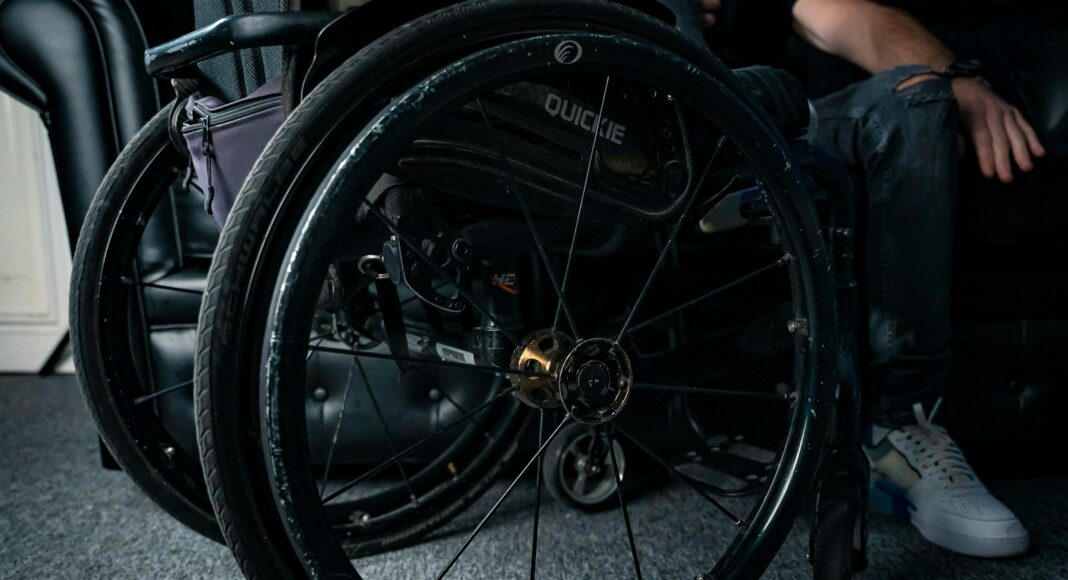
Employers are being urged to act more decisively on disability inclusion as new scrutiny falls on workplace accessibility as the UK marks the UN’s International Day of Persons with Disabilities today.
Despite repeated promises to close the disability employment gap, observers say many HR teams still feel unsure how to recruit disabled candidates with confidence, resulting in lost skills across the economy.
Almost one in four of the UK’s working–age population is disabled, according to the Office for National Statistics. Yet disabled people remain more than twice as likely to be out of work as non-disabled people. Campaigners have warned that the gap has barely moved in recent years, even as employers continue to struggle with staff shortages.
Intent without action
Business groups have argued that the biggest challenge is not a lack of goodwill but a lack of capability. Observers said employer fears about “getting it wrong” often stall progress before it starts.

Diane Lightfoot, who leads the Business Disability Forum and co-chairs the Disability Charities Consortium, described widespread hesitation among employers who want to act but feel unsure how. “We know that lots of employers want to do more to recruit and retain disabled employees but don’t know where to begin,” she was quoted in The Times as saying.
But the gap, experts point out, between statements and practical follow-through is stark. Official government survey data has found that only around one-third of employers feel confident hiring disabled workers. Inclusion specialists have argued that unless hiring practices change at pace, the UK will miss out on talent that is already available.
Recruitment processes ‘failing disabled applicants’
Disability organisations have highlighted multiple barriers that commonly arise before a candidate even reaches interview stage. They include online application systems that are incompatible with assistive technology and written assessments that allow no alternative formats or additional time, even when such adjustments have no impact on core job demands.
Analysts have warned that without checks in place, some digital tools used in recruitment could screen out disabled applicants before any human has reviewed them.
Employment charities have called for simple changes that make recruitment more accessible. It includes reviewing language in job adverts, offering interviews to disabled applicants who meet minimum requirements and providing clear information on what adjustments are available before hiring decisions are made.
Employer action can change culture
Some employers have reported strong results from supported employment pathways. The Times reported that schemes enabling young people with learning disabilities and autism to gain real workplace experience have led to sustainable jobs and better retention. Those outcomes, observers said, demonstrate what is possible when inclusive design begins at the start of someone’s working life.
Katharine Weston, director of the supported employment charity Mission EmployAble, said employers often overestimated the complexity of hiring disabled staff while overlooking the benefits to workplace culture. “Employing someone with a learning disability is not as ‘risky’ or expensive as potential employers often fear. But it is truly transformational for staff,” she told The Times.
Campaign groups continue to call for stronger leadership from those in HR and senior roles, warning that progress remains uneven across sectors and long-standing biases remain entrenched.
Talent and business advantage
Disability employment specialists have advised that seeing inclusion as social responsibility alone misses a core opportunity. Many disabled jobseekers are highly motivated to work and businesses that embrace inclusive hiring often report lower absenteeism and higher loyalty. Access-focused organisations have also noted that disabled households represent significant consumer power.
As the International Day of Persons with Disabilities refocuses attention on employment access, commentators are urging HR teams to match commitment with confident execution. Practical improvements in recruitment are known to remove the most common barriers. With labour shortages continuing to bite, the cost of inaction is rising for employers and for society.
The challenge now is to ensure disabled applicants are no longer overlooked simply because processes have not caught up with intentions.

William Furney is a Managing Editor at Black and White Trading Ltd based in Kingston upon Hull, UK. He is a prolific author and contributor at Workplace Wellbeing Professional, with over 127 published posts covering HR, employee engagement, and workplace wellbeing topics. His writing focuses on contemporary employment issues including pension schemes, employee health, financial struggles affecting workers, and broader workplace trends.
- William Furney

- William Furney
- William Furney
- William Furney