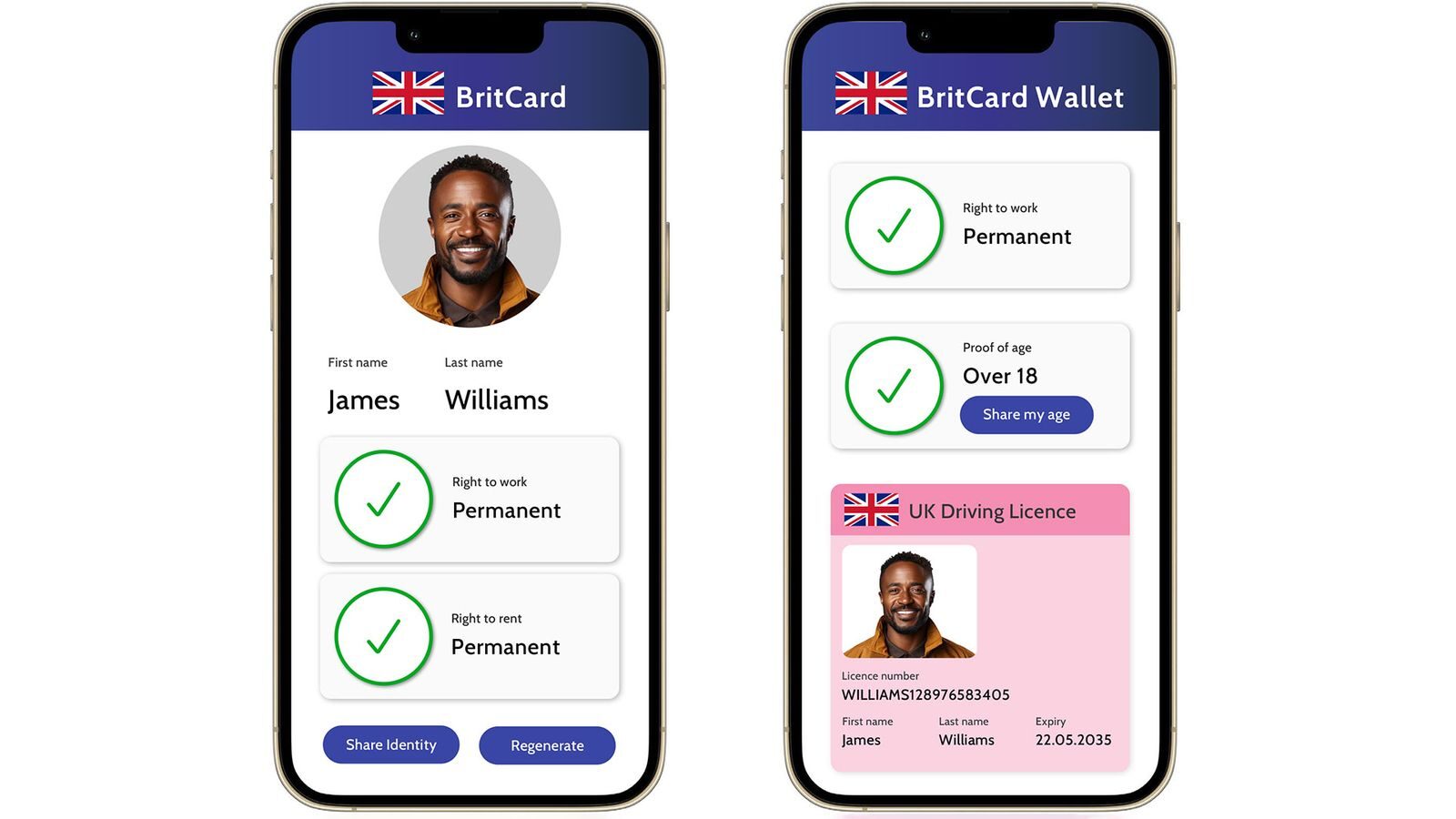
The government has dropped plans to require workers to register for a new digital identity scheme as a condition of employment, marking a significant change to its approach to right-to-work checks in the UK.
Under the revised position, employers will still be expected to carry out mandatory digital right-to-work checks by the end of the decade, but individuals will not be compelled to enrol in the government’s digital ID programme to prove their eligibility to work.
The move represents a departure from policy statements made in 2025, when ministers indicated that digital ID registration would become a prerequisite for employment. At the time, Prime Minister Sir Keir Starmer said workers would not be able to take up jobs in the UK without digital identification.
Following news of the scrapping on Tuesday, Conservative leader Kemi Badenoch said: “Good riddance. It was a terrible policy anyway.”

From compulsory registration to optional digital identity
The updated approach means that while right-to-work checks will increasingly take place through digital systems, such as biometric passport verification or online immigration status checks, participation in the broader digital ID scheme will be voluntary.
Digital verification of work status will still be required, but the government has stepped back from tying employment directly to enrolment in a single, centralised digital identity programme.
The change follows mounting political unease about the compulsory nature of the original proposal, including concerns expressed by Labour MPs and strong public opposition. Nearly three million people signed a parliamentary petition opposing mandatory digital IDs.
Government maintains commitment to digital checks
Despite removing compulsory digital ID registration, ministers have reiterated that digital right-to-work checks themselves will remain mandatory for employers.
A government spokesperson said the current system relies too heavily on fragmented and paper-based processes, which can leave employers exposed to fraud and abuse. The spokesperson said digital checks would make compliance more robust while remaining accessible.
Employers are legally required to verify that anyone they hire has the right to work in the UK. Since 2022, businesses have been able to carry out digital checks for British and Irish passport holders using government-certified identity service providers, while some non-British or Irish nationals can be verified through an existing Home Office online status checking service.
Move towards digital public services
Rather than framing digital ID primarily as an employment control mechanism, the government is now positioning it as a voluntary tool to support access to public services.
Darren Jones, the Cabinet Office minister responsible for the rollout, told an Institute for Government conference that digital ID would form part of a wider programme of digital transformation across public services, according to the BBC. He said a public consultation on the proposals would be launched shortly.
The government’s digital identity infrastructure is expected to centre on two systems. Gov.uk One Login, which is used for services such as passport applications and managing a lasting power of attorney, has more than 12 million registered users. A second system, Gov.uk Wallet, has yet to launch and would allow people to store digital credentials on their smartphones.
Employer and workforce compliance
The policy adjustment removes the prospect of having to manage employee enrolment into a mandatory digital ID scheme while still signalling a clear direction of travel towards fully digital right-to-work compliance.
HR teams will continue to need robust processes for digital verification, record-keeping and compliance, particularly as paper-based checks are phased out. But the removal of compulsory registration is likely to ease concerns around employee trust, data privacy and industrial relations.
While the technical details of the revised system have yet to be published, the decision suggests the government is seeking to balance enforcement, public confidence and digital modernisation as it reshapes how right-to-work checks operate in the years ahead.

William Furney is a Managing Editor at Black and White Trading Ltd based in Kingston upon Hull, UK. He is a prolific author and contributor at Workplace Wellbeing Professional, with over 127 published posts covering HR, employee engagement, and workplace wellbeing topics. His writing focuses on contemporary employment issues including pension schemes, employee health, financial struggles affecting workers, and broader workplace trends.
- William Furney

- William Furney

- William Furney

- William Furney