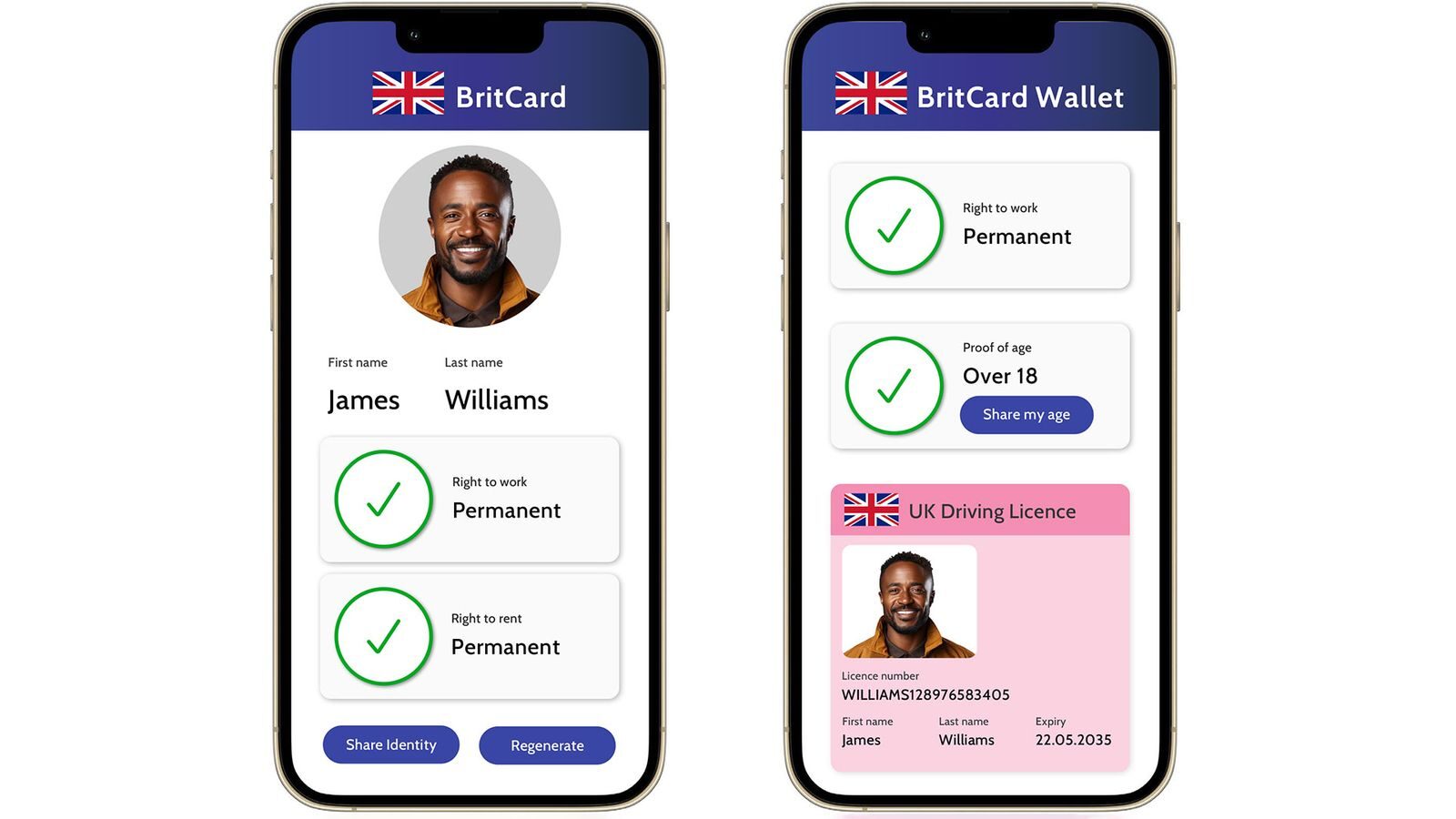
The government’s plan to introduce a compulsory digital ID for all workers, dubbed the “Brit Card”, has been presented as a way to clamp down on illegal employment and improve access to public services. But employer groups and legal experts have told HRreview that it will not address the underlying problems that lead to illegal working.
Prime Minister Sir Keir Starmer announced the scheme last Friday at the Global Progress Action Summit in London, where he said a “free-of-charge” digital ID would be mandatory for right to work checks by the end of this parliament. He described the measure as part of Labour’s mission to respond to public concerns about migration and curb the influence of Reform UK, the party led by Nigel Farage.
The government said the Brit Card would be stored on people’s mobile phones and serve as the authoritative proof of identity and residency status. It will include personal details such as name, date of birth, nationality or residency and a photograph secured with biometric technology. Over time, it will also be used to access services including driving licences, childcare, welfare and tax records.
Employer concerns about enforcement
The Chartered Institute of Personnel and Development (CIPD), the professional body for HR and people development, said the scheme might help reduce bureaucracy for employers but would not by itself prevent illegal employment.

“There could be some advantages to digital ID cards from an employer perspective, as they could potentially remove some of the bureaucracy businesses face around right to work checks when recruiting new staff, particularly overseas workers,” Ben Willmott, head of public policy at the CIPD, told HRreview.
“However, if the intention is to reduce illegal working then other changes would be required alongside digital ID cards, including more resources for the Fair Work Agency and the wider labour market enforcement system. There are already stringent right to work requirements in the UK, so any steps to tackle illegal working would also need to address existing fault lines in the system.”
The government said the Brit Card would simplify the process, cut down on forged documents and generate data that could help the Home Office target employers hiring illegally. Ministers said illegal working arrests had risen by 50% in the past year, and that new legislation was being prepared to address the gig economy.
Legal specialists question impact
Immigration law experts said the plan raised issues of civil liberty and questioned whether it would have any effect on illegal work.
“It’s interesting that the UK government are looking to reintroduce an ID card proposal given the overwhelming opposition to these cards in the past. Framing them in the context of preventing illegal workers doesn’t fully address issues that most people held previously with civil liberty,” said Oliver O’Sullivan, director of immigration at law firm Migrate UK.
“In reality, if you’ve applied for a British passport recently or otherwise verified your identity with the UK government via a Gov.UK website, you already have the essence of a digital passport with the government.”
O’Sullivan said that “[l]ike the EU settlement scheme, digital IDs face resistance from a new generation of people resistant to sharing sensitive information online, while also struggling with a large population of people who are not familiar with digital technologies who will struggle to complete the process.”
Illegal employment often arose because businesses either failed to carry out right to work checks or did not understand how to complete them properly, he said. And so he asked if the Brit Card was likely to solve the problem.
“Not if the main reason for illegal working is employers knowingly hiring a person without permission to work, or not doing the right checks in the first place. Right to work checks aren’t failing because of the documents involved.”
HR needs clarity on compliance
Employment services provider Peninsula said businesses would need clear guidance on how to implement the new system. “Right to work checks have become increasingly complicated over recent years, so the confirmation by the government that the introduction of Digital IDs will make this process simpler and easier for employers is good news,” Kate Palmer, its employment services director, said.
“However, with the risk of hefty fines for getting it wrong, employers will need clear and comprehensive guidance on how to process Right to work checks in the future. The government will need to ensure it’s clear whether employers need to retrospectively check the Right to work of current employees and provide instruction on what do in the event a Digital ID check isn’t possible.”
Palmer added that she hoped that “more information on the implementation of Digital IDs will be included in the consultation expected to take place later this year. For now, though, employers do not need to make any changes to their processes. However, employers should see this as another clear sign of the government’s intent to crackdown on illegal working and be prepared to review and adapt their processes to remain compliant.”
International comparisons and security promises
Downing Street said the system would take lessons from countries that already use digital identification successfully. In Australia, citizens use their digital ID to access banking and retail services, while in Estonia parents can use their card to apply for childcare places and access health records.
Denmark allows students to use national ID to retrieve qualifications, and India has saved an estimated $10 billion annually through reduced fraud in welfare programmes.
The Brit Card will use encryption and authentication technology designed to limit the amount of personal information shared and protect against theft. If a phone is lost or stolen, the ID can be revoked and reissued.
The government has pledged that inclusion will be central to the design, with support for people without smartphones and outreach programmes for older people and the homeless.
Longstanding debate on ID cards
Britain has a complex history with national identity systems. Identity cards were abolished after the Second World War, and Labour’s efforts to reintroduce them in the 2000s collapsed in the face of political opposition and civil liberty concerns. Polling by Ipsos in July found that 57% of Britons supported a national identity scheme, although three in 10 raised worries about privacy, data sales and breaches.
Starmer described digital ID as “an enormous opportunity for the UK” and said it would make illegal working harder while also helping citizens access services more easily”.
The prime minister added that it would “also offer ordinary citizens countless benefits, like being able to prove your identity to access key services swiftly, rather than hunting around for an old utility bill”.

William Furney is a Managing Editor at Black and White Trading Ltd based in Kingston upon Hull, UK. He is a prolific author and contributor at Workplace Wellbeing Professional, with over 127 published posts covering HR, employee engagement, and workplace wellbeing topics. His writing focuses on contemporary employment issues including pension schemes, employee health, financial struggles affecting workers, and broader workplace trends.
- William Furney

- William Furney
- William Furney
- William Furney