
Chief executives are holding back on recruitment because they fear artificial intelligence may soon make new staff redundant, according to the head of the world’s largest HR body.
Johnny C Taylor Jr, president and chief executive of the Society for Human Resource Management (SHRM), said business leaders are reluctant to bring in workers only to be forced to let them go shortly afterwards. SHRM represents around 340,000 members in 180 countries.
“We’ve naturally become more conservative in our hiring, so if there’s anything on the horizon that suggests that we may not need those people, we don’t hire them,” Taylor said in an interview with the Times.
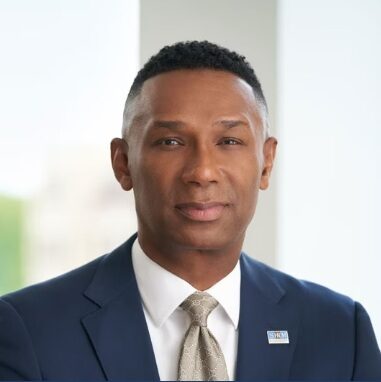
He added that many leaders still felt the effects of over-expansion during the pandemic, when rapid hiring was followed by mass layoffs. “I think there was a lot of guilt for, ‘I hired you away from another job, you had a perfectly great life, I brought you over, I recruited you … and then I got rid of you through no fault of your own’.”

Taylor described the pace of AI adoption as unlike any previous workplace shift. “We have nothing to compare it to, if you think about AI,” he said. “Historically technologies have been introduced and then took a time for adoption, and now instantly that day [when ChatGPT was launched in 2022] millions of people signed up and agreed to get it and … now all of a sudden it’s impacting us and that’s what’s so scary to me.”
Job losses linked to AI
Some organisations have been open about AI-driven staff cuts. IBM confirmed this year that 200 HR jobs were replaced with chatbots, while Recruit Holdings, owner of Indeed and Glassdoor, cut 1,300 roles in its technology arm, citing AI.
But Taylor suggested others are hiding the connection for fear of reputational damage. “Most companies — I think because of damage to their brand — don’t want to be seen as bad, especially if they’re B2C [business to consumer]. So if I could reduce headcount in a B2C business but doing it might subject me to a boycott, I’m not going to tell you, but I’m still going to do it.”
While US labour figures show a slowdown in hiring rather than widespread redundancies, Taylor warned the longer-term impact could be severe. “Human beings and workers in particular are going to be significantly impacted. I don’t know if it’s to the degree that some suggest but if there are eight billion people on the planet, roughly four billion people working, if it’s 10 per cent it’s a lot of people who are no longer working.”
He believes political leaders will be forced to take a stance, with “job killer” or “job protector” labels shaping future elections.
Cultural fatigue in the workplace
Taylor also warned that chief executives are retreating from taking public positions on social issues, saying employees have grown weary of polarised workplace debates.
“Research was saying the workplace was becoming very uncivil and polarised and people were telling us ‘I actually don’t want to come here and debate right or wrong, I just want to do my job. I just want to go home. I don’t want to get into all of this. I can’t solve a variety of years of slavery over lunch and not be glib’.”
He said the “chilling effect” was visible in diversity, equity and inclusion (DEI) policies in the US, particularly after a series of Supreme Court rulings. In June the court held that “reverse discrimination” claims brought by majority groups are not subject to higher standards of proof, something Taylor said has “totally changed” the HR landscape.
“I remember in my legal practice as well as in my HR practice, when you were getting ready to terminate someone or taking some sort of employee decision we’d say, ‘Is that person a member of a protected class, race, gender, national origin, disability?’ Now everyone is a member of a protected class because the court has said everyone has a right to equal protection.”

William Furney is a Managing Editor at Black and White Trading Ltd based in Kingston upon Hull, UK. He is a prolific author and contributor at Workplace Wellbeing Professional, with over 127 published posts covering HR, employee engagement, and workplace wellbeing topics. His writing focuses on contemporary employment issues including pension schemes, employee health, financial struggles affecting workers, and broader workplace trends.
- William Furney

- William Furney
- William Furney
- William Furney