The widespread use of generative AI by jobseekers is creating a new recruitment challenge for employers, who face soaring application volumes, falling candidate quality and mounting concerns about interview integrity.
Industry leaders warn that a “tsunami of sameness” is making it harder than ever to identify genuine talent, particularly for graduate and entry-level roles. With artificial intelligence now able to generate tailored CVs and cover letters in seconds, applicants are flooding platforms such as LinkedIn and Indeed with hundreds — or even thousands — of job applications.
The Institute of Student Employers reports that the average number of applications per graduate job rose from 50 in 2019 to 140 last year, with some vacancies attracting thousands of applicants in just hours. According to LinkedIn, around 11,000 job applications are now submitted every minute.
Recruiters say this surge is being driven by AI tools such as ChatGPT, and platforms like LazyApply, which allow jobseekers to auto-fill and auto-send applications en masse. In one example, a software engineer reportedly applied for 5,000 jobs in a week using such tools, securing just 20 interviews — a hit rate of just 0.4%.

But this low-effort, high-volume approach is reshaping candidate expectations and undermining traditional hiring filters, experts say.
“Companies are dealing with a tsunami of sameness in applications,” Estelle McCartney, chief executive of psychometric testing tools service Arctic Shores, was quoted in the Telegraph as saying. She noted that while high-application volumes had long been an issue in graduate recruitment, “with the advent of the AI-enabled candidate, we’re now working with companies across a much broader range”.
Box-ticking culture comes full circle
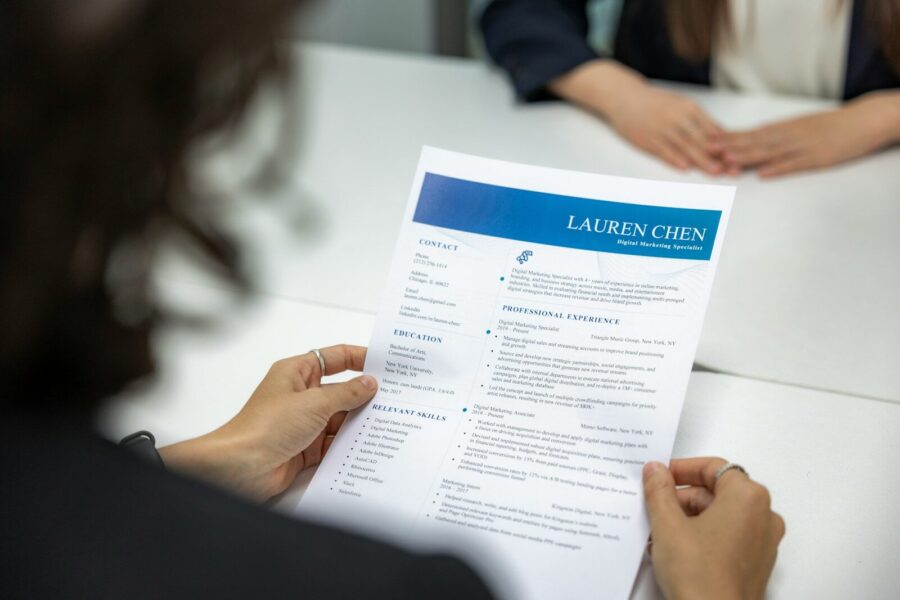
Observers argue that recruiters have unintentionally fuelled the change. Over the past two decades, the use of applicant tracking systems (ATS) to scan for keywords has rewarded conformity. Now, jobseekers are feeding those same systems with algorithmically optimised responses.
As Dr Huw Fearnall-Williams of Lancaster University said that even before the advent of ChatGPT, candidates were coached to mimic “ideal” CV formats, use specific power words and model their answers to expected formats.
“AI is obviously quite good at that,” he told the Telegraph.
The result is an application pile saturated with polished but generic responses, many of which are easily spotted by experienced hiring managers. Despite this, AI-authored applications are increasingly the norm: according to job board Adzuna, nearly two thirds of workers have used AI to write their CVs, and fewer than half now consider it “cheating”.
James Neave, head of data science at Adzuna, said AI has the potential to match candidates with roles more effectively and reduce administrative burden, but noted that many tools currently focus on “application volume rather than doing what hiring truly requires”.
Interview integrity under pressure
The use of AI doesn’t stop at CVs. Employers report that some candidates now rely on generative AI tools — often running in the background — during live video interviews, raising questions about authenticity, ethics and competence.
In response, recruiters are taking countermeasures, such as introducing “curveball” questions like “What did you have for breakfast?” or requiring candidates to share their screens.
The cat-and-mouse dynamic is pushing some organisations to return to more traditional assessments. In-person interviews are making a comeback at firms such as Google, whose chief executive Sundar Pichai recently confirmed that the tech giant had reintroduced face-to-face final interviews due to cheating in remote coding tests.
Others are turning to game-based psychometrics, such as those provided by Arctic Shores, which are designed to assess qualities like critical thinking and problem-solving — attributes that cannot be easily faked or gamed by AI.
One-way video interviews, in which candidates record answers to pre-set questions, are also being used more widely. They’re sometimes evaluated by humans but can also be analysed by AI software.
Risk of mismatched hires
HR leaders warn that over-reliance on generative AI can create a mismatch between how candidates present themselves and how they perform in the role.
According to the Institute of Student Employers, more new hires are falling short on attributes such as resilience, self-awareness and verbal communication. “At best, the training process is disrupted, at worst, the candidate finds themselves in the wrong job,” said the institute’s Stephen Isherwood.
This gap between perception and reality adds cost and complexity to onboarding and retention. It also undermines efforts to build inclusive, high-performing teams, especially when recruitment decisions are based on automated filters rather than human judgment.
Neil Carberry, chief executive of the Recruitment and Employment Confederation, said both employers and candidates were suffering. “On current trends it’s harder both ways,” he noted, describing the growing reliance on AI as contributing to a wider breakdown in the recruitment experience.
Human-centric hiring focus
In the face of growing concerns about candidate quality, more employers are re-emphasising human judgment and personal connections.
Specialist recruiters are playing a renewed role in screening and referring candidates based on personal knowledge and insight, in a development Carberry calls a “flight to quality”.
Meanwhile, government agencies are leaning in the opposite direction. The Department for Science, Innovation and Technology recently announced plans to work with the private sector to develop an AI agent that can assist unemployed jobseekers by filling out applications on their behalf.
The Civil Service has also updated its guidance to allow applicants to use AI to “enhance” their written responses.
The challenge for HR departments, say observers, is to strike the right balance: leveraging AI to improve efficiency, while avoiding the unintended consequence of reducing people to keywords and prompts.
The battle between generative tools and screening technologies is not sustainable, they warn. If employers want to attract the best talent — and not just the most polished application — they may need to rethink what recruitment looks like in an AI-saturated age.

William Furney is a Managing Editor at Black and White Trading Ltd based in Kingston upon Hull, UK. He is a prolific author and contributor at Workplace Wellbeing Professional, with over 127 published posts covering HR, employee engagement, and workplace wellbeing topics. His writing focuses on contemporary employment issues including pension schemes, employee health, financial struggles affecting workers, and broader workplace trends.
- William Furney

- William Furney
- William Furney
- William Furney