
Can employers help employees build good savings habits?

-

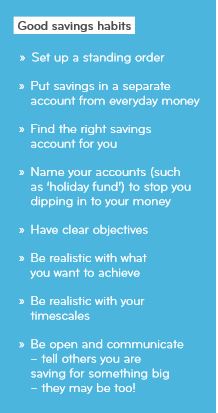
Creating a savings buffer means putting money aside regularly.

However, a survey from from leading Financial Wellbeing Provider, Neyber, shows that nearly a fifth of employees (18 per cent) are not saving anything at all each month.
For those earning between £10,000 and £19,999, that figure is far higher, at 26 per cent.

As the primary source of income, employers are in a great position to reinforce the importance of regular saving, through financial education and providing support to help employees choose the right products for their needs.

HRreview Logo

Get our essential weekday HR news and updates.

This field is for validation purposes and should be left unchanged.
Keep up with the latest in HR...
This field is hidden when viewing the form
Optin_date
This field is hidden when viewing the form


Employers spend a considerable amount of money providing benefits for their employees, often these include protection and savings products as well as voluntary benefits such as discount and employee purchase schemes.

It’s vital that employees understand and recognise the value of these benefits. Clear communication and easy access for employees play a huge part in achieving engagement, as well as ensuring information and guidance to build knowledge. This allows employees to make smart, well informed decisions about what is right for them and their loved ones.


Neyber’s full report – the DNA of financial wellbeing – can be found here.

www.neyber.co.uk

Rebecca joined the HRreview editorial team in January 2016. After graduating from the University of Sheffield Hallam in 2013 with a BA in English Literature, Rebecca has spent five years working in print and online journalism in Manchester and London. In the past she has been part of the editorial teams at Sleeper and Dezeen and has founded her own arts collective.

Latest news

Transgender staff excluded from single-sex toilets under new equality guidance

Transgender people must be excluded from single-sex toilets and changing rooms that correspond with their lived gender under updated...

Simon Coker: Closing the emotional gap – why AI in the workplace is as much a human challenge as a technological one

AI adoption is transforming how work gets done across every sector. But its deeper impact is less visible: it is reshaping how people feel about their work.

Employment tribunal delays stretch towards 2030 as lawyers warn system is nearing collapse

Employment tribunal hearings are being delayed for years as lawyers warn mounting backlogs are undermining workplace justice.

Keeping culture and purpose at the centre of a growing fintech

A fintech people leader explains how culture, wellbeing and purpose are being protected during rapid business growth.
- Advertisement -

Migrant worker with no right to work in UK wins discrimination case against employer

An employment tribunal has ruled that a migrant worker without the legal right to work in Britain can still pursue successful discrimination claims.

Government to replace some GP sick notes with return-to-work plans

Workers in four English regions will be directed towards personalised health and employment support as ministers test alternatives to GP-issued fit notes.

Must read

Nick Mitchell: How do we stop training budgets being cut during times of recession?

Whatever the claims made by politicians of a ‘recovery’,...

Ruth Penfold: That time I realised it’s all about the people

Shazam is full of smart people, smart people that love their jobs – and we love it that way. Our quest as a global hiring team, therefore, is not only to keep finding and introducing smart people to the business; it’s to find more smart people that will truly love their jobs too. Why? Because when you have a room full of smart people that love their jobs, that’s when the magic happens.
- Advertisement -

You might also likeRELATED
Recommended to you








