

However, this move seems to contradict advice given by SAGE which argued that workers should be homeworking indefinitely in order to avoid a third wave of the virus.
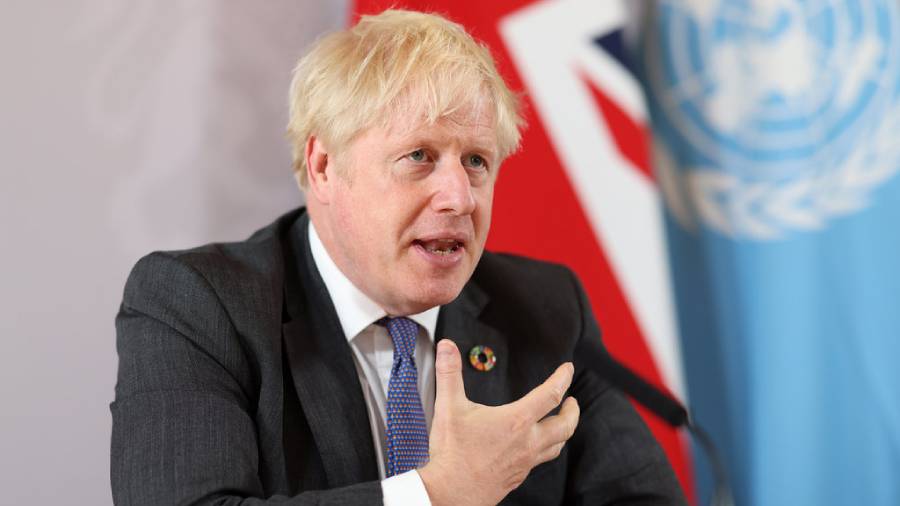
The Prime Minister has stated his intention to end the work from home order on the day that all lockdown restrictions are lifted – in line with Step 4 of the Government’s roadmap.
When asked about this in Prime Minister’s Questions on Wednesday, he stated this was “certainly the Government’s intention, provided we stay on track”.
However, Mr. Johnson then said he “[wanted] to be sure that people will wait until we’re able to say that with more clarity later on because we must be guided by what’s happening with the pandemic”.

This approach largely aligns with what he and the Chancellor have been arguing is the most favourable option for cities – a return to offices.
This is despite the Scientific Advisory Group for Emergencies (SAGE), responsible for supporting government decision makers during times of emergency, recently expressing that a mass return to work would not be favourable until the impact of lockdown easing was fully understood.
Instead, the group suggested that people working from home should continue to do so indefinitely to avoid the potential of a third wave of the virus.
The debate surrounding whether offices should re-open imminently this summer has been made more complicated by the news of the Indian variant of the virus.
The Prime Minister himself confessed feeling “anxious” about this new mutation (called B.1.617.2) and said he is “ruling nothing out” in order to tackle it. At present, Public Health England has recorded 1,313 cases of this variant in the UK.
However, the deputy chairman of the COVID Recovery Group of MPs, argued that the vaccine roll-out was working well enough to continue with the plan to lift all lockdown restrictions on the 21st June:
Why on earth would we lock down when the vaccines continue to break the link between cases and hospitalisations and deaths?
We were told the roadmap was cautious – in spite of the overwhelmingly promising data on the benefits of the NHS vaccine rollout – precisely so it would be irreversible.
The Government plans to keep all measures under review with Stage 3 of the roadmap being expected to be implemented from next week (17th May).

Monica Sharma is an English Literature graduate from the University of Warwick. As Editor for HRreview, her particular interests in HR include issues concerning diversity, employment law and wellbeing in the workplace. Alongside this, she has written for student publications in both England and Canada. Monica has also presented her academic work concerning the relationship between legal systems, sexual harassment and racism at a university conference at the University of Western Ontario, Canada.
- Monica Sharma

- Monica Sharma

- Monica Sharma

- Monica Sharma





