

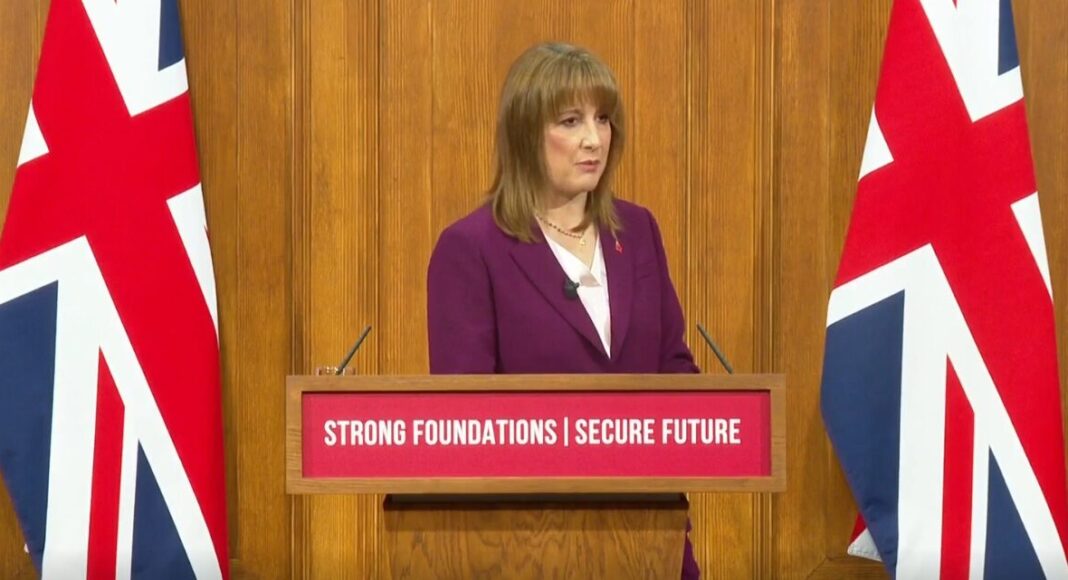
The chancellor has signalled that tax rises are likely in the upcoming Autumn Budget, as economic pressures mount and government spending rules tighten.
Speaking from Downing Street early on Tuesday, Rachel Reeves said the government would be “honest” with the public and prepared to make the “necessary choices” to address the UK’s economic challenges. While no specific measures were announced, her refusal to rule out future tax increases has fuelled speculation ahead of the 26 November statement.
Observers said the speech amounted to a softening-up exercise, laying the groundwork for potentially unpopular fiscal decisions as the government confronts a £30 billion gap in the public finances.
Economic backdrop limits options
Reeves made no direct reference to tax increases, but acknowledged that the government’s ability to make investments depended on sustainable public finances.

“The causes of our economic underperformance are well understood,” she said. “The chronic stop-go cycle of public investment has left us with roads full of potholes, high energy prices and unstable conditions for vital business investment in skills and technology.”
Reeves said the “long-term failure to invest in our regions has built growth on a narrow base — with some parts of the country forging ahead while others fall behind.
“Later this month, I will deliver my second budget as chancellor of the exchequer. At that budget, I will make the choices necessary to deliver strong foundations for our economy. My budget will be led by this government’s values of fairness and opportunity, and focused entirely on the priorities of the British people: protecting our NHS, reducing our national debt and improving the cost of living.
“As I take my decisions on both tax and spend, I will do what is necessary to protect families from high inflation and interest rates, and to protect our public services from a return to austerity.”
Her remarks follow repeated calls for transparency from economists and business groups. Forecasts suggest the Office for Budget Responsibility may downgrade the UK’s productivity outlook, potentially wiping £20 billion from the economic outlook and leaving little fiscal “headroom”.
In that context, the chancellor’s promise to abide by strict borrowing and spending rules effectively narrows the government’s options to either tax rises or spending cuts.
Tax rises likely despite election promises
Paul Robbins, director of tax at accountancy and audit specialists Croner-i, told HRreview that the speech confirmed that the government was preparing the ground for revenue-raising measures. “Reading between the lines of [the] speech, it seems the chancellor is bowing to pressure and paving the way for tax rises.”
He noted that while Reeves had not directly confirmed new tax measures, her refusal to rule them out was politically significant. “In political terms, such a refusal is effectively an admission of the inevitable,” he said.
Robbins also warned that the government’s pre-election pledge not to raise taxes on working people now appeared “in hindsight, increasingly ill-advised”, given the fiscal outlook and limited flexibility within the current financial framework.
Impact on employers and HR
For employers and HR leaders, the prospect of tax rises creates fresh uncertainty in workforce planning, reward structures and future hiring. Business groups have already raised concerns about how any increase to National Insurance or income tax could affect employment costs, particularly for sectors under pressure to raise wages in line with inflation.
At the same time, the potential for spending cuts poses a threat to public services and job security in government-funded roles, adding to wider workforce anxiety as the economy continues to flatline.
The Chartered Institute of Personnel and Development has previously urged the government to focus on productivity growth and investment in skills, warning that short-term fiscal decisions risk undermining long-term workforce resilience.
Defining moment for Labour
Robbins described the forthcoming budget as a “politically defining moment” for the government, which is still in its early months following the general election. He added that “[m]aybe it’s time to rip off the plaster from our ailing economy and let some air get to the wound”.
The sentiment reflects the view of several economists who argue that difficult choices are inevitable, and that clarity now will help to rebuild confidence among investors, employers and the public.
Labour’s campaign messaging focused heavily on financial responsibility and rebuilding trust in economic management. But delivering on that promise may now require the government to break with elements of its own manifesto.
Further announcements are expected in the lead-up to the budget, as the government seeks to prepare voters and stakeholders for what could be a painful fiscal reset.

William Furney is a Managing Editor at Black and White Trading Ltd based in Kingston upon Hull, UK. He is a prolific author and contributor at Workplace Wellbeing Professional, with over 127 published posts covering HR, employee engagement, and workplace wellbeing topics. His writing focuses on contemporary employment issues including pension schemes, employee health, financial struggles affecting workers, and broader workplace trends.
- William Furney

- William Furney

- William Furney

- William Furney






