


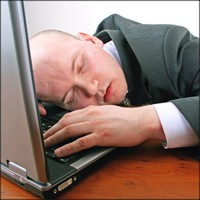
 Vielife health data confirms one in three employed people have poor sleep
At-least 1 million UK workers are ‘sleep drunk’ due to a lack of shut eye, new data of nearly 39,000 employed people from vielife has shown.
Although drink driving is socially unacceptable sleep deprivation is so extreme in the UK that 1 million people are doing the equivalent of getting behind the wheel intoxicated every day, without alcohol passing their lips, having a profound impact on their employer and workplace.
The data, from vielife’s online health & wellbeing assessment, also shows that one in three or approximately 100 million European working adults suffer from ‘poor sleep’. These people are living in danger of a semi-conscious existence equal to repeatedly driving their car well over the alcohol limit.

The facts:
- Women are more at risk than men – 35% have poor sleep compared to 31% of men
- Depression has a profound correlation with poor sleep
- People working a five day week generally have better sleep than people working more or less than five days
- Poor BMI, longer working hours, smoking, asthma, depression, high blood pressure, migraine and body pain, low job satisfaction, higher sick days and lower energy levels ALL correlate with poorer sleep
- 56% of people getting between five and seven hours sleep per night have high sleep risk, compared to only 6.25% of people getting 7-8 hours per night
- 33% of people are unhappy with their sleep and 90% of people with poor sleep are unhappy with their sleep
- 7-8 hours sleep per night appears to minimise sleep risk
Being ‘sleep drunk’ is caused by the tiredness felt after prolonged waking hours which has the equivalent effect as a raised blood alcohol level above the legal limit to drive.
Tony Massey, vielife’s chief medical officer and ‘Sleep Doctor’ says: “Being ‘Sleep Drunk’ is a common issue that causes personal and work life issues and a healthy lifestyle is at the heart of solving it.”
The data is based on ‘sleep scores’ recorded by users of vielife’s online health & wellbeing platform. A sleep score indicates the overall quality and satisfaction of a person’s sleep as part of a wider ‘wellbeing score’ used to help people identify and work to improve their health issues. This research was based on 38,784 assessments of people employed in the UK taken between 2009 and 2011.





