The government has announced a ‘productivity plan’ that will aim to increase the UK’s productivity by improving economic output.
Business secretary, Sajid Javid, claims that if we could match USA for productivity we could boost our GDP by 31 percent.
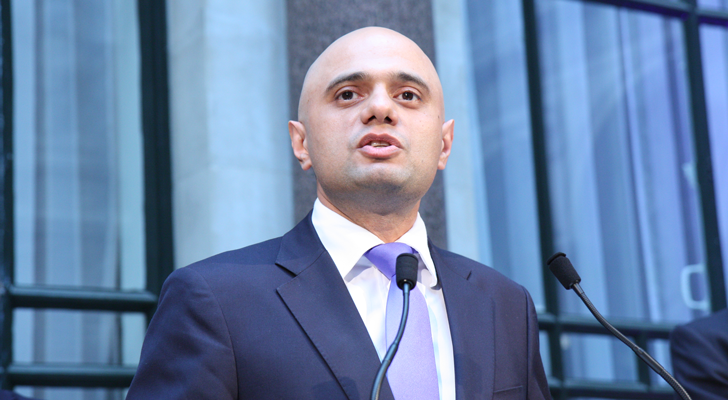
In a speech announcing the plan, Javid says:
“Britain is home to some of the world’s most innovative and dynamic businesses, staffed by incredibly talented, hardworking individuals. Yet our productivity is well below its potential. In stark terms, it currently takes a worker in the UK five days to produce what his or her counterparts in Germany can deliver in four.”

The plan, ‘Fixing the Foundations: Creating a more prosperous nation’, focuses on long-term investment and promoting a dynamic economy. This includes creating greater investment in transport infrastructure and automatic planning permission for brownfield sites.
The plan also reiterates the ‘apprenticeship levy’ announced earlier this week in the budget, which sees employers paying for, and having greater control of the types and quality of apprenticeships available.
The plan also proposes a more streamline education system, by replacing thousands of qualifications with a clear set of routes that allow for progression to high level skills.
The CBI welcomes the plan as John Cridland, CBI director-general, says, “Productivity is a missing piece of the growth puzzle.”
“This ambitious plan from the Government will help our economy move up another gear. We’ve already seen progress in the Budget with lowering Corporation Tax, movement towards a business tax roadmap and the new permanent Annual Investment Allowance – all will help increase investment by creating certainty for businesses.
“Creating better routes into the higher skills needed for today’s jobs market is something we’ve been behind all along, so we’re glad to see the Government making this the centrepiece of its plans to power up productivity with the creation of Institutes of Technology.
Chris Jones, chief executive of the City & Guilds Group, however has some concerns as he says, “As ever, the devil will be in the detail.”
He adds:
“I always get worried when I hear Government talk about ‘radical change.’ As our recent report into skills policy showed, we’ve had three decades of constant change in skills and employment policy. In order to boost productivity and strengthen the UK’s skills base, we need stable, long-term planning that gives new policies a chance to mature. I am keen to see how core aspects of this plan will be implemented in practice, including the apprenticeship levy.”
Title image credit: Creative Britain

Amie Filcher is an editorial assistant at HRreview.
- Amie Filcher

- Amie Filcher

- Amie Filcher

- Amie Filcher