

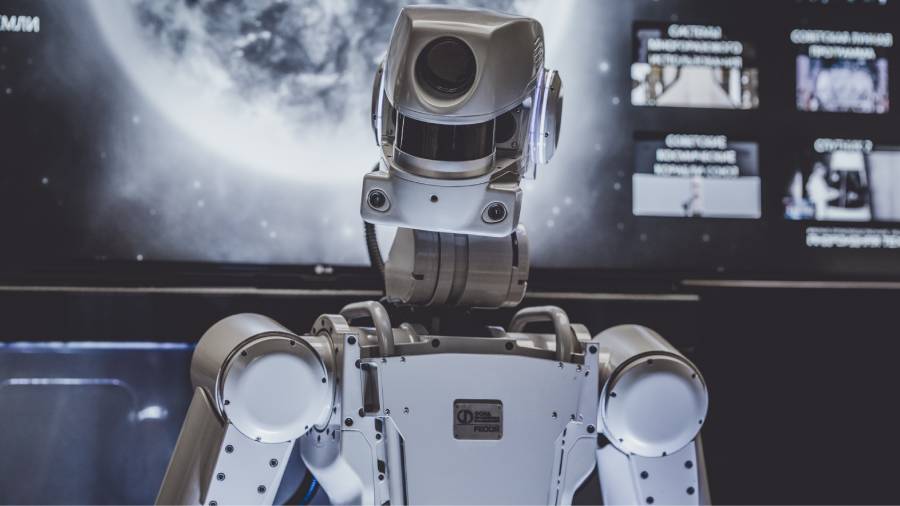
HRreview asks experts in various fields about the acceleration of technology across different sectors and what employers must keep in mind as machines are increasingly implemented in the workplace.
Recent research from the World Economic Forum highlights the rapid rate of change when it comes to technology in the workplace. The findings predict that by 2025 – almost four years from now – half of all work tasks will be handled by machines.
Although this is predicted to create 97 million jobs worldwide, it may be responsible for destroying just as many, Agata Nowakowska warns.
Furthermore, Agata Nowakowska, Area Vice President at Skillsoft, an educational technology company, states that this advancement of technology is not likely to impact different groups equally:

However, whilst automation through AI and Machine Learning will impact millions of jobs across the globe, presenting a risk to employees who lack digital skills and proficiencies – not everyone is at equal risk of being replaced by a robot. Twice as many women than men are likely to lose their jobs as automation replaces human labour, as roles most susceptible to automation include data processing jobs – such as cashiers or receptionists.
Prioritising a learning culture
Due to this, Agata argues the necessity of organisations to prepare for this impact by prioritising learning in all its different states across the workforce:
With the ‘robot revolution’ causing significant implications for gender equality in the workplace, employers need to ensure everyone, regardless of gender, age, or location, shares in the spoils of new technology. This means taking a comprehensive approach to reskilling, upskilling, and job transitioning – cultivating a flexible learning culture which provides employees the opportunity to learn new skills through lifelong learning initiatives.
By proactively encouraging a flexible learning culture that embraces change and supporting female employees to develop the skills required to fill identified gaps, employers can lead the charge in narrowing the skills and gender gap for a future that is more human, and less robot.
Additionally, Samantha Humphries, Security Strategist at Exabeam, a data security analytics company, highlights the various positives that increased machine learning and technology could bring:
The Robot Revolution’ has become increasingly topical over the past decade, with automation, AI and machine learning forecasted to radically transform the workplace as we know it. According to Exabeam’s 2020 Cybersecurity Professionals Salary, Skills and Stress Report, 88% of cybersecurity professionals believe automation will make their jobs easier – simplifying cybersecurity work, helping to reduce response times, and bolstering defence.
Communicating the positives
However, citing the well-documented fear that machines will eradicate job roles that are currently held by humans, Samantha suggests there is more to be done in communicating the benefits of these machines to employees.
However, whilst automation improves business productivity and outcomes, there is the growing concern that people will become displaced by machines in the workplace – indeed almost half of workers believe automation is a threat to their jobs.
With heightened concerns around ‘The Robot Revolution’, security leaders should reassure staff members that automation improves outcomes and provides advancement opportunities, rather than eliminating jobs. For example, with machines replacing lower-value activities, such as data inputting, employees are able to focus on managing high profile strategic projects.
Automation creates possibilities for growth, and senior leaders should communicate these possibilities across their organisation, taking an active interest in their team’s career paths and ongoing education. By investing in employee training, workforces are able to develop agile workers and create new job opportunities – who are able to embrace, rather than fear, emerging technologies.
Finally, Martin Taylor, Deputy CEO and co-founder of Content Guru, a cloud communications provider, reflects on the advancements in technology and how this has been impacted by COVID-19.
Martin Taylor further explains:
Although this digital skills gap existed before the pandemic hit, it has been brought into even clearer focus by COVID-19. One of the effects of the pandemic has been to fast-track automation and artificial intelligence technologies as a matter of necessity in industries everywhere.
Citing research from the CBI, Martin states that it “speaks volumes” that nine in 10 workers will need to be reskilled by 2030. He further explains that there are around 21 million people in the UK currently that lack ‘digital basic skills’.
Aligning new technology and employees
In order to rectify this, Martin states there must be a greater movement to align new technologies and roles with the workers that will be needed to fill these roles.
He further states that he is a “firm believer” in AI assisting human workers rather than replacing them. In order to this, Martin states that he focusses on AI technology “[that speeds] up decision making” which means “AI acts more like a personal assistant to the human worker rather than a malevolent interloper looking to take the human’s job”.
Overall, it is evident that HR must take significant steps to ensure an effective transition as machines begin to take over certain job roles and the rise of automation continues.

Monica Sharma is an English Literature graduate from the University of Warwick. As Editor for HRreview, her particular interests in HR include issues concerning diversity, employment law and wellbeing in the workplace. Alongside this, she has written for student publications in both England and Canada. Monica has also presented her academic work concerning the relationship between legal systems, sexual harassment and racism at a university conference at the University of Western Ontario, Canada.
- Monica Sharma

- Monica Sharma

- Monica Sharma

- Monica Sharma





