
HRreview Header

CBI seeks ban on strikes

-

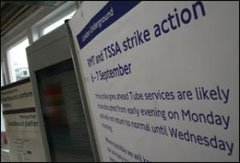
The CBI has called for the law to be changed, so that strikes can only go ahead if at least 40% of balloted members vote in favour of industrial action.

This mirrors a report from thinktank Policy Exchange earlier this month, which argued that the legal balance between trade unions, union members and employers no longer reflects the realities of low union membership in most sectors. It also coincides with calls this weekend from London mayor Boris Johnson.

The CBI is also calling for companies to be able to recruit agency staff to “provide essential cover” for striking workers. Currently, organisations can recruit temporary workers directly but are not able to use an agency.

John Cridland, CBI deputy director-general, said: “Industrial action is never inevitable, and we want to see public sector managers and unions going the extra mile during difficult times ahead. By constructively working together, damaging industrial action can be avoided.

“The public increasingly expects it to be business as usual, even during a strike, so firms must be allowed to hire temporary workers directly from an agency to provide emergency cover for striking workers.”

TUC general secretary Brendan Barber commented: “The UK has some of the toughest legal restrictions on the right to strike in the advanced world. Already the courts regularly strike down democratic ballots that clearly show majority support for action.

“The CBI proposals are a fundamental attack on basic rights at work that are recognised in every human rights charter, and will be dismissed by any Government with a commitment to civil liberties.”




Latest news

James Rowell: The human side of expenses – what employee behaviour reveals about modern work

If you want to understand how your people really work, look at their expenses. Not just the total sums, but the patterns.

Skills overhaul needed as 40% of job capabilities set to change by 2030

Forecasts suggest 40 percent of workplace skills could change by 2030, prompting calls for UK employers to prioritise adaptability.

Noisy and stuffy offices linked to lost productivity and retention concerns

UK employers are losing more than 330 million working hours each year due to office noise, poor air quality and inadequate workplace conditions.

Turning Workforce Data into Real Insight: A practical session for HR leaders

HR teams are being asked to deliver greater impact with fewer resources. This practical session is designed to help you move beyond instinct and start using workforce data to make faster, smarter decisions that drive real business results.
- Advertisement -

Bethany Cann of Specsavers

A working day balancing early talent strategy, university partnerships and family life at the international opticians retailer.

Workplace silence leaving staff afraid to raise mistakes

Almost half of UK workers feel unable to raise concerns or mistakes at work, with new research warning that workplace silence is damaging productivity.

Must read

Will the BBC’s gender pay gap impact the future of the law?

Following the controversy around the BBC and who is paid what, the broadcaster is under increased public and legal scrutiny

Andrew Firth: Pension schemes – how are you connecting with millennials?

In an age where millennials (people born after 1980) account for a growing percentage of the workforce, and baby boomer representation decreases, companies are recognising that the two generations have a very different attitude when it comes to saving for their future.
- Advertisement -

You might also likeRELATED
Recommended to you


