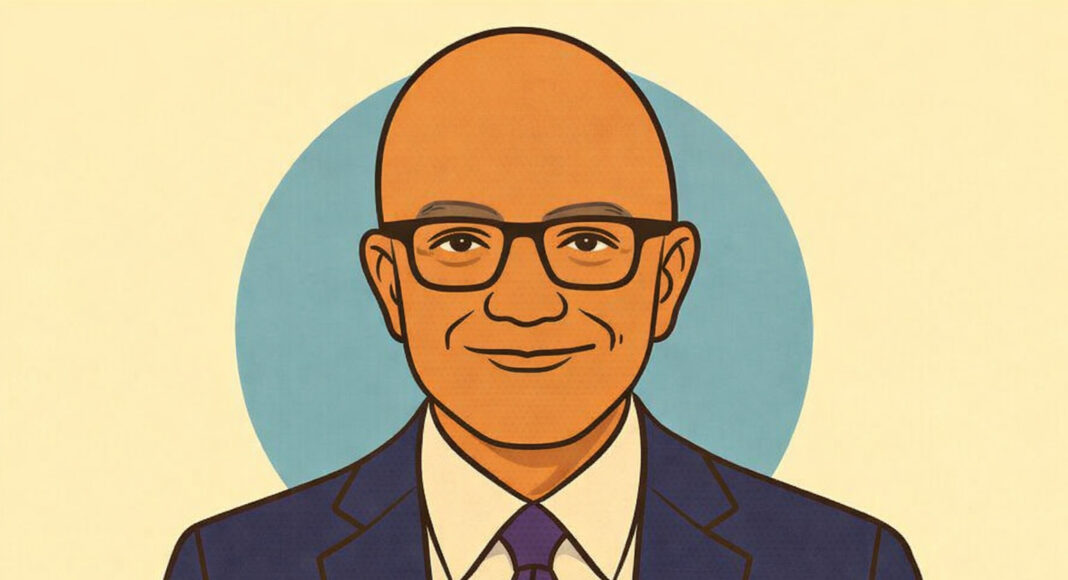
“AI will not replace people, but people who use AI will replace those who don’t.”
Context
Satya Nadella, chief executive of Microsoft, has overseen the company’s rapid expansion into artificial intelligence. Under his leadership, Microsoft has integrated AI into everyday work software, positioning it as a core part of how employees create, communicate and make decisions. His statement, “AI will not replace people, but people who use AI will replace those who don’t,” reflects a growing view among business leaders that the technology will reshape performance rather than simply reduce headcount.
Meaning
The quote reframes the debate around AI away from job loss and towards capability. Nadella’s point is that the advantage will lie with those who learn how to use AI tools effectively to enhance their work. Employees who embrace AI can improve productivity, decision-making and output, while those who resist or lack access to these tools risk falling behind. The focus is therefore not on machines replacing humans, but on a widening gap between different levels of digital fluency and adaptability in the workforce.
Implications
For employers, the message places responsibility firmly on how organisations prepare their people for this transition. Training, access to tools and clear guidance on practical use are now essential, not optional. Without this support, businesses risk creating uneven performance and disengagement among staff who feel left behind. Nadella’s perspective also raises questions about fairness and opportunity, as those given the chance to develop AI skills may progress faster than others. Ensuring that adoption is inclusive and supported across the workforce will be critical to maintaining both performance and trust.

William Furney is a Managing Editor at Black and White Trading Ltd based in Kingston upon Hull, UK. He is a prolific author and contributor at Workplace Wellbeing Professional, with over 127 published posts covering HR, employee engagement, and workplace wellbeing topics. His writing focuses on contemporary employment issues including pension schemes, employee health, financial struggles affecting workers, and broader workplace trends.
- William Furney

- William Furney
- William Furney
- William Furney