


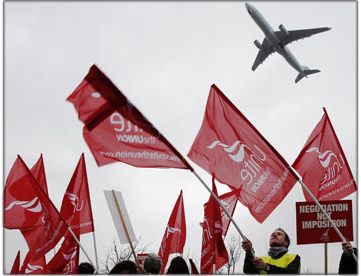
 The long-running dispute between British Airways and its cabin crew is set to continue. Members of the Unite union have voted in favour of industrial action which could cause travel disruption over the busy Easter period.
The dispute has been running for almost two years and was originally about staff cuts and changes to working practices. However, the removal of travel perks and other disciplinary action taken against striking staff has become an inflammatory issue over which both sides are entrenched.
Dates for further strikes have not yet been announced. Unite’s leadership are thought to be considering other forms of industrial action such as a work-to-rule, although the ballot gives an explicit mandate for another strike. It is estimated that the dispute, which has involved 22 days of strike action, has cost BA £150 million so far.
Unite general secretary-designate Len McCluskey said: “For the fourth time in 13 months, British Airways cabin crew have voted overwhelmingly in support of their union and expressed their dissatisfaction with management behaviour. Indeed, the turnout and the majority on this occasion are much greater than in the last ballot.

“Surely BA management must now wake up and listen to the voice of their skilled and dedicated employees. This dispute will be resolved by negotiation, not litigation or confrontation, and it is to negotiation that BA management should now apply itself. We are ready.”
But BA claimed that only a minority of cabin crew now supported strike action.
“Of our 13,500 crew, only 43 per cent voted in favour of strike action in this ballot,” said a spokesman. “Unite has lost about 2,500 cabin crew members since this dispute started, as crew have voted with their feet. Even with a smaller membership, the proportion of Unite members supporting disruption continues to fall, contrary to the union’s claims.
“We urge Unite to return to the deal we negotiated, which guarantees pay rises for the next two years and secures terms and conditions for our existing crew that are the best in the UK industry.”
The union will have to give seven days’ notice of any new strike dates.




