


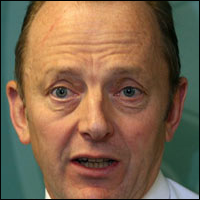
 A public row has erupted over the appointment of senior police officers between Sir Hugh Orde, president of the Association of Chief Police Officers, and Lord Dear who was chief constable of the West Midlands from 1985 to 1990 and then Her Majesty’s Inspector of Constabulary until 1997.
Dear pointed out in an opinion column in the Times newspaper that the problems forces had experienced relating to the death of Ian Tomlinson during the G20, Plebgate, phone-hacking, Hillsborough and the apparent politicisation of the Police Federation were all to do with poor leadership.
The police service had created, trained and promoted to its top ranks managers instead of leaders, Dear said, blaming a decision taken at the Police Staff College in the early 1990s to drop the focus on leadership on the grounds that it was divisive and elitist and concentrate instead on management. The police, like much of the public sector, remain preoccupied with the management ethic, the peer wrote.
Bringing in people from outside the police service, as proposed by the Home Secretary, certainly carried risks but would be worth a shot, he said, adding: “Well-qualified men and women frequently move around different sectors in industry and commerce, often with great success. So why not within the police?”

Dear went on: “The police service needs to attract its fair share of top-quality graduates from Russell Group universities, who have all the essential qualities of integrity, common sense, resilience – and the ability to lead. Yet a career in the police does not figure as an option for high-flying graduates. The service is still seen as a blue-collar occupation even though it offers variety, challenges and an opportunity to change society for the better.”
The majority of officers should carry on climbing the ranks as happens now, but there should also be an annual intake of 250 or more graduates who should be groomed for leadership. Experience on the street is essential, but not for an unrealistically long time, and ranks could be skipped, Dear said. He added: “Diehards in the service will oppose this, but they have no alternative other than more of the same and look where that has led us.”
Whether or not he would rank in Dear’s list of diehards, Orde wrote into the paper to describe Dear’s “attack” on leadership in policing as both surprising and ill-judged, especially since he above all should understand the complexities of leading a service that is charged with protecting citizens 24 hours a day, managing risks that span from local to the international.
Orde said of Dear: “Under his command West Midlands carried out the original inquiry into the Hillsborough disaster; while the West Midlands Crime Squad had to be disbanded when discrepancies in evidence which led to acquittals including those of the Birmingham Six came to light. He was subject to investigation (as I was) before he left to join Her Majesty’s Inspectorate of Constabulary, so he should be the last to make such attacks.”
Orde pointed out that current leadership in the police service was well qualified, with 79 per cent of senior leaders having at least one degree (38 per cent have a Masters) and many are drawn from the Russell Group of universities. Also, the average progression from constable to chief officer rank was 15 years and reducing – at least six years fewer than in Dear’s time. And frontline police staff were of equally high quality.
“The service is not opposed to direct entry but in non-command positions all forces already have senior colleagues drawn from outside police officer ranks,” Orde said. “Likewise, we support the concept of accelerated promotion for the brightest and best: many of today’s chief officers rose through the service in this way before previous schemes lost favour with government.”
The former chief constable of Northern Ireland police and Deputy Assistant Commissioner of the Metropolitan Police Service, who has a BA in public administration, concluded: “We are lucky in this country to have at the top of our police service a group of men and women of outstanding ability, unquestioned integrity, a high level of professionalism and a deep commitment to public service. These are not my words, but those of the Prime Minister’s policing adviser Lord Wasserman, with whom I am pleased to agree.”

Pamela Flores is an events professional with experience at Symposium Events, a UK-based conference and events organization. She has worked in editorial and event coordination roles within the HR and expatriate management sector, contributing to the organization of major conferences including the Expatriate Management and Global Mobility conference. Her background spans online editorial work and events management within the professional conference industry.
- Pamela Flores

- Pamela Flores
- Pamela Flores
- Pamela Flores








