

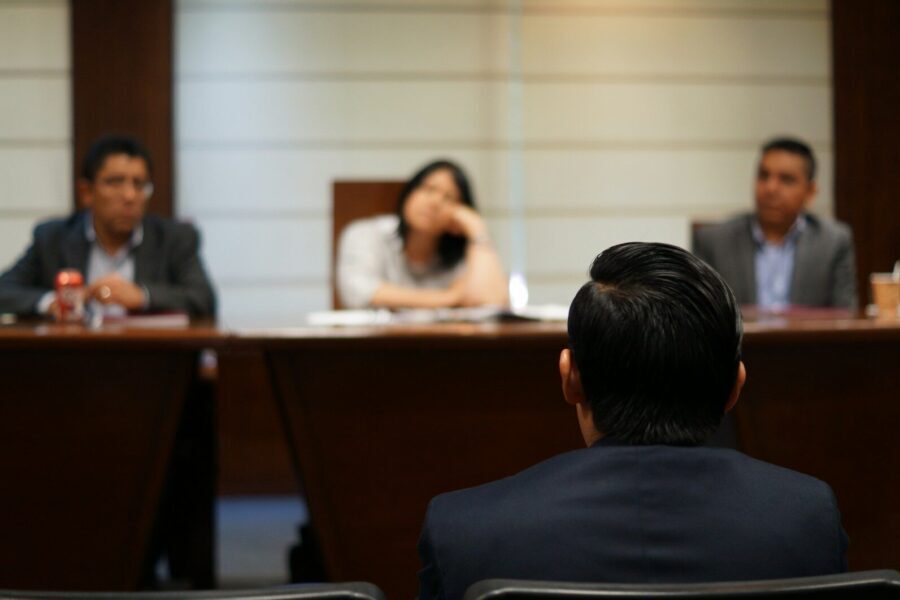
A senior recruiter has been awarded nearly £200,000 after an employment tribunal found that his employer unfairly dismissed him following a cardiac arrest that left him with a brain injury.
Darron Blewitt, a former southern regional operations director at Mach Recruitment, suffered a cardiac arrest in 2020, which resulted in a hypoxic brain injury affecting his memory and cognitive abilities. Despite returning to work after the incident, Blewitt faced notable difficulties. He reported being left without support and said he was expected to “get on with the job” despite his health issues.
Blewitt, who had worked in recruitment for 22 years, described himself as a “workaholic” and said he had been “deeply unhappy” at work after his illness. The tribunal heard that the company did not provide necessary adjustments or support, instead leaving him to manage on his own.
Employment Judge Roger Tynan ruled in Blewitt’s favour, finding that the company acted “unreasonably” in dismissing him due to his health and had failed to follow fair procedures or employment best practice. The tribunal awarded Blewitt £187,585 for unfair dismissal and disability discrimination.

Dismissal linked to ill-health after workplace failings
The tribunal in Cambridge heard that after returning to work, Blewitt struggled with fatigue, anxiety and changes to working practices following the pandemic. He reported being left “to his own devices” without structured support. He also said the company failed to provide a “calm and quiet” working environment suitable for his condition.
Katie Barrett, Mach Recruitment’s head of human resources, was accused of repeatedly cancelling meetings with Blewitt and failing to respond to occupational health communications. The tribunal was told that Blewitt was ultimately dismissed by Barrett, who informed him he would be “let go” due to a reduction in headcount among senior staff.
Initially, the company cited a downturn in business and negative media coverage as reasons for the dismissal. However, Barrett later acknowledged that Blewitt’s dismissal was linked to his “ill-health”.
The judge found that the company’s dismissal process was deeply flawed. He stated that Mach Recruitment failed to document its concerns, kept no records of meetings and did not even provide a written confirmation of the dismissal.
Judge Tynan noted that these actions demonstrated an organisation “entirely neglectful of its responsibilities”. He added that the behaviour of Barrett amounted to harassment and criticised the company’s failure to adhere to employment standards.
Lack of process and disregard for disability rights
Blewitt’s claim was further supported by the company’s failure to comply with tribunal orders. Mach Recruitment did not submit documents as required, resulting in its defence being struck out. The company also failed to attend both the merits and remedy hearings.
Blewitt, who is now unemployed and receiving benefits, told the tribunal that his health had deteriorated further since his dismissal.
Liz Stevens, professional support lawyer in the employment team at Birketts LLP, commented on the case. She told HR review, “It is clear from the tribunal’s findings that the employer had failed to follow even the most basic procedural steps in this case.
“The employer disregarded occupational health advice, failed to document its concerns in writing and kept no records of meetings with the claimant. There had been no formal capability process or any warning given of the potential for dismissal.”
She also noted that Blewitt’s medical condition met the definition of a disability under the Equality Act 2010, meaning the employer was under a duty to make reasonable adjustments.
“The employer failed in this duty,” she said. “The tribunal was particularly critical of the respondent’s head of HR for these shortcomings.”

Alessandra Pacelli is a journalist and author contributing to HRreview, where she covers topics including labour market trends, employment costs, and workplace issues.
- Alessandra Pacelli

- Alessandra Pacelli
- Alessandra Pacelli
- Alessandra Pacelli








