

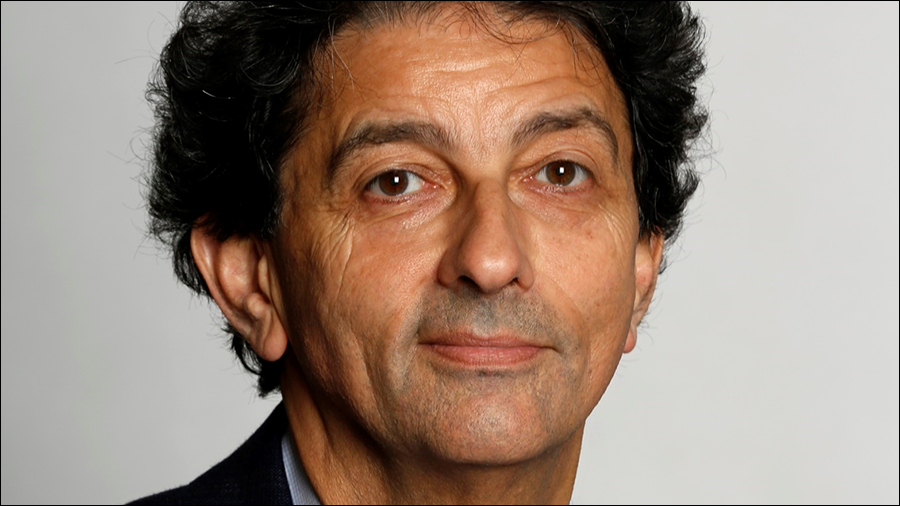
Within a liberated company, employees enjoy freedom to take any action that they—not their supervisors or procedures —decide are the best for the company’s vision. Professor Isaac Getz discusses freedom and leadership at work.
France is all about Liberté, Egalité, Fraternité.
That said, two French economists Yann Algan and Pierre Cahuc called their famous book about France: La Société de Défiance, in English “the mistrust society”. Based on numerous studies they have shown that France is one of the lowest trust countries in the developed world (the Scandinavians are usually at the top).
So if Fraternité takes a big blow here, perhaps Liberté can carry the day?

Sure, even in our terrorism-prone times, one can walk on every sidewalk in France but one (the Palais de l’Élysée, the French hybrid between 10 Downing Street and Buckingham Palace). More, one can trade jokes with policemen.
That said, the freedom in the daily French lives, halts at the gates of the corporate world. Its most important freedom—that of employee initiative—is stifled.
France – 6% of engaged employees
The reader might say “but it’s the same all over the world: surely hierarchy and bureaucracy are built for control not for freedom of initiative?” According to Gallup’s 2017 employee engagement survey, in Western Europe, France has 6% of engaged employees, occupying—with Spain and Italy—the very bottom.
Gallup’s numerous studies have shown that employee engagement is highly correlated with employee willingness to express their creative ideas and to take initiative. Put differently, though employees in France are encouraged theoretically to take initiative on behalf of their companies, in practice, they are not doing it.
I can’t resist to tell this joke about a conversation between an English and a French diplomat. The Englishman says: “We have tried a new approach, and it’s wonderful, it works in practice”. To which the Frenchman replies (do it with a French accent): “Yes, but does it work in theory?”
So, in practice the workplace in France is not very favourable to freedom of initiative and that— paradoxically—is the key for the corporate liberation revolution taking place in this country.
What is corporate liberation?
Corporate liberation means transforming a company’s organisation to allow employee freedom and responsibility to take any action they—not their superiors or procedures—decide as the best for their company’s vision.
For our book Freedom, Inc. Brian Carney and I have studied several dozen such transformations in five countries. Yet, since our book has been translated in French in 2012, something started to happen in this country which hasn’t happened in the Anglo-Saxon countries or even Sweden where the book has appeared in 2011.
Dozens, and then, hundreds of French-based companies started their liberation. Most are SMEs, but corporate liberation occurs also in multinationals such as Airbus, Decathlon and Michelin, a European apparel leader Kiabi, a big insurer MAIF. More, unbelievably, French administration—Social security, of public housing, municipalities—joined the movement.
Meeting fundamental human needs
My way to explain this French paradox is through food (it’s France after all). Imagine, that your company’s cafeteria serves tasty and affordable lunch. If a small eatery offering great inexpensive food opens nearby, you won’t necessarily try it. But, imagine that your cafeteria is just awful. There is a strong chance, you will try—even run to—this eatery.
Paradoxically then, French organisations resemble bad cafeterias and hence, French CEOs and HR professionals increasingly try a radically different, liberated workplace. Some companies in Gallup’s pool have 70% engagement level. The engagement level of liberated companies is similar.
Indeed, the liberated workplace is built to meet the fundamental human needs of intrinsic equality, self-realisation and self-direction. Employees who can satisfy these needs are self-motivated and engaged. Every morning they go to work not because they must but want to, and once there they do their best every day.
No wonder these companies—but also public services—largely outperform their counterparts.
Lessons for HR
Liberated companies hold important lessons for HR because they transform many HR processes. They do that not because of some theory, but because self-directing teams ask for it, in practice.
For example, teams may ask to set their own work schedules, their vacations, have a final say on the team-member recruitment, decide on their training needs and perhaps source the training provider.
Even Comp & Ben is revisited. Salaries are fixed in the third quartile of the job market—neither below, in order to retain good professionals, nor above, in order to avoid mercenaries and divas.
Performance-based bonuses are avoided since mistrustful of employee’s ability to repeat the feat next year. Instead, the increase in salary is practiced—the sign of trust in person’s ability to continue being a high contributor.
Finally, a gain sharing scheme kicks in if enough profits are made. In most of the liberated companies, the same sum is given to every employee. In one French liberated company, a European leader in auto-parts, for a frontline employee it amounted usually to 3 additional months of salary annually, and in good years to 5-6 additional months.
The UK and corporate liberation
There are liberated companies in UK but few—as was the case everywhere else, including France, between 1960 and 2010. However France is changing through corporate liberation, so surely there is hope for the UK too?
Using again the food metaphor, French companies and public services have decided to radically improve the lunch they offer to their employees. Belgian and Swiss companies are joining corporate liberation too.
So are UK businesses and public services so illustrious that they can continue absorb the tremendous human cost of lost initiative and potential of their employees?
The collateral damage of the actively disengaged employees is estimated by Gallup to cost the UK 84.3 to 87.2 billion GBP each year in lost productivity. More, according to research, between 75% and 90% of visits to general practitioner—be it back or shoulder problems, skin eczema, insomnia or depression—are somatisations of work stress, of which the n°1 cause is the lack of control over one’s task.
So wouldn’t it be fun to join the corporate liberation movement and see employees smile and engaged every day, and the UK economy prospering?
HR teams can travel with CEOs on this journey—not just in theory but in practice too.

Rebecca joined the HRreview editorial team in January 2016. After graduating from the University of Sheffield Hallam in 2013 with a BA in English Literature, Rebecca has spent five years working in print and online journalism in Manchester and London. In the past she has been part of the editorial teams at Sleeper and Dezeen and has founded her own arts collective.
- Rebecca Clarke

- Rebecca Clarke
- Rebecca Clarke

- Rebecca Clarke







